Jaipur Battery Storage Guidelines Strengthen Renewable Energy Plans
Rajasthan’s transition toward renewable-energy-driven urban growth has entered a new phase after the state power regulator issued detailed guidelines governing battery-energy storage systems — a move expected to reshape how solar power is integrated into cities and industrial zones.
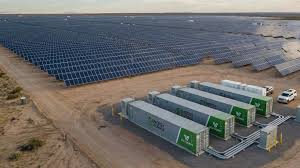
The new framework, notified by the state regulator this week, establishes a formal structure for the deployment, ownership, and operation of battery storage systems across the power ecosystem. The rules apply not only to utilities but also to private developers, commercial consumers, and large housing or industrial projects that want to combine solar generation with energy storage. Energy experts say the policy marks an important shift because storage is increasingly seen as the missing link in India’s solar-energy expansion. Rajasthan already has one of the country’s largest solar-generation capacities, but demand patterns in cities such as Jaipur and Jodhpur peak in the evening when solar production declines. The new guidelines allow battery systems to store excess daytime energy and release it later, improving grid reliability and reducing dependence on conventional power during peak hours.
The framework also supports multiple ownership models, including utility-owned storage, private investment, and consumer-level installations. Industry analysts say this is particularly relevant for urban real-estate projects and industrial clusters, where developers are increasingly integrating rooftop solar and storage systems to reduce long-term energy costs and improve sustainability performance. The rules are technology-neutral and allow both standalone storage and systems combined with renewable-energy projects. The move aligns with the state’s long-term renewable-energy strategy. Government policy documents show that Rajasthan aims to build up to 90,000 MW of renewable capacity by 2030, with a significant share expected to come from solar energy supported by storage systems such as batteries and pumped-storage plants. Regulators have also introduced energy-storage obligations for utilities in the coming years, signalling that storage will become a core component of the state’s power infrastructure rather than an optional technology.
Urban planners say the implications go beyond the power sector. Reliable clean energy is becoming a key factor in attracting investment to cities, especially in manufacturing and technology sectors that depend on uninterrupted electricity. Battery storage systems can also support climate-resilient urban infrastructure by improving power reliability during extreme weather conditions — an increasingly important issue as Indian cities face higher temperatures and more volatile demand patterns. At the same time, the policy highlights how India’s energy transition is shifting from capacity expansion to system stability. In the past decade, the focus was on installing solar plants; the next phase will depend on how effectively cities and utilities manage energy storage, grid flexibility, and distributed generation.
The success of the new guidelines will ultimately depend on implementation. If utilities move quickly to procure storage capacity and developers adopt the new framework, Rajasthan could become one of the first states where solar power backed by batteries becomes a mainstream energy solution for urban and industrial growth.