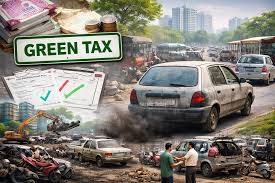
Maharashtra is tightening its approach to vehicular emissions with a proposed increase in environmental levies on older vehicles, signalling a stronger push towards cleaner mobility in rapidly urbanising regions. The revised framework, part of the state’s latest fiscal roadmap, is expected to influence how ageing vehicles are retained, replaced, or retired across cities.
Under the proposal, green tax rates on older private vehicles are set to double across key categories. Two-wheelers could attract a levy of ₹4,000, while petrol-powered light motor vehicles may see charges rise to ₹6,000 and diesel variants to ₹7,000. The policy targets vehicles operating under older emission norms, which are known to contribute disproportionately to urban air pollution. By raising the cost of retaining such vehicles, the state is attempting to create a financial disincentive that encourages a shift towards newer, cleaner alternatives.This Maharashtra green tax intervention comes at a time when cities across the state are grappling with deteriorating air quality and increasing vehicular density. Urban centres like Mumbai, Pune, and Nashik continue to experience rising traffic volumes, making emission control a critical component of sustainable urban planning.
Alongside the higher tax burden, the state is also promoting voluntary scrappage of older vehicles through fiscal incentives. Owners who retire ageing vehicles and replace them with newer models could receive tax concessions, creating a dual mechanism of deterrence and encouragement. Urban mobility experts view this approach as a calibrated policy response. While outright bans on older vehicles can be disruptive, incremental financial measures allow for a gradual transition. However, the success of the Maharashtra green tax framework will depend on complementary systems such as scrappage infrastructure, public transport accessibility, and the availability of low-emission alternatives.The implications extend beyond environmental outcomes. Increased costs for maintaining older vehicles could influence household mobility choices, particularly in lower- and middle-income segments where vehicle replacement is not always immediate. This raises questions about affordability and the need for inclusive transition pathways.
From an infrastructure standpoint, the policy aligns with broader efforts to reduce the environmental footprint of transport systems. Cleaner vehicle fleets can contribute to improved urban air quality, reduced healthcare burdens, and enhanced liveability—key goals for cities aiming to balance growth with sustainability.At the same time, the shift highlights the importance of integrating transport policies with urban planning. Investments in public transit, non-motorised transport, and electric vehicle infrastructure will be essential to ensure that higher taxes translate into behavioural change rather than economic strain.The Maharashtra green tax proposal also reflects a wider national trend of using fiscal tools to modernise vehicle fleets and reduce emissions. As states experiment with similar measures, Maharashtra’s approach could serve as a reference point for balancing environmental objectives with economic realities.
In the coming months, the focus will be on implementation and public response. How effectively the policy is executed—and how citizens adapt—will determine whether it can deliver cleaner, more resilient urban mobility systems without widening access gaps.