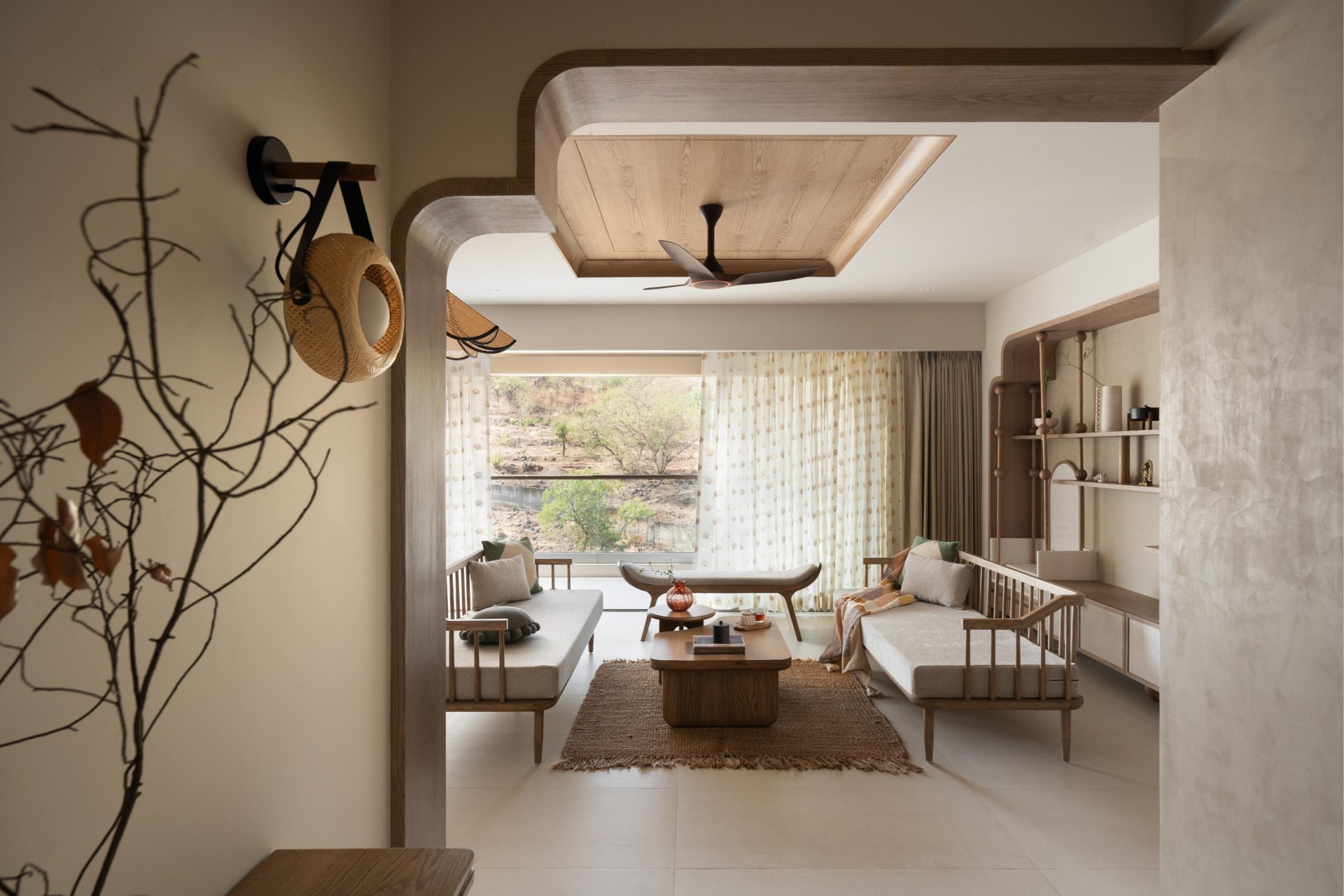
Pune Minimalist Home By The Arch Studio Reflects Memory
A residential project in Pune designed by The Arch Studio is highlighting how memory-led minimalism is shaping contemporary urban housing, with design choices rooted in personal history while responding to the spatial constraints of city living.
The home draws inspiration from Dehradun’s landscape and sensorial qualities, translating them into a pared-back, material-driven interior environment. The approach reflects a growing shift in Indian residential architecture, where minimalism is no longer defined by starkness but by emotional continuity and lived experience. At the core of the design is a deliberate effort to create warmth within restraint. The Arch Studio has used natural materials such as wood and cane to introduce texture and familiarity, while maintaining a controlled palette that avoids visual clutter. This balance enables the home to feel both contemporary and rooted—an increasingly important quality in fast-evolving urban environments.
The layout prioritises openness and fluidity, allowing light and movement to define spatial boundaries rather than rigid partitions. Shared areas are designed to function as cohesive zones for interaction, while private spaces retain a sense of calm and enclosure. This reflects broader urban housing trends where flexibility is essential to accommodate changing family routines, including hybrid work patterns and multi-use living areas.A defining feature of the project is its connection to landscape memory. Design cues inspired by the hills and greenery of Dehradun are subtly embedded through textures, colours, and spatial transitions. Rather than replicating a visual aesthetic, the home interprets these elements as sensory references—creating a psychological link between past and present environments. Urban planners suggest that such approaches mark an evolution in how Indian homes are conceptualised. As cities densify, the role of interior architecture becomes more critical in delivering comfort, identity, and environmental responsiveness within limited footprints. Projects like this demonstrate how design can compensate for spatial constraints by enhancing quality of experience.
Sustainability is also embedded through passive strategies. The emphasis on natural light, ventilation, and durable materials reduces long-term energy dependence and maintenance requirements. While subtle, these interventions align with the broader push towards climate-responsive residential design in Indian cities.The project further reflects a shift towards “soft minimalism”—a design philosophy that prioritises human comfort over rigid aesthetic rules. By integrating memory, materiality, and functionality, the residence avoids the sterility often associated with minimalist interiors, instead offering a lived-in, adaptable environment.As Pune continues to expand as a major urban centre, such housing models are gaining relevance. They offer insights into how homes can remain emotionally resonant while meeting the demands of density, efficiency, and sustainability.
Looking ahead, the challenge for architects and developers will be to scale these principles across diverse housing segments. Integrating personalisation, environmental sensitivity, and spatial efficiency into mainstream housing could play a key role in shaping more inclusive and resilient urban futures.