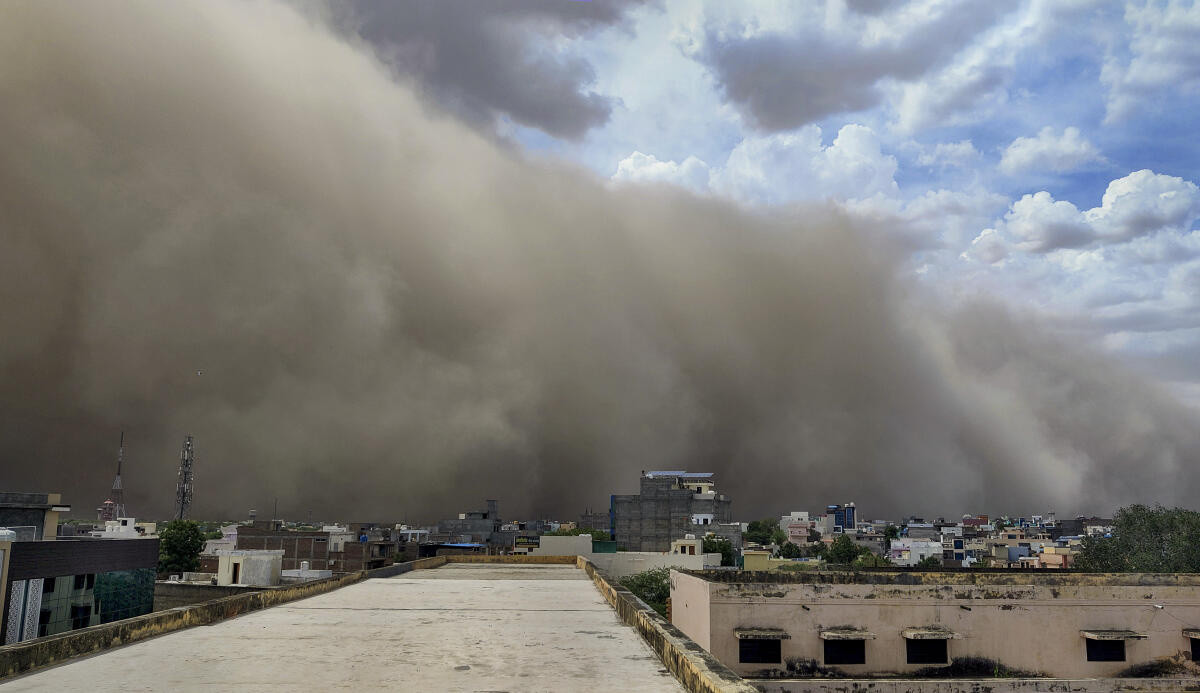
Jaipur and several districts across Rajasthan are witnessing a shift in weather patterns, with authorities issuing a Jaipur dust storm alert alongside forecasts of rainfall and temperature fluctuations. The development, driven by an active western disturbance, has brought short-term relief from rising heat while highlighting the increasing variability of pre-summer climate conditions in the region. Meteorological officials indicate that nearly ten districts are likely to experience dust storms, gusty winds, and scattered rainfall over a short window, followed by another round of unstable weather conditions later in the week.
The Jaipur dust storm alert comes at a time when daytime temperatures had been steadily rising, making the sudden drop of a few degrees noticeable for residents and urban systems alike. Across key urban centres, including Jaipur and surrounding districts, cloud cover and late-evening rainfall have temporarily moderated temperatures. While the cooling effect is welcome, urban planners point out that such abrupt weather changes can strain city infrastructure. Dust storms, in particular, tend to disrupt transport networks, reduce visibility, and increase particulate pollution levels before rainfall helps settle airborne dust. Experts note that the recurrence of western disturbances during the transition from winter to summer is not unusual. However, the intensity and frequency of such events appear to be shifting, potentially linked to broader climatic changes. The Jaipur dust storm alert therefore reflects not just a short-term weather event but also a pattern that cities must increasingly plan. From an urban resilience perspective, these weather shifts underline the importance of adaptive infrastructure. Cities like Jaipur, which are expanding rapidly, need drainage systems capable of handling sudden rainfall, as well as urban design measures that reduce dust generation.
Construction activity, unpaved surfaces, and sparse green cover can exacerbate the impact of dust storms, making mitigation strategies critical. The economic implications are also notable. Weather disruptions can affect construction timelines, outdoor commercial activity, and local supply chains. For the real estate sector, intermittent rainfall and storms may slow project execution but also reinforce the need for climate-responsive design, including better ventilation, dust control measures, and water management systems. Looking ahead, meteorological assessments suggest a brief stabilisation in weather conditions before another system becomes active, potentially bringing thunderstorms and even hail in isolated areas. This pattern of alternating calm and disturbance phases is expected to continue through the week. For city administrators, the Jaipur dust storm alert serves as a reminder that urban planning must increasingly account for climate variability.
Strengthening early warning systems, improving coordination between civic agencies, and investing in resilient infrastructure will be key to managing such events without significant disruption to daily life. As Rajasthan transitions deeper into the summer season, the focus will remain on balancing immediate weather responses with long-term strategies that make cities more adaptable to changing environmental conditions.