Jaipur Dravyavati River Pollution Stalls Redevelopment Plans
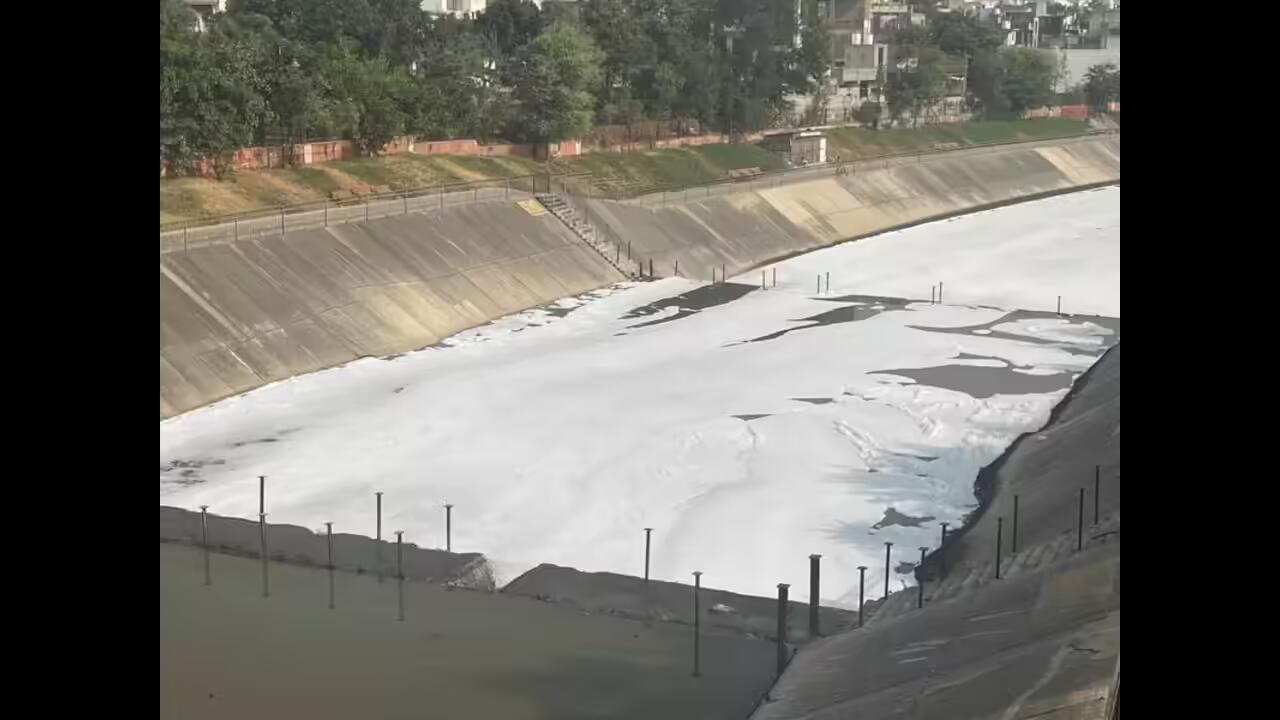
Plans to transform stretches of Jaipur’s Dravyavati riverfront into a public leisure corridor have encountered a significant setback, as rising pollution levels threaten both project timelines and environmental outcomes. The challenge underscores a broader urban governance issue: infrastructure creation without sustained operational coordination. Recent site inspections by senior state officials revealed visible foam accumulation and untreated sewage inflows at multiple points along the river, raising concerns over the viability of planned riverfront development. The Dravyavati river pollution has emerged as a critical barrier, forcing authorities to reassess immediate interventions before proceeding with urban design ambitions.
The river, which had undergone a major restoration initiative in recent years, was equipped with multiple sewage treatment plants (STPs) designed to intercept and process wastewater before it entered the channel. However, urban expansion and fragmented infrastructure planning appear to have undermined these efforts. Officials indicate that additional drainage lines were subsequently connected to the river system without adequate treatment integration, allowing untreated wastewater to flow directly into the river. Urban planners note that such gaps reflect a recurring challenge in fast-growing cities: parallel development by multiple agencies without unified oversight. While capital-intensive infrastructure such as STPs may be built, their effectiveness depends on long-term governance, monitoring, and inter-agency coordination. In the case of Dravyavati river pollution, the absence of these elements has led to environmental stress despite earlier investments. To address the immediate crisis, authorities are working on interim measures, including diverting excess sewage to an underutilised treatment facility. This stop-gap arrangement is expected to partially mitigate the inflow of untreated waste, although experts caution that temporary fixes cannot substitute for systemic solutions. Long-term plans include expanding treatment capacity and ensuring that all drainage networks are properly linked to functional STPs.
Beyond environmental concerns, the delay has economic implications. Riverfront redevelopment projects are increasingly seen as catalysts for urban regeneration, boosting real estate values, tourism potential, and local livelihoods. However, without addressing foundational issues such as water quality, such projects risk becoming unsustainable or underutilised assets. The Dravyavati river pollution also raises questions about climate resilience. Urban waterways play a crucial role in flood management, groundwater recharge, and heat mitigation. Polluted and poorly maintained rivers compromise these functions, making cities more vulnerable to extreme weather events. Industry experts suggest that future urban river projects must prioritise integrated planning—combining wastewater management, ecological restoration, and public space development within a single governance framework. Transparent data sharing, stricter enforcement against illegal discharges, and continuous monitoring are seen as essential to maintaining project outcomes.
As Jaipur recalibrates its approach, the focus is likely to shift from rapid redevelopment to stabilising the river’s ecological health. Only once pollution levels are controlled can the city realistically move forward with its vision of creating accessible, people-centric riverfront spaces that balance development with environmental stewardship.