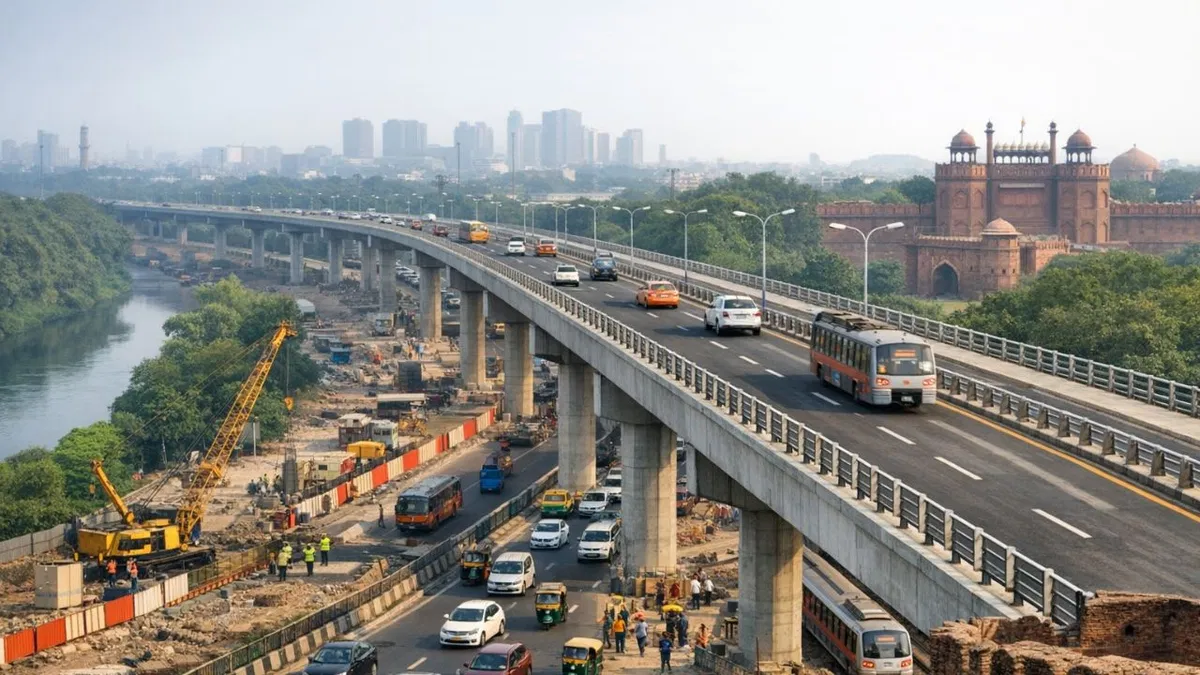
Indore Ring Road Compensation Reshapes Land Economics
Land acquisition for Indore’s planned outer ring road is emerging as a critical flashpoint, with farmers demanding higher payouts as surrounding property values rise sharply. The dispute highlights a familiar tension in fast-growing cities: how to balance large-scale infrastructure expansion with fair and transparent compensation for landowners. At the centre of the issue is the widening gap between officially assessed land values and prevailing market rates along the proposed corridor. As infrastructure announcements have triggered speculative and real demand in peri-urban areas, land prices have surged, prompting affected landowners to question whether compensation frameworks reflect current realities.
The Indore ring road compensation debate carries broader implications for how cities manage growth at their edges. Urban planners point out that ring roads often act as catalysts for new development zones, reshaping land use and unlocking real estate potential. However, when compensation mechanisms lag behind market movements, it can delay projects and deepen resistance from local communities. Officials involved in the process indicate that compensation is being calculated based on established guidelines, which typically include a multiplier over notified land values. Yet, industry experts argue that such formulas may not fully capture rapid price escalation driven by infrastructure-led speculation. This disconnect is increasingly visible in tier-two cities like Indore, where growth corridors are evolving faster than administrative valuation systems. The stakes are high for both sides. For landowners, fair Indore ring road compensation is tied not only to immediate financial returns but also to long-term livelihood security. Many depend on agricultural land as a primary income source, making displacement a sensitive issue. For the city, delays in land acquisition could slow down a project seen as essential for decongesting inner roads and improving regional connectivity. Real estate analysts note that the outer ring road is expected to redistribute growth away from the city core, encouraging the development of new residential and commercial clusters. If executed effectively, such infrastructure can support more balanced urban expansion, reduce travel times, and improve logistics efficiency. However, unresolved compensation disputes risk creating uncertainty that can deter investment. The situation also raises questions about the need for more dynamic land valuation systems that respond to real-time market signals. Some urban policy experts suggest integrating periodic revisions or independent assessments to ensure compensation remains aligned with actual transaction values, particularly in high-growth corridors.
From a sustainability perspective, equitable land acquisition is increasingly seen as central to building inclusive cities. Projects that fail to adequately compensate affected communities often face prolonged resistance, undermining both timelines and public trust. Conversely, transparent and responsive compensation frameworks can enable smoother transitions while supporting long-term urban resilience. As negotiations continue, the outcome of the Indore ring road compensation issue could shape not only the pace of this project but also the approach to future infrastructure expansion in the region. The challenge lies in aligning economic growth with fairness on the ground, ensuring that the benefits of urban transformation are more evenly shared.