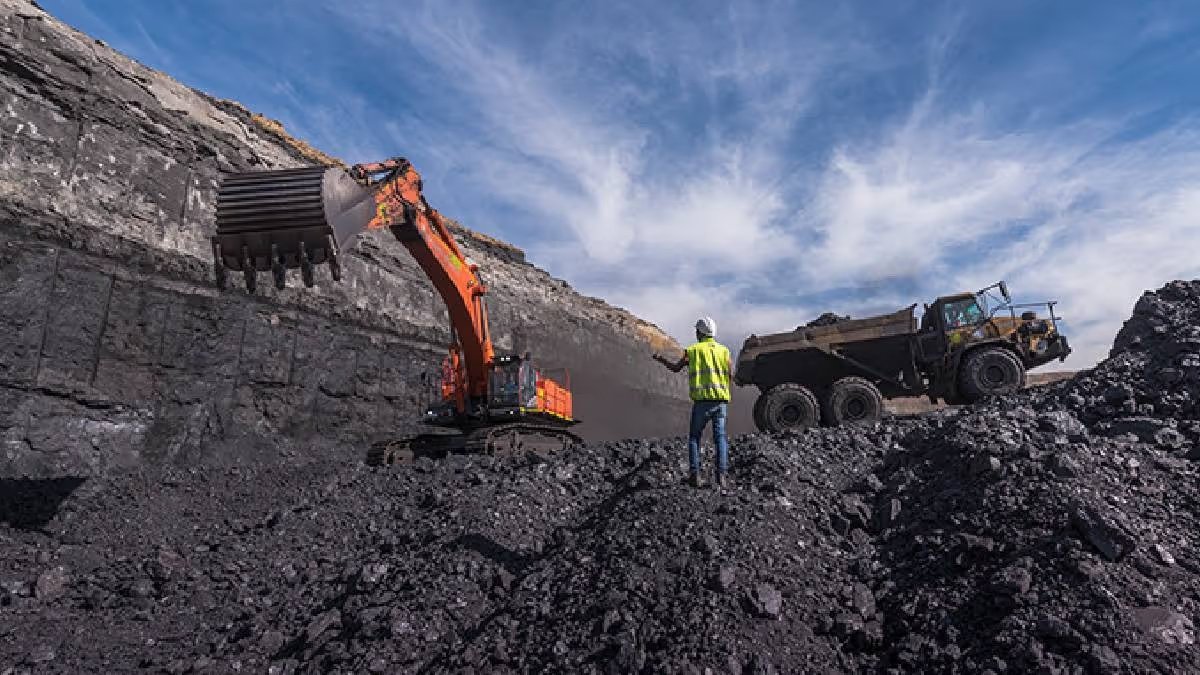
A renewed push for a locally tailored coal mining framework in Meghalaya is bringing attention to the complex balance between environmental safeguards and livelihood protection in resource-dependent regions.A regional civil society organisation has urged the state unit of a national political party to take up with the Centre the need for a Meghalaya coal mining policy that allows small-scale, regulated extraction. The demand is rooted in concerns that existing national frameworks are ill-suited to the state’s unique landholding patterns and geological conditions.
At the heart of the issue is a regulatory requirement that mandates large land parcels—often cited as a 100-hectare threshold—for mining approvals under central law. Stakeholders argue that such norms are incompatible with Meghalaya’s fragmented, community-owned land systems, where coal deposits are typically located in small, dispersed patches. The call for a revised Meghalaya coal mining policy also reflects the region’s distinctive geology. Coal seams in the state are often thin, irregular, and spread across hilly terrain, making large-scale mechanised mining both impractical and environmentally disruptive. In contrast, proponents argue that carefully regulated small-scale mining could better align with local conditions while reducing ecological damage.Livelihood concerns are central to the debate. Thousands of families in the Jaiñtia Hills and surrounding regions have historically depended on coal extraction and related activities. Restrictions on mining in recent years, particularly following environmental interventions, have disrupted income streams and local economies.
Urban and regional planners note that such disruptions can have spillover effects beyond mining areas. Reduced economic activity in resource belts often translates into lower demand in nearby towns, affecting small businesses, transport networks, and construction supply chains. In a state where rural and peri-urban economies are closely linked, the absence of a viable mining framework can slow broader development momentum.At the same time, the environmental risks associated with unregulated mining remain significant. Meghalaya’s past experience with informal extraction methods has led to concerns over land degradation, water contamination, and safety hazards. Experts emphasise that any future policy must integrate scientific assessments, strict monitoring, and community participation to ensure long-term sustainability.The proposal includes calls for comprehensive geological surveys to map coal-bearing areas more accurately and identify appropriate extraction methods. Such data-driven planning, stakeholders argue, could help bridge the gap between regulatory compliance and ground realities. The evolving discussion around the Meghalaya coal mining policy also highlights a broader governance challenge: aligning national mining regulations with region-specific socio-economic contexts. As India moves towards more structured and environmentally responsible resource management, states with unique land and ecological systems may require customised approaches.
Looking ahead, the outcome of these policy discussions will be critical for Meghalaya’s development trajectory. A framework that enables safe, small-scale mining while safeguarding environmental integrity could offer a pathway to reconcile economic needs with sustainability goals—particularly in regions where natural resources remain a primary source of livelihood.