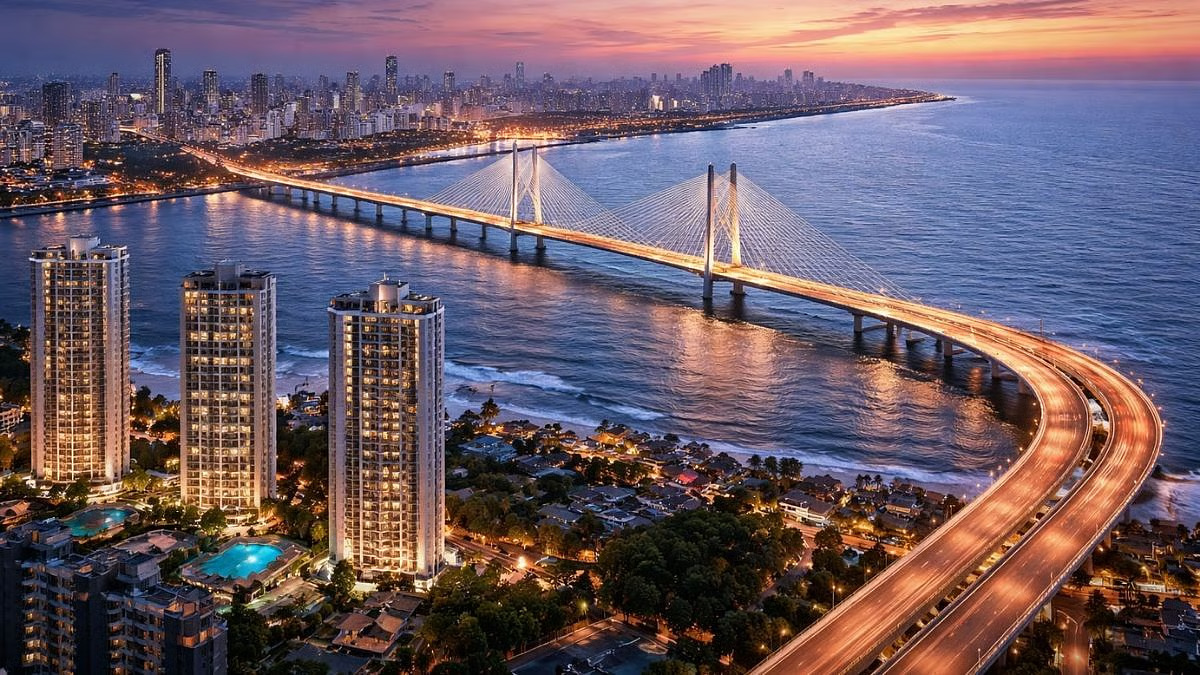
Versova, a coastal suburb in Mumbai’s western corridor, is emerging as a high-growth residential micro-market, driven by a combination of infrastructure expansion and redevelopment-led transformation. With a major sea link project under development and a steady pipeline of housing upgrades, the locality is witnessing a structural shift in both demand and pricing dynamics.
The Versova real estate growth story is closely linked to improving regional connectivity. A planned coastal corridor connecting the western suburbs to South Mumbai is expected to significantly reduce travel time, reshaping commuting patterns and enhancing accessibility. Urban infrastructure experts note that such projects tend to create long-term value by integrating peripheral locations into the city’s core economic network. Alongside connectivity improvements, redevelopment activity is reshaping the built environment. Older residential structures are being replaced with modern high-rise developments, offering upgraded amenities and higher density housing. This transition reflects broader trends across Mumbai, where limited land availability has made redevelopment the primary source of new supply.
Market data indicates a sharp rise in housing demand in recent years. Residential absorption has increased steadily post-pandemic, signalling renewed buyer confidence in the micro-market. Industry observers attribute this to a mix of end-user demand and investor interest, supported by the area’s proximity to commercial hubs such as Andheri, Oshiwara, and the extended business districts of the Mumbai Metropolitan Region. The Versova real estate growth trajectory is also evident in pricing trends. Property values have recorded significant appreciation over the past few years, with premium developments—particularly those offering sea views or proximity to key infrastructure—commanding higher valuations. Analysts suggest that the anticipation of improved connectivity is already being factored into property prices, a trend commonly observed in infrastructure-led markets.
Rental demand remains another strong pillar supporting the locality’s growth. With a diverse tenant base that includes professionals from media, corporate, and service sectors, rental yields continue to remain relatively stable for a premium neighbourhood. This dual appeal—both for end-users and investors—has helped sustain transaction volumes even amid broader market fluctuations. However, experts caution that infrastructure-led growth must be supported by sustainable urban planning. Increased density, if not matched with adequate civic amenities such as water supply, waste management, and transport integration, can strain local systems. Planners emphasise the need for coordinated development that balances real estate expansion with environmental and social infrastructure.
From a climate perspective, coastal development also brings additional considerations. Ensuring resilience against flooding, sea-level rise, and extreme weather events will be critical as the area evolves into a more densely populated urban zone. Integrating green building practices and resilient design standards will be essential to future-proof growth. As Versova continues its transition from a niche coastal neighbourhood to a mainstream residential hub, the interplay between infrastructure investment and real estate activity is expected to shape its trajectory. The coming years will determine whether this growth translates into a more connected, resilient, and liveable urban environment.
Versova Real Estate Growth Driven By Coastal Connectivity