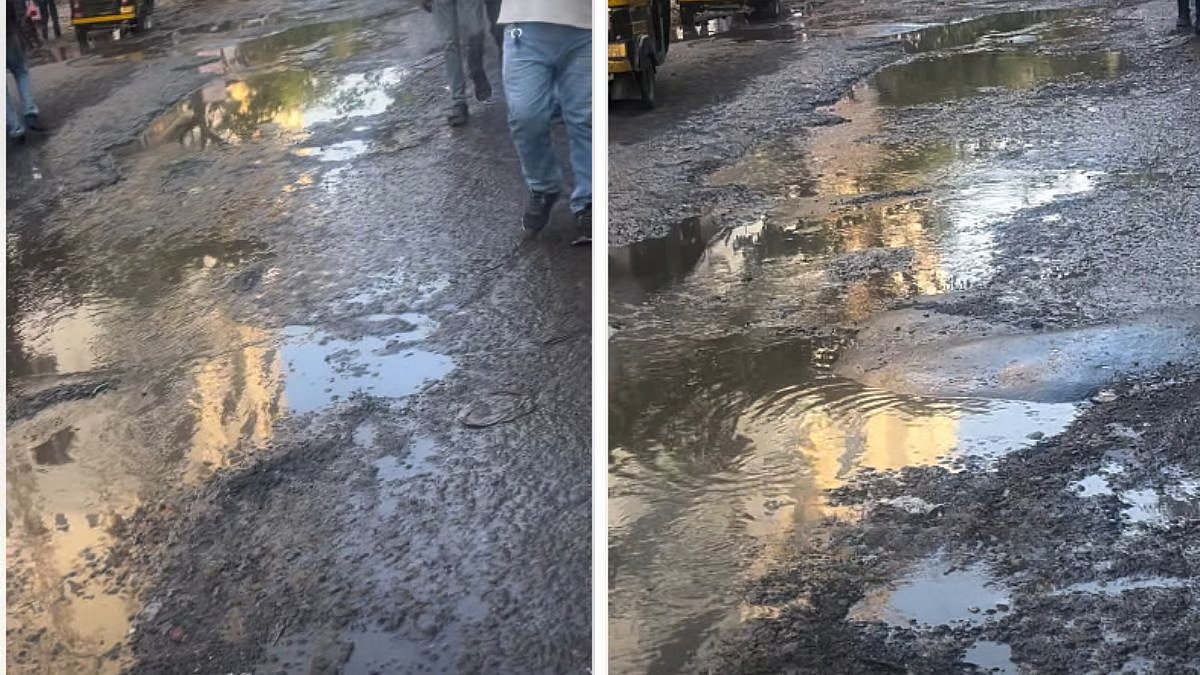
A deteriorating road stretch near Kanjurmarg railway station in Mumbai has brought renewed attention to the city’s persistent infrastructure vulnerabilities, with commuters flagging safety risks weeks ahead of the monsoon season. The issue has gained traction after visuals of water-filled craters circulating online highlighted the poor condition of a key access route in the eastern suburbs.
The affected stretch serves as a critical connector between residential clusters, commercial hubs, and nearby business districts, handling significant daily traffic. Despite the absence of heavy rainfall, multiple sections of the road have already developed deep surface damage, with stagnant water accumulating in potholes and forcing motorists to slow down or take evasive routes. Urban mobility experts point out that such early deterioration raises concerns about construction quality, drainage integration, and routine maintenance cycles. Roads in high-traffic corridors are expected to withstand wear and tear, particularly in a city like Mumbai where climate variability and heavy monsoon exposure are well known factors. Premature damage, they argue, signals deeper systemic issues rather than isolated failures.
Civic officials acknowledge that underground leakages and ageing utility networks can accelerate road degradation. Water seepage from pipelines or sewage lines weakens the road base, leading to surface collapse even in dry conditions. This not only increases repair costs but also shortens the lifecycle of infrastructure assets, placing additional pressure on municipal budgets. For daily commuters, the immediate concern is safety. Uneven road surfaces combined with waterlogging create hazardous driving conditions, particularly for two-wheeler riders and pedestrians navigating narrow stretches. With the monsoon approaching, such vulnerabilities are likely to intensify unless timely intervention is carried out.
The situation also reflects broader challenges in Mumbai’s pre-monsoon preparedness. While annual road repairs and desilting activities are routinely undertaken, recurring complaints suggest gaps in execution and monitoring. Experts emphasise the need for durable materials, better contractor accountability, and the adoption of climate-resilient design standards to ensure long-term performance. From an economic perspective, road quality plays a direct role in sustaining urban productivity. Disruptions caused by poor infrastructure can slow down logistics, increase travel time, and affect access to employment hubs. In areas like Kanjurmarg, which connect to key business districts and emerging residential zones, such inefficiencies can have wider ripple effects on real estate value and commercial activity.
Urban planners also highlight the importance of integrating road maintenance with broader infrastructure planning. Coordinated work between transport, water, and sewerage departments can help prevent repeated digging and patchwork repairs, which often weaken road surfaces over time. As civic authorities assess the situation, the focus will need to shift towards preventive maintenance rather than reactive fixes. Strengthening inspection systems, ensuring timely repairs, and addressing root causes such as leakages will be critical to improving road resilience.
With the monsoon season just weeks away, the condition of this stretch serves as an early indicator of the challenges ahead—underscoring the urgency for more durable, accountable, and climate-ready urban infrastructure in Mumbai.
Mumbai Kanjurmarg Road Damage Raises Commuter Safety Concerns