


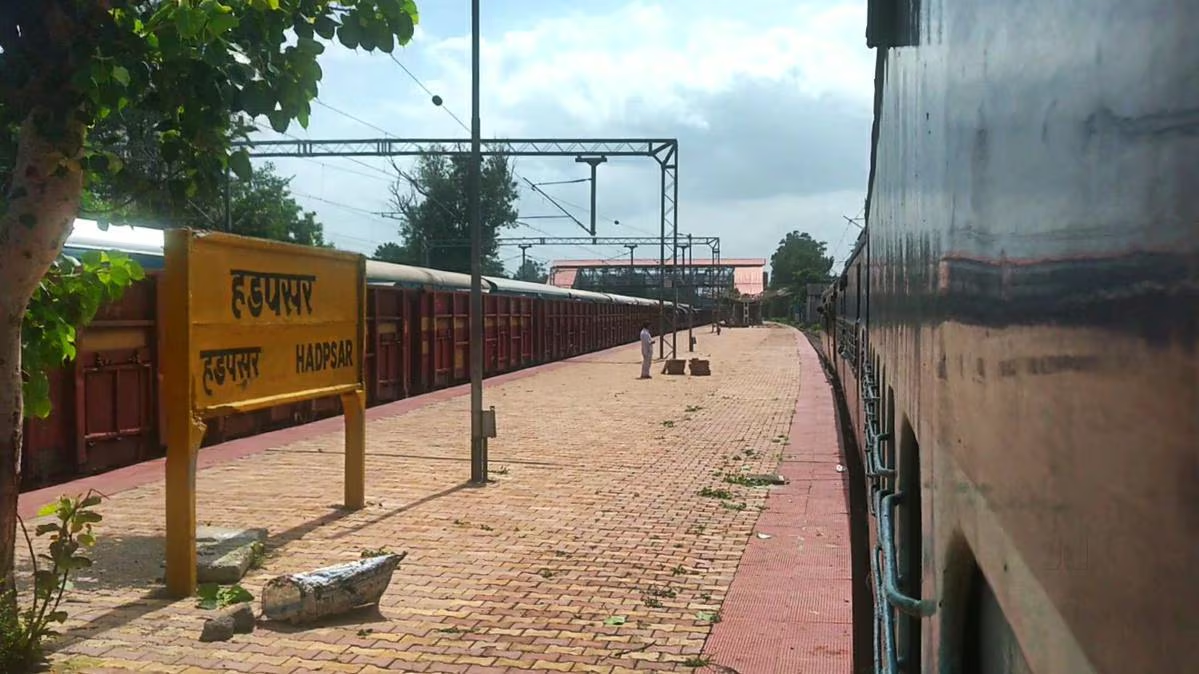
Pune’s rail network is set for a strategic shift as Hadapsar station in the city’s eastern corridor moves towards becoming a secondary terminal, aimed at easing congestion at the central railway hub and improving access for fast-growing suburban zones. The planned upgrade is expected to redistribute passenger traffic while supporting long-distance travel demand from emerging residential and commercial districts.
Railway authorities have cleared the addition of a fourth platform at the station, a move that will expand its operational capacity and allow more trains to originate or halt there. Currently handling a modest daily footfall, the station is poised to take on a larger role in Pune’s transport ecosystem as urban growth continues to push eastward. The Pune Hadapsar station upgrade is closely tied to the city’s evolving geography. Areas such as Kharadi, Wagholi, Manjari and Magarpatta have transformed into dense residential and employment clusters, particularly driven by the IT sector. For residents in these localities, accessing long-distance trains from the central station often involves navigating congested inner-city roads, adding time and cost to travel.
By decentralising rail operations, planners aim to reduce pressure on Pune’s main station while improving last-mile efficiency for passengers. Industry experts suggest that satellite terminals like Hadapsar can play a crucial role in large metropolitan regions by distributing demand more evenly and enabling better scheduling flexibility for railway operators. The proposed platform expansion is expected to support additional train services in the future, including new routes and increased stoppages for existing long-distance trains. Technical specifications are still under review, particularly concerning platform length, which will determine the type and capacity of trains that can be accommodated. A longer platform would enable the handling of full-length trains, significantly enhancing operational efficiency.
From an infrastructure perspective, the Pune Hadapsar station upgrade is relatively low-cost compared to large-scale station redevelopment projects, yet it offers high impact in terms of capacity augmentation. However, urban planners caution that the success of such upgrades depends on complementary investments in access roads, public transport links, and passenger amenities. There is also a broader sustainability dimension to the project. Strengthening suburban rail nodes can reduce reliance on private vehicles for intercity travel, cutting congestion and emissions. Integrating the station with bus networks and future metro connectivity could further enhance its role as a multimodal hub, aligning with long-term goals for low-carbon urban mobility. s Pune continues to expand, the shift towards decentralised transport infrastructure is likely to become more pronounced. The transformation of Hadapsar into a functional satellite terminal may serve as a template for future upgrades, helping the city balance growth with efficient and inclusive mobility systems.
Pune Hadapsar Station Upgrade To Ease Rail Pressure
