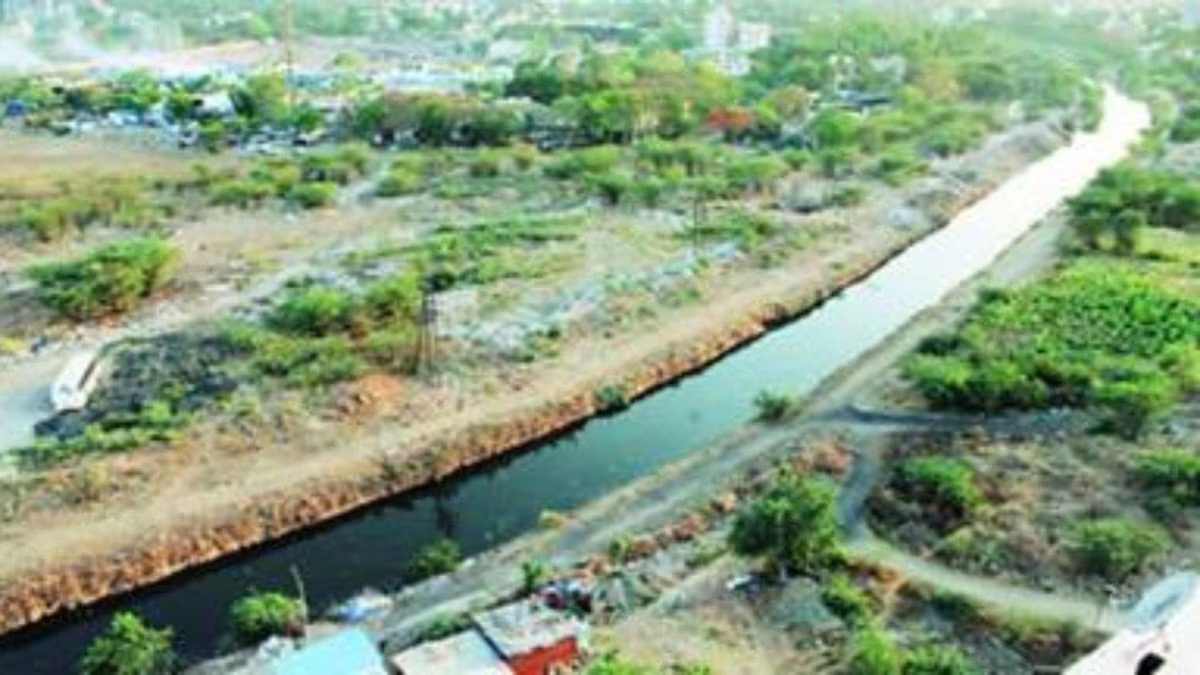
A sudden surge in canal water levels triggered flooding in parts of Manjari Budruk on Pune’s eastern edge, inundating informal settlements and disrupting road connectivity during peak evening hours. The incident, which impacted around 50 homes, underscores the growing vulnerability of rapidly urbanising zones where infrastructure systems struggle to keep pace with expansion.
The flooding occurred after excess water entered a canal network near the locality, eventually breaching its capacity and spilling into nearby habitations. Low-lying clusters, particularly in densely packed settlements, were among the worst affected as water entered homes with little warning, damaging essential household belongings and displacing families. The Pune canal overflow also spilled onto a key connecting road between Manjari and Wagholi, briefly halting traffic and creating confusion among commuters. This stretch has become increasingly important as residential development spreads eastwards, linking emerging housing hubs with employment centres in Kharadi and Hadapsar.
Preliminary assessments by civic and irrigation officials suggest that the overflow was compounded by obstructions within the canal, including vegetation and debris that restricted water flow. Urban infrastructure experts say such blockages are a recurring issue in Indian cities, where natural and engineered drainage systems often remain poorly maintained despite rising climate variability and urban density.
Emergency measures were initiated soon after the incident, including halting upstream water inflow and deploying machinery to clear the canal. Local authorities also began surveying damage and arranging temporary relief for affected residents. However, the episode has once again highlighted the disproportionate exposure of informal settlements to climate-linked risks and infrastructure failures.
Urban planners note that the Pune canal overflow reflects a broader pattern of development along water bodies without adequate buffer zones or flood management systems. As cities expand outward, peri-urban areas frequently absorb unplanned growth, often lacking resilient drainage networks, early warning systems, and formal housing structures. From a policy standpoint, the incident raises questions about coordination between water management, land use planning, and disaster preparedness. While canals and irrigation infrastructure were originally designed for agricultural landscapes, their integration into urban environments requires updated design standards and continuous monitoring.
There are also implications for real estate and infrastructure investment in the region. As eastern Pune continues to attract residential demand, recurring flood incidents could influence buyer sentiment and insurance considerations, particularly in areas lacking formal civic infrastructure. The immediate focus remains on rehabilitation and restoring normalcy, but the longer-term challenge lies in rethinking how urban expansion interacts with existing water systems. Without systemic upgrades, episodic flooding events risk becoming more frequent, placing both livelihoods and urban growth trajectories under strain.
Pune Canal Overflow Exposes Urban flood Risks