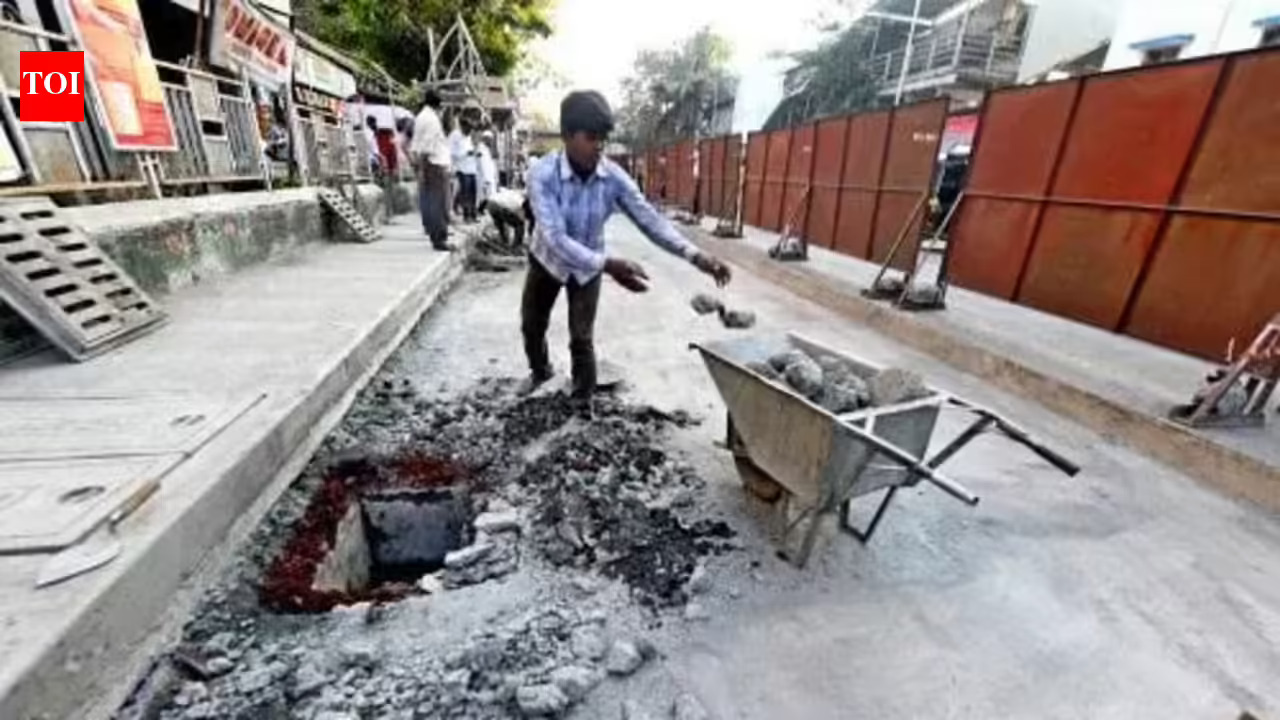
Mumbai’s large-scale transition to concrete roads is entering a new planning phase, even as ongoing works across the city remain incomplete, raising concerns over execution timelines, coordination, and fiscal prioritisation. The civic administration is preparing estimates for an additional round of projects, signalling a continued push to overhaul the city’s road network.
The initiative, aimed at replacing asphalt and paver-block roads with more durable concrete surfaces, has been positioned as a long-term solution to recurring pothole issues. However, the proposed expansion of the Mumbai road concretisation programme comes amid visible disruptions on the ground, with several stretches still under construction or awaiting completion ahead of the monsoon season. Officials indicated that preparatory work for the next phase is underway, although implementation timelines remain uncertain. The city’s road network spans over 2,000 kilometres, making it one of the most extensive urban infrastructure upgrades currently underway in India. So far, multiple phases have been rolled out, covering key arterial routes as well as internal roads across suburban and island city regions.
Despite progress on several corridors, urban governance experts highlight persistent coordination challenges between departments. In some areas, newly completed concrete roads have reportedly been reopened shortly after completion for utility-related works such as drainage upgrades or underground infrastructure installation. This has raised questions around planning integration and sequencing of civic projects. The Mumbai road concretisation effort also carries significant financial implications. With thousands of crores already committed, the proposed additional investment has triggered debate over fiscal prudence, particularly when earlier phases are yet to stabilise operationally. Infrastructure economists note that while durable road materials can reduce long-term maintenance costs, upfront capital expenditure must be matched with efficient execution to deliver value.
Another layer of concern relates to procurement and tendering processes. Allegations of irregularities in upcoming contracts have surfaced in public discourse, underscoring the need for transparent bidding mechanisms. Industry observers emphasise that large infrastructure programmes must maintain high standards of accountability to sustain investor confidence and public trust. From a sustainability perspective, the shift to concrete roads presents both opportunities and challenges. While such surfaces can improve longevity and reduce frequent repairs, experts caution about increased surface temperatures and reduced water permeability. Integrating climate-sensitive design elements, such as improved drainage and heat mitigation strategies, will be critical as the programme scales up.
For residents and businesses, the ongoing works have translated into short-term disruptions, including traffic congestion and access constraints. However, the long-term promise of smoother, pothole-free roads remains a key driver behind public support for the initiative. As Mumbai prepares for the next phase of its Mumbai road concretisation programme, the focus is likely to shift towards better inter-agency coordination, transparent contracting, and climate-resilient design. The success of this transformation will depend not just on scale, but on the city’s ability to align infrastructure delivery with sustainable and inclusive urban planning goals.
Mumbai Road Concretisation Plan Faces Fresh Expansion Debate