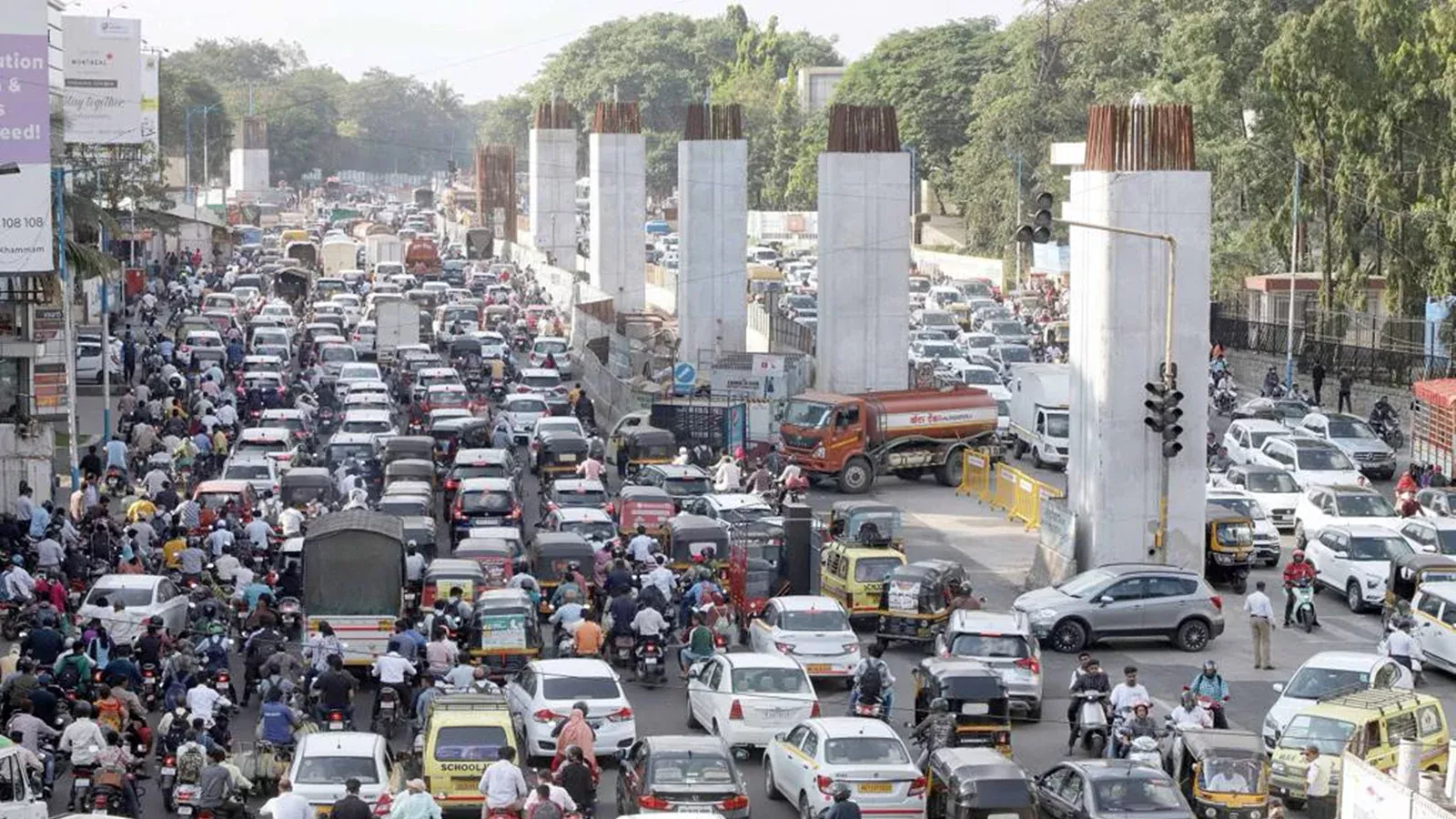
Pune’s eastern transport corridor is undergoing temporary traffic recalibration this week, as authorities restrict heavy vehicle movement along the Lonikand–Kharadi stretch to manage rising congestion linked to a major state-level sporting event. The move reflects the growing pressure on peri-urban infrastructure, where highways increasingly double as both freight routes and local mobility lifelines.
The restrictions, in place during afternoon and evening peak hours over multiple days, target freight carriers, private buses, and construction equipment—vehicle categories that typically occupy significant road space and slow down traffic flow. The affected corridor connects rapidly developing residential zones with commercial districts and remains a crucial link for goods movement towards the city’s eastern industrial belt.
Urban mobility experts say such measures, while temporary, highlight structural gaps in how Indian cities manage event-driven surges in traffic demand. Pune traffic curbs of this nature are becoming more frequent as the city’s footprint expands beyond traditional boundaries, placing additional strain on arterial roads that were not originally designed for mixed, high-intensity usage.
Authorities have simultaneously discouraged roadside parking of large vehicles along the stretch, aiming to preserve carriageway width and reduce bottlenecks. Alternative routes have been suggested for logistics operators, though industry observers note that diversions often increase travel time and fuel consumption, raising operational costs for transporters. The Pune traffic curbs also underscore the challenge of balancing economic activity with public convenience. The Lonikand–Kharadi belt has witnessed accelerated real estate development, driven by proximity to IT hubs and improved highway connectivity. However, infrastructure upgrades have struggled to keep pace with this growth, resulting in recurring congestion during peak hours and special events. From a sustainability perspective, planners argue that such episodic restrictions should evolve into longer-term solutions, including dedicated freight corridors, better integration of public transport, and decentralised event infrastructure. Without these, cities risk relying on reactive measures that shift congestion rather than resolve it.
Traffic officials indicate that the current plan is designed to maintain smoother vehicular movement for commuters attending the event, as well as daily office-goers. However, the experience may offer broader lessons for urban governance, particularly in managing large gatherings without disrupting essential economic flows. As Pune continues to urbanise, the effectiveness of such interventions will depend on coordination between traffic management, land use planning, and transport policy. The coming days will test not only the city’s ability to handle short-term demand spikes but also its preparedness for a future where mobility pressures are likely to intensify.
Pune Traffic Curbs Reshape Freight Movement Corridors