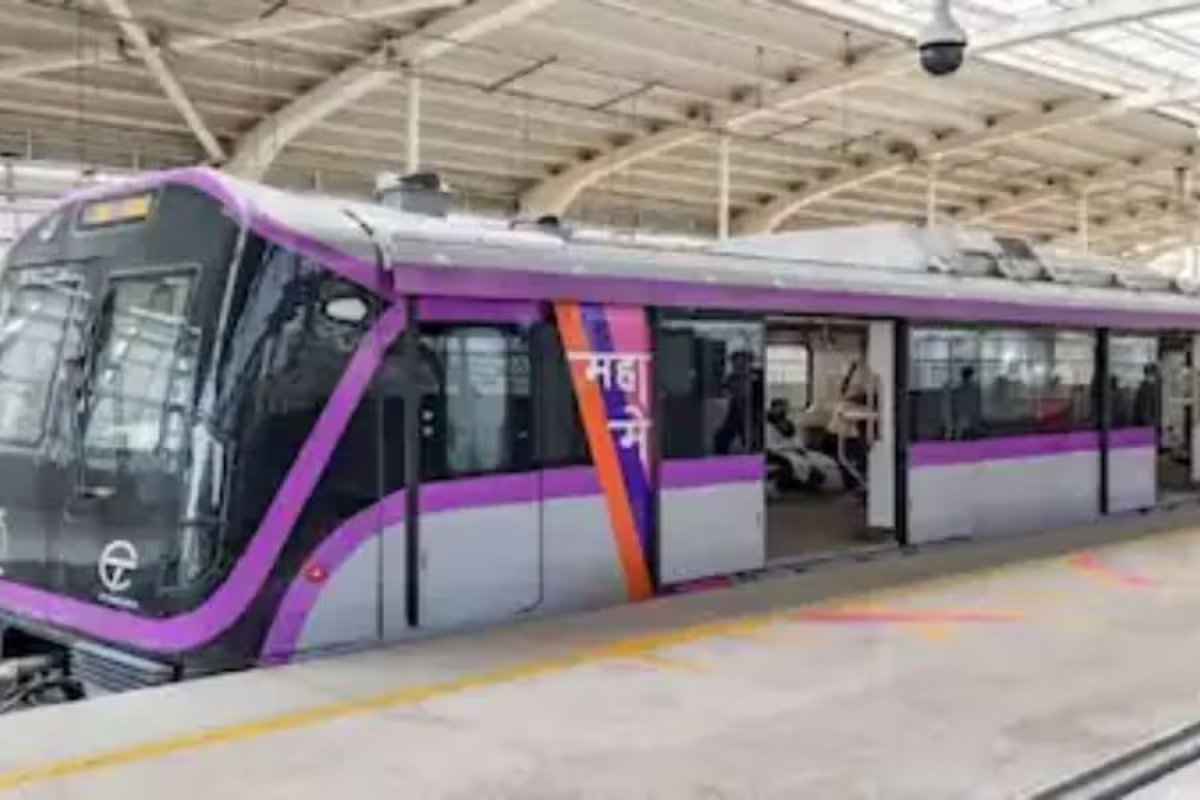
Pune’s expanding rapid transit network is set to push further east, with plans advancing for a new Metro corridor linking Ramwadi to Wagholi. The proposed 12.5-km stretch, currently under technical review, is expected to significantly ease pressure on Nagar Road while opening up faster connections between residential clusters and employment hubs in the city’s growth corridor.
Officials from the state-backed metro agency, along with traffic authorities and local administrators, recently assessed the alignment to evaluate feasibility and on-ground constraints. The proposed line is designed to run above the Pune–Shirur highway, adopting a multi-level transport approach that aims to optimise limited urban space while maintaining traffic flow during construction. The Pune Metro Wagholi extension is planned with 11 stations, positioned to serve emerging residential zones and commercial pockets that have seen rapid, and often unplanned, expansion over the past decade. Urban planners note that this corridor could play a decisive role in shaping transit-oriented development, encouraging higher-density, mixed-use growth around station areas while reducing dependence on private vehicles.
A key challenge lies in executing construction without exacerbating congestion along one of Pune’s busiest arterial routes. Project engineers are working on a phased traffic management strategy that retains essential road capacity for vehicles and pedestrians. This includes temporary road widening and ensuring that at least two lanes remain operational throughout the construction period. Infrastructure experts point out that such elevated metro alignments, when integrated with existing highways, can reduce land acquisition pressures—a persistent bottleneck in Indian urban projects. However, they also caution that careful design will be needed to mitigate environmental impacts such as noise, dust, and heat retention, particularly in densely populated stretches.
From a real estate perspective, the Pune Metro Wagholi extension is expected to influence property demand in the eastern periphery. Improved connectivity typically drives both residential and commercial investments, but planners emphasise the need for balanced development that includes affordable housing and adequate civic infrastructure. Without this, transit gains risk being offset by unregulated sprawl.The project timeline, estimated at around three years subject to approvals, reflects a broader push to accelerate public transport delivery in rapidly growing cities. For Pune, where vehicle ownership has surged and road capacity remains constrained, expanding metro coverage is increasingly seen as essential to sustaining economic productivity and improving quality of life.
As the proposal moves towards approvals, the focus will remain on execution discipline, integration with feeder systems, and ensuring that last-mile connectivity supports inclusive access. The success of this corridor could set a template for how mid-sized Indian cities align infrastructure growth with climate-conscious and people-centric urban planning.
Pune Metro Wagholi Link To Reshape Commute