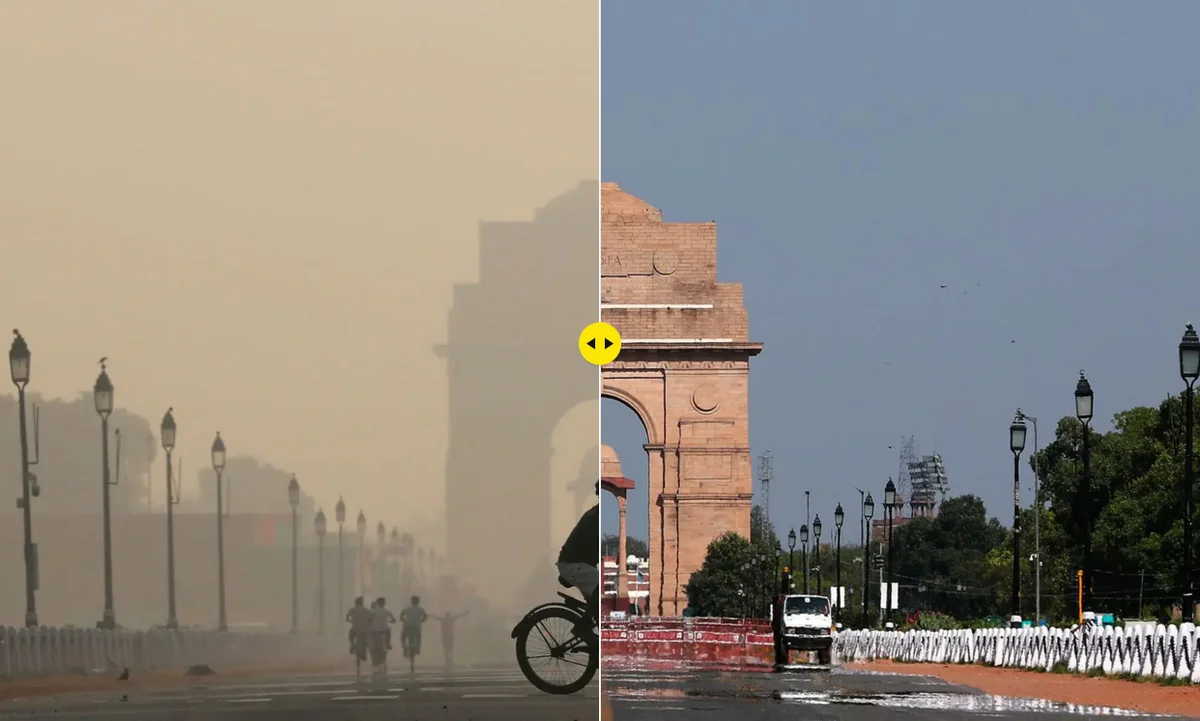
Delhi Air Quality Improves After Months Of Pollution
Delhi has recorded a notable improvement in environmental conditions, with the city’s air quality improves trend reaching its most favourable level in several months. The development has enabled authorities to withdraw emergency pollution controls across the National Capital Region, signalling a temporary easing of regulatory pressure on construction, transport, and industrial activity. Recent air monitoring data indicates that pollution levels have dropped into the moderate range, marking a clear departure from the prolonged period of elevated particulate pollution that typically defines the winter season. The improvement has been attributed to a combination of light rainfall, stronger surface winds, and enhanced atmospheric dispersion, all of which have contributed to clearing accumulated pollutants.
The shift has allowed regulatory bodies to roll back measures under the graded response framework, which had imposed restrictions on high-emission activities for an extended duration. For businesses, particularly in construction and logistics, the easing of these controls offers operational relief after months of intermittent disruptions. Real estate developers and infrastructure contractors, who often face delays during pollution curbs, are expected to benefit from improved working conditions. However, environmental analysts caution that while the air quality improves in the short term, the underlying structural challenges remain unresolved. Delhi’s pollution patterns are highly seasonal, with winter dominated by fine particulate matter due to stagnant atmospheric conditions. As temperatures rise, the pollution profile begins to shift towards ground-level ozone, a secondary pollutant formed through chemical reactions driven by sunlight and vehicular emissions.
This seasonal transition introduces a different set of risks. Unlike particulate pollution, which is more visible and widely tracked, ozone formation can fluctuate rapidly during warmer afternoons, posing health concerns that are less immediately perceptible but equally significant. Experts note that managing this shift requires a broader strategy focused on emission reductions rather than reactive measures tied to seasonal spikes. Early indicators suggest that the recent gains in air quality may not be sustained without continued favourable weather conditions. Minor fluctuations have already been observed, reflecting the fragile nature of improvements driven largely by meteorological factors rather than systemic emission control. From an urban resilience perspective, the episode underscores the need for long-term interventions that go beyond seasonal enforcement. Investments in cleaner mobility, energy-efficient buildings, and low-emission industrial practices are increasingly seen as essential to stabilising air quality across the year.
For residents, the current phase offers a brief window of improved living conditions, with clearer skies and relatively healthier air. Yet, planners and policymakers are likely to view this as an opportunity to reassess strategies for sustained air quality management, particularly as climate variability continues to influence pollution dynamics in large metropolitan regions.