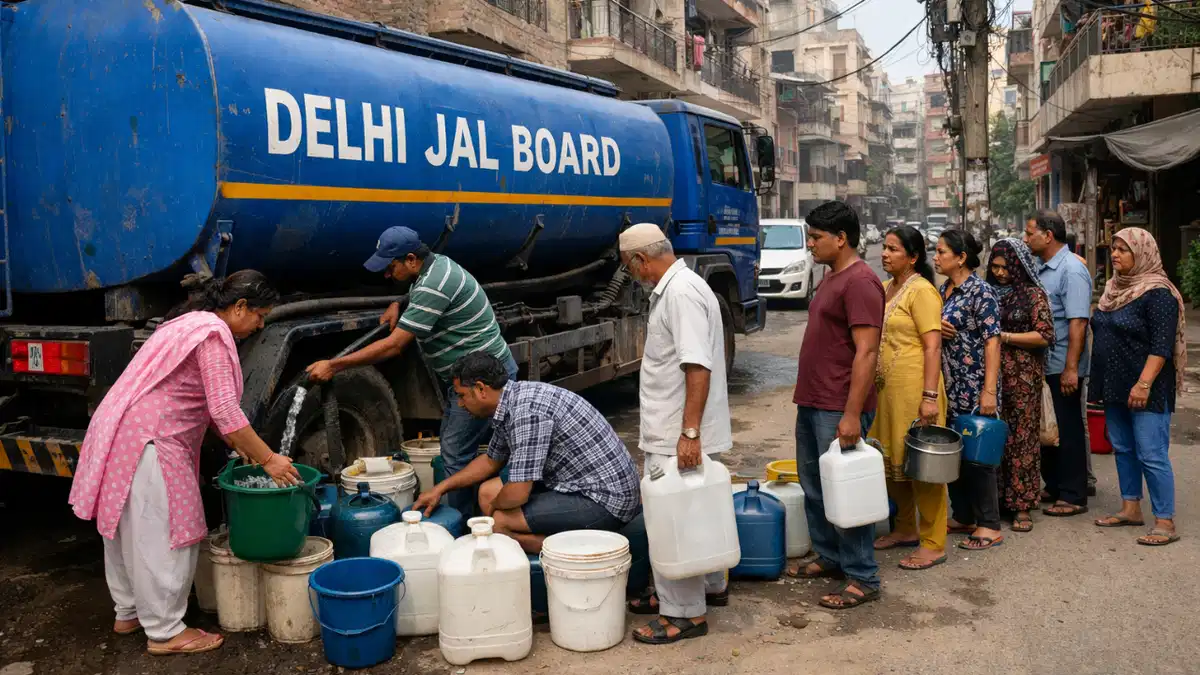
A planned water supply disruption across several parts of Delhi is set to test the city’s already strained urban utilities, with authorities initiating a 48-hour shutdown to carry out critical maintenance and system upgrades. The move comes at the onset of rising summer demand, underscoring the fragile balance between infrastructure upkeep and uninterrupted service delivery in a rapidly growing metropolis. The interruption, scheduled over two consecutive days in March, is part of a broader maintenance cycle involving underground reservoirs, booster pumping stations, and pipeline interconnections.
Officials indicate that these interventions are essential to remove accumulated sediment, improve water quality, and enhance the long-term efficiency of distribution systems. However, the timing coincides with a period when household water consumption typically begins to climb sharply. Several residential clusters across west, north-west, and south Delhi are expected to experience low pressure or complete supply outages during the water supply disruption. These include established neighbourhoods as well as peripheral areas where infrastructure gaps are more pronounced. Urban planners note that such shutdowns tend to disproportionately affect high-density and informal settlements, where storage capacity and alternative access remain limited. The city’s water system continues to operate under a structural supply-demand imbalance. Current production levels fall short of peak seasonal requirements, creating recurring stress during summer months. Planned maintenance, while necessary to prevent larger system failures, temporarily intensifies this gap. Experts suggest that without parallel investments in demand management, leak reduction, and decentralised storage, such disruptions may become more frequent.
Authorities have advised residents to store water in advance and use it judiciously during the shutdown period. Emergency tanker services have been mobilised in key zones to address immediate shortages. While tanker-based supply offers short-term relief, infrastructure specialists highlight that it is neither cost-efficient nor environmentally sustainable as a long-term solution, particularly in a city facing groundwater depletion and rising energy use in water transport. From an infrastructure perspective, the episode highlights the need for resilient and adaptive urban water systems. Routine maintenance such as reservoir cleaning and pipeline strengthening is critical, yet it also exposes the lack of redundancy in existing networks. Cities with more robust systems often incorporate looped networks or backup supply channels, allowing maintenance without widespread service interruptions. The economic implications extend beyond households. Water-dependent activities, small businesses, and construction operations can face disruptions, affecting productivity in localised pockets. In the real estate sector, consistent water access remains a key determinant of property value and liveability, particularly in mid-income and emerging residential zones.
As Delhi navigates another summer cycle, the focus is likely to shift towards how effectively infrastructure upgrades can be synchronised with growing demand. The current maintenance drive may strengthen system reliability in the long run, but it also reinforces the urgency of building a more climate-resilient and equitable urban water framework.