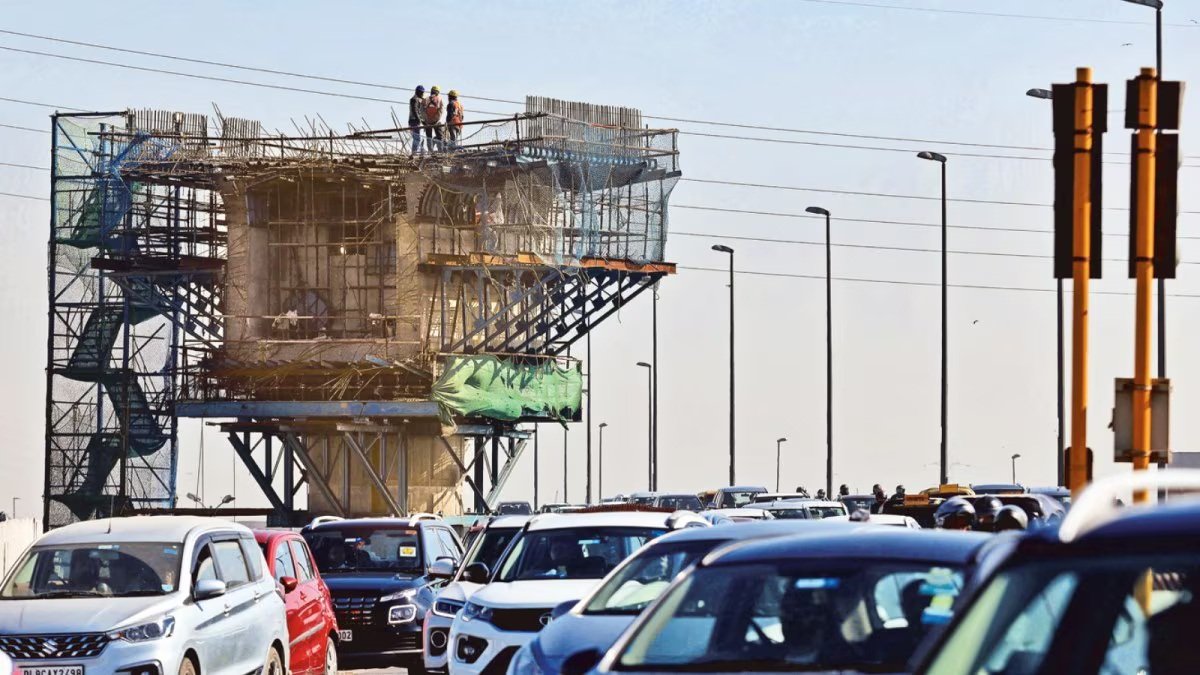
Delhi Advances Barapullah Phase III Expansion Plan
Delhi has approved a new phase of large-scale road infrastructure investment aimed at easing pressure on some of its most congested urban corridors, with a focus on improving cross-city mobility between the eastern and southern districts. The decision includes the long-awaited expansion of the Barapullah Phase III corridor and a parallel elevated road project in south Delhi, reflecting a continued reliance on grade-separated transport solutions to address rising traffic demand. The extension of the Barapullah Phase III corridor will bridge a critical missing link in an elevated road network that has gradually evolved over more than a decade.
The new stretch is designed to connect densely populated residential areas in east Delhi with major institutional and healthcare hubs in the south through a continuous, signal-free route. Urban mobility experts suggest that closing such gaps is essential to unlocking the full efficiency of existing infrastructure, which currently loses time-saving benefits at transition points. Transport officials indicate that the corridor will be constructed along an existing drainage channel, a strategy often used in land-constrained cities to minimise displacement. However, planners caution that building over natural drainage systems requires careful engineering to prevent long-term environmental stress, particularly during extreme rainfall events that are becoming more frequent due to climate variability. Alongside this, a second project has been cleared to develop a multi-lane elevated road with integrated underpasses along a key arterial route in south Delhi. The design includes a double-decker configuration in parts, combining flyovers and underpasses to segregate traffic flows. This approach is expected to improve movement across neighbourhoods that currently experience bottlenecks due to mixed traffic and limited road width.
The involvement of a metro rail agency in executing the project signals a growing trend towards integrating road and transit infrastructure within shared corridors. Industry observers note that such coordination could open opportunities for more efficient land use, though its success depends on ensuring that public transport remains prioritised over private vehicle expansion. From a market perspective, improved connectivity across these corridors could reshape real estate dynamics in peripheral and underserved areas. Faster travel times often lead to increased residential demand and commercial activity, particularly in zones that gain direct access to employment centres. At the same time, infrastructure-led growth raises questions about equitable access and whether benefits extend across income groups. While the projects aim to deliver immediate congestion relief, urban planners emphasise that long-term mobility challenges cannot be solved through road expansion alone. Integrating these investments with public transport, non-motorised mobility, and demand management strategies will be critical to achieving a more sustainable and low-emission urban transport system.
With timelines set and execution frameworks in place, the effectiveness of these projects will depend not only on timely delivery but also on how they fit into Delhi’s broader transition towards resilient and inclusive urban infrastructure.