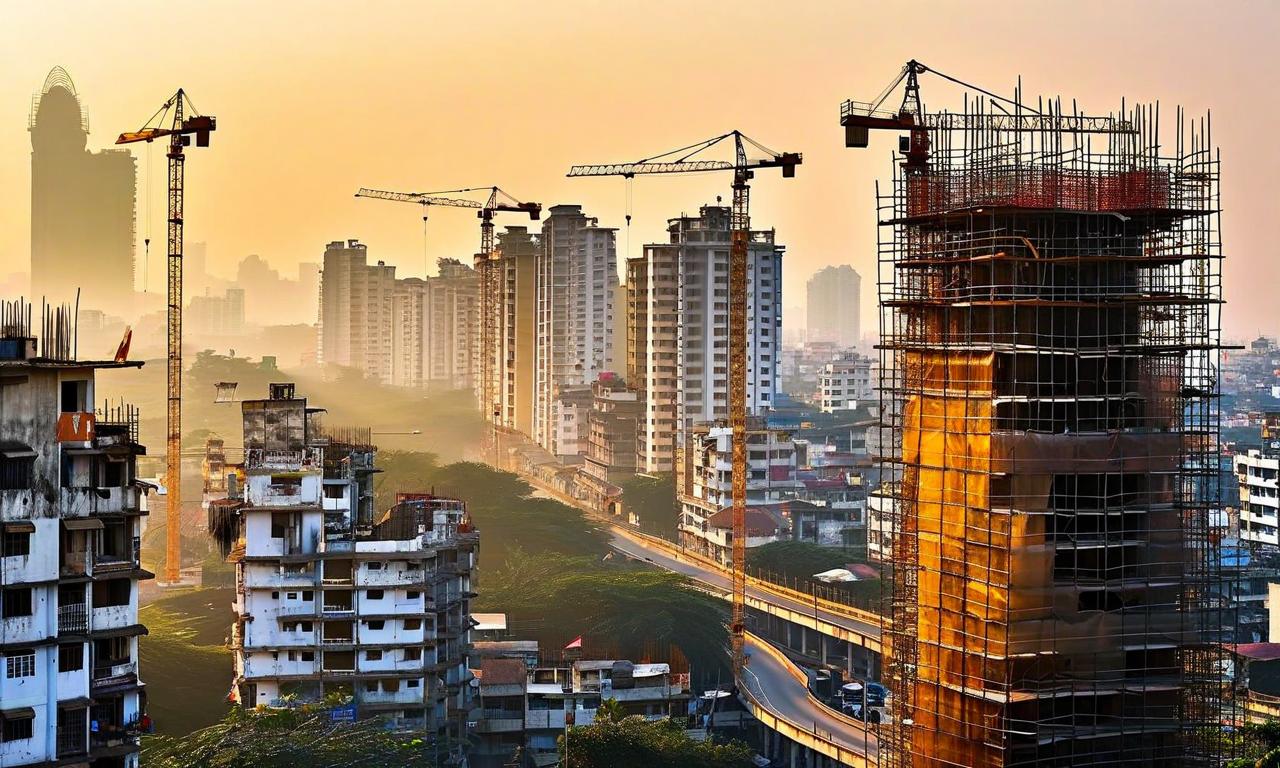
A new Andheri redevelopment project in Mumbai’s western suburbs is set to reshape an ageing residential cluster, as developer Kalpataru Group moves to add a ₹14 billion scheme to its urban portfolio. The initiative reflects a growing push to renew built-up neighbourhoods while unlocking land value in one of India’s most land-constrained cities.
Located in Andheri, a long-established residential and commercial hub, the project will focus on replacing older housing stock with updated residential units and infrastructure. Urban planners say such efforts are increasingly central to Mumbai’s growth model, where vertical expansion and redevelopment are often the only viable options to accommodate population pressures.
The Andheri redevelopment project is expected to follow a multi-stakeholder approach, involving resident communities, civic authorities and regulatory approvals. Industry observers note that navigating consent agreements and statutory clearances remains one of the most complex aspects of redevelopment in Mumbai, often determining project timelines more than construction capacity itself.
Beyond its immediate footprint, the project highlights a broader shift in the city’s real estate dynamics. Redevelopment schemes are becoming a key supply pipeline as greenfield land parcels shrink. By optimising land use and upgrading infrastructure, such projects aim to deliver higher-density housing alongside improved services such as water systems, waste management and energy efficiency.
Experts point out that redevelopment also carries economic ripple effects. Large-scale projects typically generate employment across construction, logistics and allied sectors, while attracting ancillary investments in retail, services and mobility infrastructure. In dense suburbs like Andheri, these interventions can gradually enhance liveability if aligned with transport planning and public amenities.
From a market perspective, the financial scale of this Andheri redevelopment project may influence property valuations in surrounding micro-markets. Analysts suggest that increased participation by organised developers could bring greater standardisation in pricing, design quality and delivery timelines factors that have historically varied widely in redevelopment-led housing.
However, the success of such projects will depend on more than financial investment. Urban development specialists emphasise the need for climate-responsive design, efficient resource use and inclusive planning to ensure that redevelopment does not simply increase density but improves resilience. Incorporating green building practices and accessible public spaces will be critical in shaping long-term outcomes.
As Mumbai continues to rely on redevelopment to modernise its housing stock, projects of this scale are likely to serve as benchmarks for balancing commercial viability with civic priorities. The coming phases spanning approvals, design finalisation and execution will determine how effectively this transformation translates into tangible benefits for residents and the wider urban ecosystem.