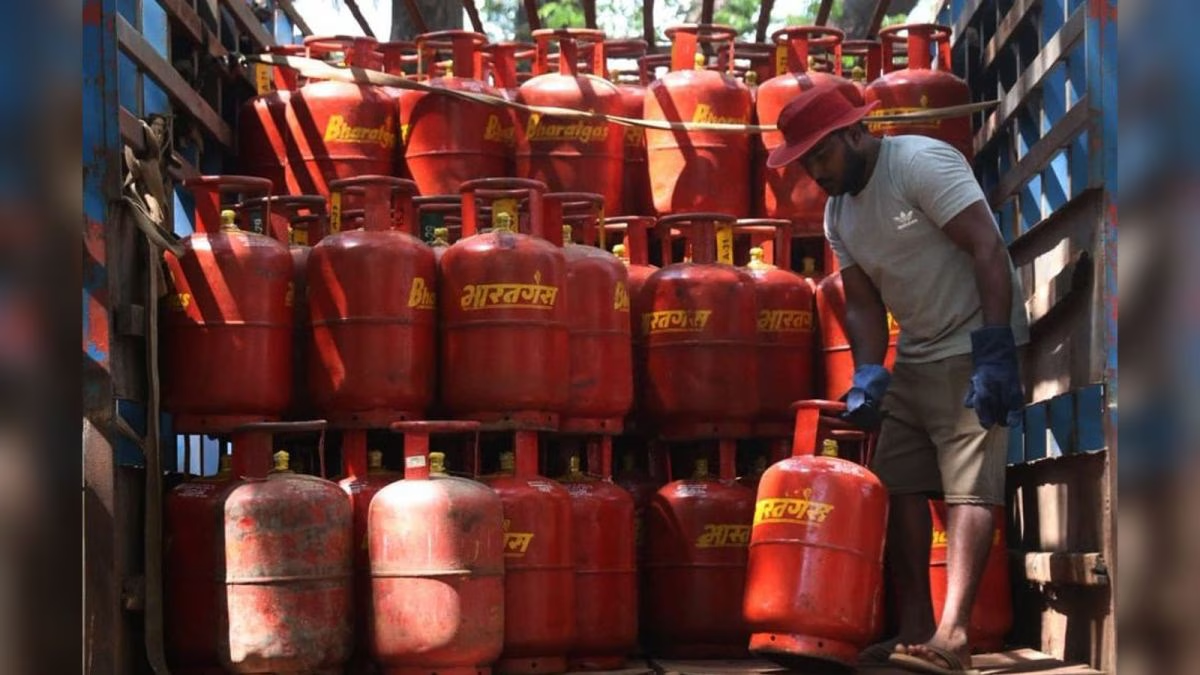
A disruption in cooking gas availability is beginning to test the resilience of community food networks in Ahmedabad, where non-profit groups serving free meals to vulnerable populations are reporting tightening LPG supplies. The Ahmedabad NGO LPG shortage is emerging as a critical concern for daily meal programmes that support hospital attendants, low-income households, and migrant workers.
At one of the city’s largest public healthcare hubs, Civil Hospital Ahmedabad, volunteer-run kitchens continue to serve hundreds of meals each day despite dwindling fuel reserves. These initiatives play a vital role in supporting families who travel from across the state for treatment and rely on affordable or free food during extended hospital stays. Organisations involved in meal distribution indicate that while operations have not yet been halted, the Ahmedabad NGO LPG shortage is forcing contingency planning. Some groups are exploring traditional cooking methods such as wood-fired stoves, a shift that raises operational and environmental concerns in an urban setting already grappling with air quality challenges.
Urban policy experts note that such disruptions highlight the often-overlooked infrastructure dependencies of social welfare systems. Community kitchens, though informal, function as critical extensions of urban safety nets. Their ability to operate consistently depends not only on volunteer efforts and donations but also on stable access to essential utilities such as cooking fuel. The situation also reflects broader supply chain sensitivities affecting cities. LPG distribution is closely tied to regional logistics, policy decisions, and demand fluctuations. When disruptions occur, essential services that depend on bulk or continuous supply such as hospitals, canteens, and community kitchens are among the first to feel the impact.
Despite the constraints, several volunteer networks continue to maintain meal distribution through decentralised models. Some rely on food contributions from households and local businesses, which are then redistributed to those in need. This hybrid system has helped cushion the immediate effects of the Ahmedabad NGO LPG shortage, though its long-term sustainability remains uncertain if fuel access does not stabilise. From a sustainability perspective, the potential shift to biomass-based cooking raises questions about balancing immediate social needs with environmental goals. While wood-fired alternatives offer a short-term solution, they may increase emissions and place additional pressure on urban ecosystems if adopted widely.
Urban planners argue that strengthening resilience in such systems requires integrating social infrastructure into formal planning frameworks. Ensuring priority access to clean cooking fuel for community services, along with exploring decentralised renewable energy solutions, could reduce vulnerability to supply disruptions.
As Ahmedabad continues to expand, the episode underscores the need to recognise and support informal yet essential urban services. Addressing the Ahmedabad NGO LPG shortage in a structured manner could help safeguard food security for vulnerable groups while aligning with broader goals of sustainable and inclusive urban development.
Ahmedabad NGOs Face LPG Shortage For Meals