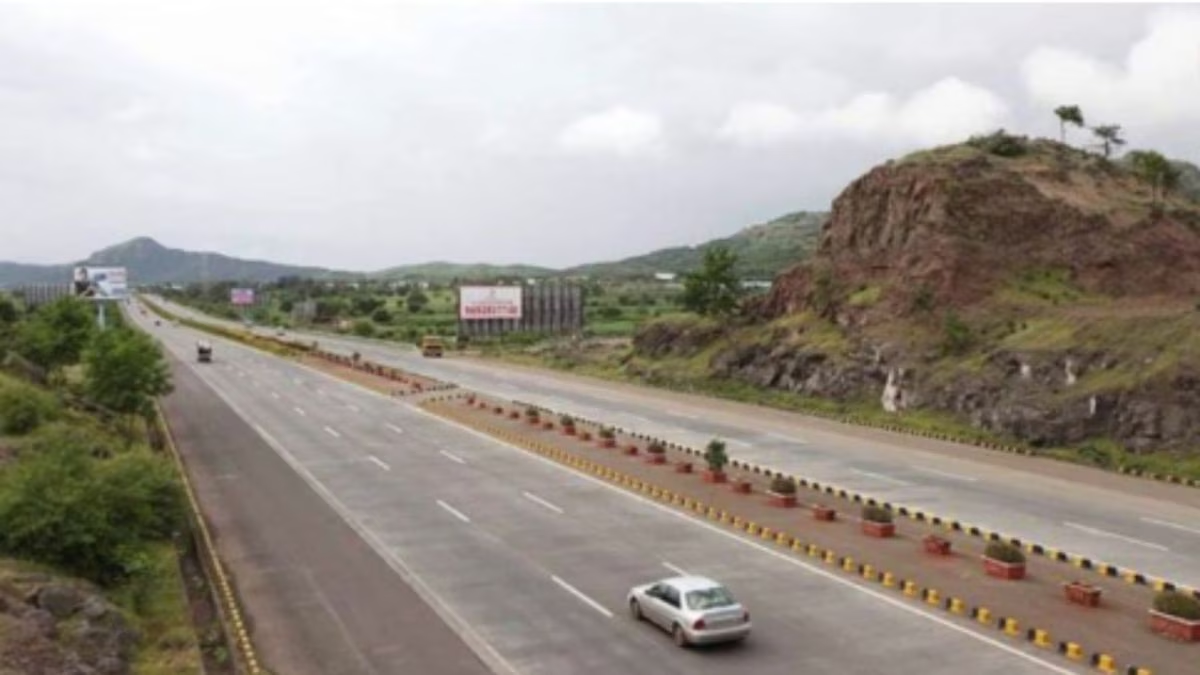
A critical highway upgrade connecting Mumbai and Pune is entering its final stretch, with the long-anticipated Missing Link corridor expected to open to traffic in early May. The project, developed by Maharashtra State Road Development Corporation, is designed to ease congestion on one of India’s busiest intercity routes while improving safety across a difficult hill section.
The 13.3-kilometre alignment effectively bypasses the steep and accident-prone ghat stretch near Lonavala, replacing winding roads with a combination of tunnels and a high-elevation bridge. Infrastructure officials indicate that civil works are largely complete, with finishing activities such as surfacing, system checks, and load testing now underway before commissioning. At the core of the Missing Link corridor are two tunnels together spanning over 10 kilometres and a cable-stayed bridge rising more than 100 metres above the valley floor. This engineering configuration allows vehicles to maintain more consistent speeds while avoiding sharp curves and heavy fog zones that have historically slowed traffic and contributed to collisions, especially during the monsoon.
The Mumbai Pune Missing Link is expected to reduce travel time between the two cities by up to half an hour under normal conditions. However, mobility experts suggest the project’s larger impact will be on travel reliability rather than just speed. By decongesting a known bottleneck, the corridor could smooth peak-hour flows and improve freight efficiency between the Mumbai Metropolitan Region and western Maharashtra’s industrial clusters. Urban planners also point to the project’s potential influence on regional development patterns. Faster and more predictable connectivity often expands commuter catchments, making peripheral locations more viable for housing and commercial investment. Areas along the expressway corridor, particularly near Lonavala and Khalapur, may see renewed real estate interest, though this raises questions around ecological sensitivity in the Western Ghats.
Environmental considerations remain central to long-term assessments of the project. While tunnels reduce surface disruption compared to conventional hill cutting, large infrastructure interventions in fragile landscapes require sustained monitoring. Experts highlight the need for slope stabilisation, water drainage management, and biodiversity safeguards to ensure that mobility gains do not come at the cost of environmental degradation. The Mumbai Pune Missing Link also reflects a broader shift in highway design, where safety engineering and climate resilience are gaining prominence alongside capacity expansion.
Elevated structures and tunnel systems are increasingly being used to minimise exposure to landslides, flooding, and extreme weather risks that are intensifying across India’s infrastructure networks.
As the corridor prepares to open, attention is likely to turn towards traffic management integration with the existing expressway and ensuring equitable access for both private and commercial users. If executed effectively, the Missing Link could become a model for balancing speed, safety, and sustainability in high-density transport corridors.
Mumbai Pune Missing Link Nears May Opening