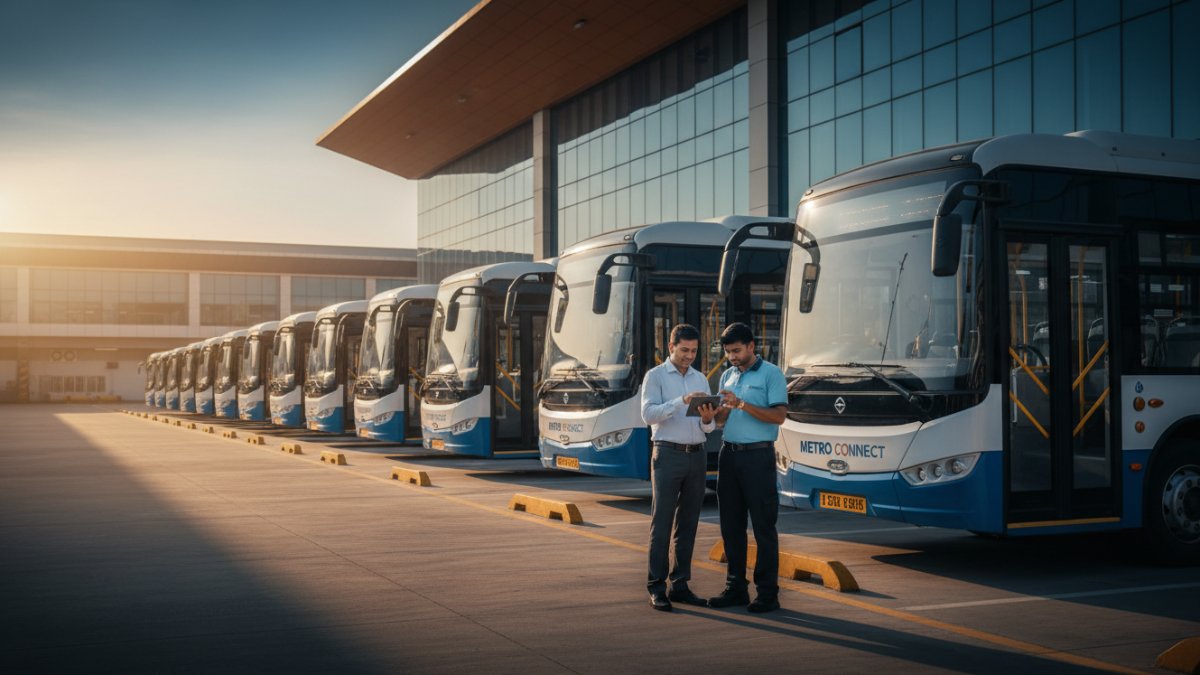
A new feeder bus initiative linked to the metro network in Pune is set to begin as a pilot in April, aiming to address persistent last-mile connectivity gaps that continue to limit public transport adoption. The programme will connect Ramwadi station to key employment and transit hubs, including Kharadi and the city’s airport, signalling a shift towards integrated urban mobility planning.
The move comes at a critical moment for Pune’s metro system, where ridership fluctuations in recent months have drawn attention to access challenges beyond station limits. While core corridors are operational, commuter dependence on informal or fragmented last-mile options has slowed the system’s ability to scale. The proposed Pune Metro feeder buses are expected to function as a structured extension of the rail network rather than a parallel service. Transport planners indicate that the pilot will test two high-demand routes linking dense residential clusters and commercial zones to Ramwadi, one of the eastern corridor’s key terminals. These areas, particularly Kharadi, have emerged as major employment centres driven by IT and business parks, yet remain unevenly served by seamless public transit options.
Currently, city bus operator PMPML runs frequent services in these corridors. However, officials are evaluating whether a metro-linked feeder system potentially operated through public-private partnerships can deliver better reliability, route optimisation, and commuter alignment. The Pune Metro feeder buses initiative is also being positioned as a way to standardise service quality, including scheduling, ticketing integration, and first- and last-mile accessibility. Urban mobility experts note that such integration is essential for reducing car dependency in rapidly expanding cities. Without dependable last-mile connectivity, metro systems risk becoming underutilised assets despite significant capital investment. In Pune’s case, improving access to stations could directly influence modal shift, congestion levels, and urban emissions.
At the same time, the proposal has triggered debate within transport circles. Concerns include potential duplication of existing bus routes and the broader implications of private sector participation in what has traditionally been a publicly operated service. Some planners argue that coordination, rather than competition, between agencies will be key to long-term success. Parallel discussions are also underway to integrate intermediate public transport such as shared autorickshaws into the metro ecosystem through formalised pick-up zones and prepaid systems. This reflects a broader attempt to create a multimodal, commuter-centric network that accommodates diverse income groups and travel needs. If the pilot demonstrates improved ridership and commuter satisfaction, authorities are likely to expand the Pune Metro feeder buses model across additional stations. For a city balancing rapid growth with sustainability goals, the success of such initiatives could shape how effectively public transport competes with private vehicles in the years ahead.
Pune Metro Expands Feeder Bus Connectivity Pilot