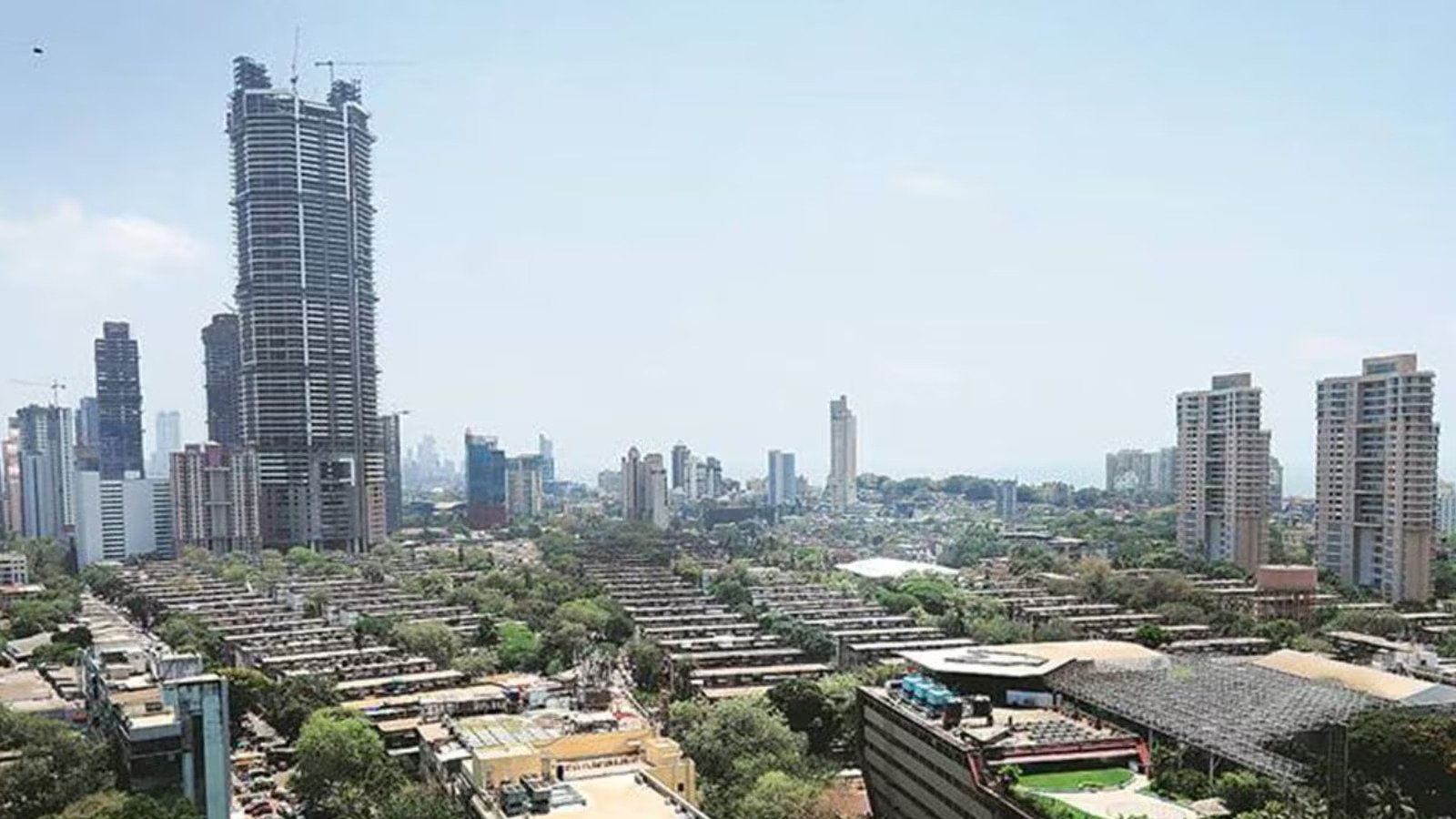
Mumbai’s long-pending BDD Chawl redevelopment has entered a crucial implementation phase, with authorities initiating the handover of newly constructed rehabilitation homes to residents in Naigaon. The move marks a significant step in one of the city’s largest inner-city housing renewal efforts, aimed at replacing ageing, high-density tenements with safer, vertical housing infrastructure while retaining communities within central urban locations.
The Naigaon cluster, located in central Mumbai, has historically housed thousands of families in low-rise chawls built nearly a century ago. These units, often measuring around 160 sq ft, have long been criticised for inadequate living conditions, limited sanitation, and structural vulnerabilities. The ongoing redevelopment seeks to address these deficits by transitioning residents into significantly larger apartments within multi-storey buildings. Urban planners note that the BDD chawl redevelopment is not just a housing upgrade but a land optimisation strategy in a space-constrained city. By building vertically, authorities aim to free up land parcels for improved infrastructure, open spaces, and future development, while ensuring that existing residents are not displaced to distant suburbs. This aligns with broader goals of creating compact, transit-linked, and inclusive urban neighbourhoods.
The current phase in Naigaon is part of a larger plan to rehabilitate nearly 15,000 families across multiple BDD locations in central Mumbai over the coming years. The redevelopment is being executed in phases to minimise displacement disruptions, with new towers rising alongside existing structures. Officials indicate that a substantial portion of residents in the first cluster will be shifted into newly completed buildings, enabling subsequent phases of demolition and reconstruction. Each rehabilitation unit is designed to offer improved liveability, including larger carpet areas, better ventilation, and access to basic amenities. The buildings incorporate contemporary safety systems such as fire protection infrastructure and earthquake-resistant design, reflecting updated urban construction standards. Provision for parking, security surveillance, and common spaces also signals a shift from basic shelter to more holistic housing.
Experts suggest that such large-scale inner-city redevelopment projects are critical for Mumbai’s long-term sustainability. By upgrading housing within established urban zones, the city can reduce pressure on peripheral expansion, lower commute times, and support more efficient use of infrastructure networks. However, they caution that timely execution, transparent allocation, and long-term maintenance will be key to ensuring the project’s success. The redevelopment also intersects with broader policy initiatives aimed at unlocking land for cluster redevelopment across Mumbai. Officials have indicated that significant land parcels are being prepared for similar transformations, which could reshape the city’s ageing housing stock over the next decade.
As the Naigaon phase progresses, attention will increasingly turn to how efficiently subsequent clusters are executed. For thousands of families still awaiting improved housing, the pace and quality of delivery will determine whether this ambitious redevelopment truly sets a new benchmark for equitable and climate-resilient urban renewal in Mumbai.
MHADA Distributes 864 Homes To Naigaon BDD Chawl Residents Under Redevelopment