Delhi Plans Interstate Bus Expansion Linking Major Pilgrim Cities
The national capital is preparing to expand its regional transport network through new Delhi interstate bus services that will connect the city with several prominent pilgrimage destinations and neighbouring states. Transport authorities are working on a proposal to introduce government-operated long-distance bus routes to cities such as Katra in Jammu and Kashmir, Khatu Shyam in Rajasthan, and Ayodhya in Uttar Pradesh, signalling a broader effort to strengthen intercity public mobility from Delhi. Officials involved in the planning process say the initiative forms part of a wider expansion of Delhi interstate bus services aimed at improving accessibility for both daily commuters and long-distance travellers.
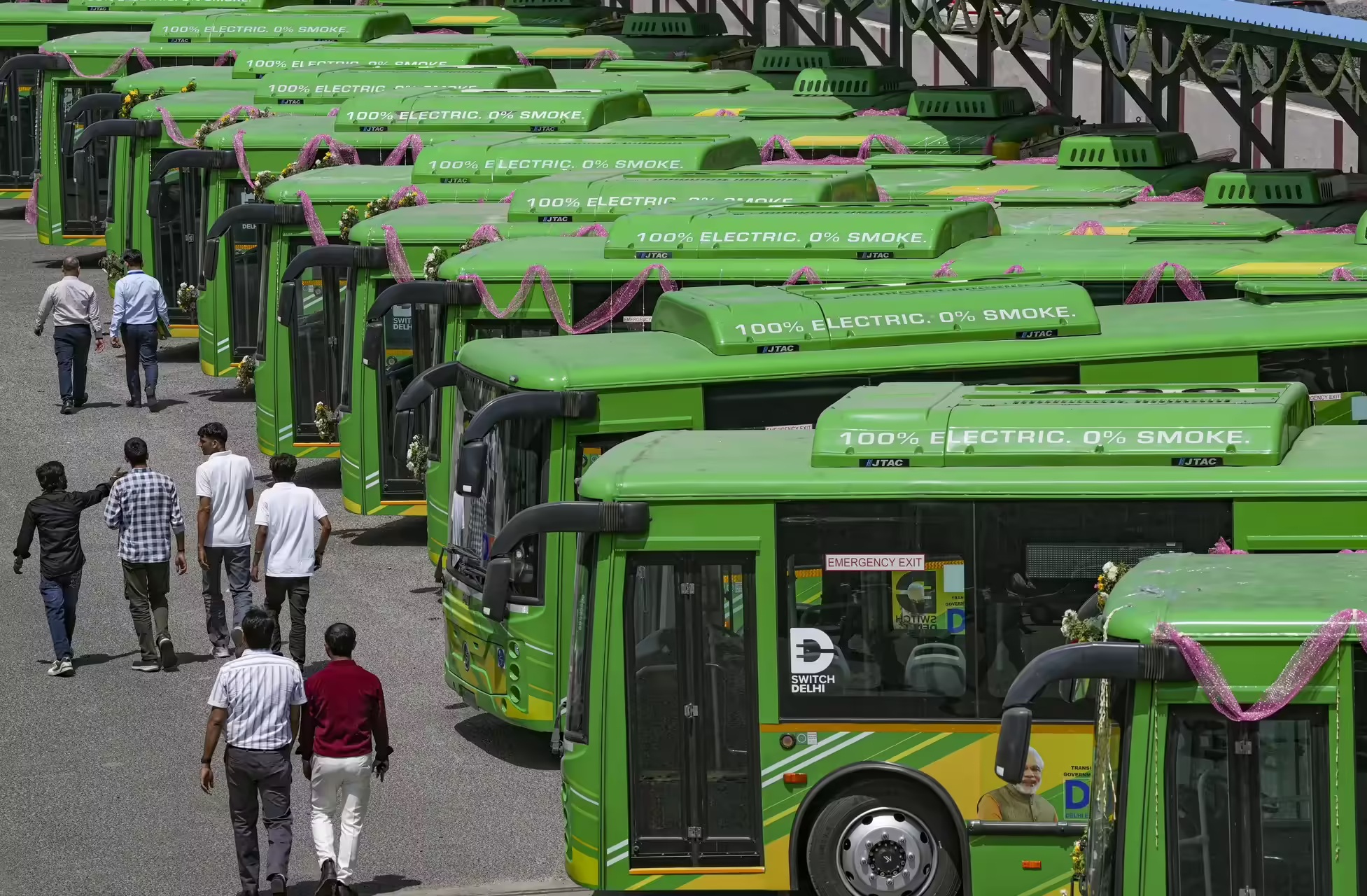
The state-run transport undertaking is expected to deploy around 50 air-conditioned buses across 17 inter-state routes, expanding capacity on corridors that connect the capital with neighbouring urban centres and religious tourism destinations. Urban mobility planners note that Delhi functions as a major transport hub for northern India, with millions of residents and visitors travelling between the capital and nearby states each year. By strengthening organised public transport connections, authorities aim to reduce dependence on private vehicles while offering more structured and affordable travel options. The proposed pilgrimage routes are expected to serve a significant number of residents who regularly travel to religious centres across northern India. Cities such as Katra serve as gateways for the Vaishno Devi shrine, while Khatu Shyam in Rajasthan and Ayodhya in Uttar Pradesh attract large numbers of devotees throughout the year. Transport experts say dedicated bus services can help manage travel demand more efficiently, particularly during peak festival seasons when private transport networks become heavily congested. Alongside these pilgrimage routes, the expansion of Delhi interstate bus services is also expected to strengthen connectivity between the capital and nearby economic centres. Authorities are examining additional routes linking Delhi with cities such as Ghaziabad, Rewari, Karnal, Rohtak, Alwar and Jewar. These corridors are widely used by commuters who travel daily for employment, education and trade.
Infrastructure analysts say that improved intercity bus connectivity can play an important role in regional economic integration. Efficient bus transport links enable labour mobility between smaller towns and metropolitan job markets, while also supporting trade, tourism and service-sector activity across state boundaries. Officials also indicated that discussions are underway to develop stronger transport links between Delhi and Bihar. With a large migrant population from eastern states living in the capital, improved bus connectivity could provide a safer and more reliable travel option for long-distance journeys. The transport authority has already begun deploying electric buses on select inter-state routes connecting Delhi with neighbouring towns in Haryana and western Uttar Pradesh. These early operations reflect a gradual shift toward cleaner mobility systems within regional public transport networks. Urban transport experts emphasise that expanding organised bus services remains essential for managing travel demand in rapidly growing metropolitan regions. Compared with private vehicles, high-capacity bus networks can carry larger passenger volumes while reducing congestion and urban emissions.
As planning for the new Delhi interstate bus services progresses, transport officials are expected to finalise route approvals, fare structures and operational agreements with neighbouring states. If implemented as proposed, the expanded network could enhance regional mobility while supporting more sustainable travel patterns across northern India.