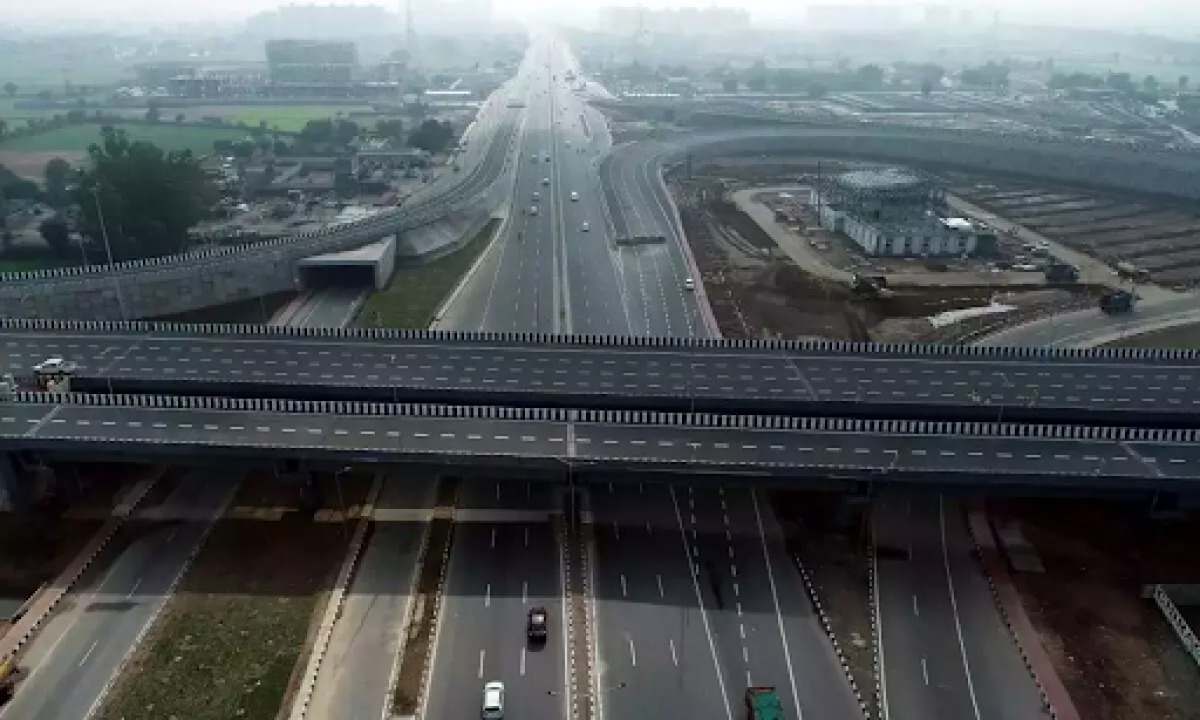
Delhi Mumbai Expressway Tunnel Set To Transform Intercity Travel
A major engineering component of the Delhi Mumbai Expressway tunnel is approaching operational readiness in Rajasthan, potentially reshaping travel times between northern and western India. Authorities are preparing to open a nearly five-kilometre underground passage near Kota, a key segment designed to maintain the continuity of the high-speed corridor while protecting a sensitive wildlife habitat. Once operational, transport planners expect the route to significantly reduce travel duration between Gurugram and Vadodara. The tunnel forms part of the larger Delhi Mumbai Expressway tunnel system being developed along the 1,300-kilometre greenfield expressway connecting the national capital region to the country’s primary financial hub. Infrastructure officials say the underground corridor has been constructed to allow uninterrupted highway movement beneath forest terrain, avoiding ecological disruption in the surrounding landscape.
Transport engineers note that the expressway has been designed as an access-controlled corridor with multiple lanes and limited entry points. Such highways enable vehicles to travel at consistent high speeds while reducing conflict with local traffic. When fully operational, the corridor is expected to cut long-distance travel time dramatically compared with conventional national highways. The section near Kota presented a unique engineering challenge due to the presence of a protected wildlife landscape. Instead of routing the highway through the reserve area, planners opted for a subterranean alignment. Specialists involved in the project say the Delhi Mumbai Expressway tunnel was developed to minimise disturbance to wildlife corridors while maintaining the expressway’s high-speed design standards. Urban infrastructure analysts say this approach reflects a broader shift toward balancing mobility infrastructure with environmental safeguards. Large transport projects increasingly incorporate tunnels, elevated structures or wildlife crossings to reduce ecological fragmentation while supporting economic connectivity. Beyond environmental considerations, the expressway itself represents one of the largest road infrastructure programmes undertaken in the country. The corridor passes near several rapidly developing cities and industrial clusters across northern and western India. Improved connectivity between these regions could accelerate logistics efficiency, strengthen trade networks and expand access to employment markets. For travellers and freight operators, the benefits are expected to be immediate. With several segments already operational, sections of the expressway are handling tens of thousands of vehicles daily.
Once the remaining stretches are completed, authorities anticipate a significant increase in traffic volume as the corridor becomes a preferred route for long-distance road transport. Transport planners estimate that the Delhi Mumbai Expressway tunnel near Kota will also remove a winding stretch of road that currently slows vehicles travelling through the region. The tunnel alignment enables smoother travel across terrain that previously required navigating multiple curves and elevation changes. While the expressway already allows high design speeds, authorities emphasise that traffic monitoring and enforcement systems will play a crucial role in maintaining safety standards. Advanced surveillance infrastructure and automated speed detection are expected to be deployed across the corridor. Construction on the final segments connecting western Gujarat to Mumbai is progressing, with completion anticipated in the coming months. Once the entire expressway becomes operational, road journeys between the northern capital region and India’s financial centre could be completed in nearly half the time currently required.
For India’s expanding urban and logistics networks, the Delhi Mumbai Expressway tunnel represents more than a transport upgrade. It signals a new phase of infrastructure planning where high-capacity mobility corridors are designed alongside environmental safeguards and long-term regional development goals.