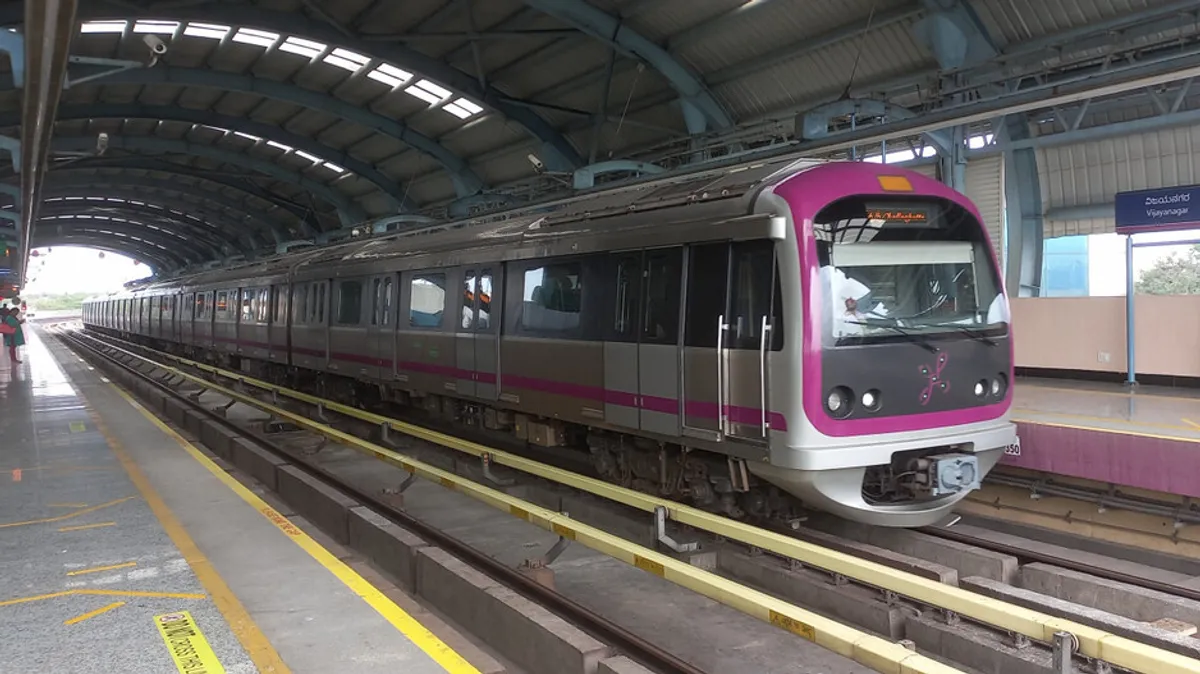
India Metro Rail Expansion Reshaping Urban Mobility And Household Finances
India’s rapidly expanding metro network is transforming the way people move across cities while also influencing household financial stability, according to a recent government-backed assessment of urban infrastructure investments. The growth of the India metro rail expansion programme over the past decade has significantly increased the reach of mass rapid transit systems, positioning metro rail as a central pillar of modern urban mobility. Operational metro corridors across the country have grown dramatically in length and geographic coverage since the mid-2010s. What was once limited to a handful of major cities has evolved into a nationwide transit network serving more than two dozen urban centres. The cumulative operational track length now extends beyond 1,000 kilometres, reflecting one of the fastest expansions of metro infrastructure globally.
Urban mobility experts say the India metro rail expansion has altered commuting patterns in densely populated metropolitan regions. High-capacity rail systems allow large numbers of passengers to travel quickly across cities while reducing dependence on private vehicles. This shift not only cuts travel time but also contributes to lower urban congestion and reduced transport emissions. Government investment in metro systems has also increased sharply during this period. Public spending allocated to metro development has multiplied several times over the past decade, signalling a strong policy focus on rail-based urban transport. Infrastructure planners view metro systems as long-term assets that support both economic productivity and sustainable city growth. In addition to improving mobility, recent research has highlighted the financial impact of improved metro connectivity on households. Analysts studying the economic effects of urban infrastructure found that residents living near metro corridors often experience lower commuting expenses. Reduced reliance on fuel, vehicle ownership and daily travel costs can free up disposable income for other household needs. The India metro rail expansion has therefore begun to influence broader economic indicators beyond transport efficiency. Data examined across several large cities suggests that households located in metro-served areas demonstrate stronger loan repayment behaviour and lower financial stress compared with areas lacking rapid transit access. Financial analysts attribute this trend to the cost savings associated with reliable public transport.
When commuting expenses decline, households may find it easier to allocate funds toward mortgage repayments, education costs and other long-term financial commitments. Over time, improved repayment behaviour can also strengthen banking sector stability by reducing default risks. Urban development experts say these outcomes illustrate how transport infrastructure shapes broader economic dynamics. Metro systems can influence property markets, employment accessibility and household spending patterns. Areas with strong transit connectivity often experience increased real estate demand and more compact urban development around stations. The environmental dimension of the India metro rail expansion is also significant. By encouraging a shift away from private vehicles, metro systems help lower carbon emissions and improve air quality in cities struggling with pollution. Many networks are also adopting energy-efficient technologies and integrating renewable energy sources to reduce their operational footprint. With several new metro corridors currently under construction and additional systems planned in emerging urban centres, the role of rapid transit in India’s urban future is expected to grow further.
Infrastructure planners say the challenge ahead lies in integrating metro systems with buses, regional rail and last-mile transport to ensure seamless mobility for millions of daily commuters. As cities continue to expand, the India metro rail expansion is likely to remain a defining feature of India’s urban infrastructure strategy—linking economic opportunity, environmental sustainability and improved quality of life for urban residents.