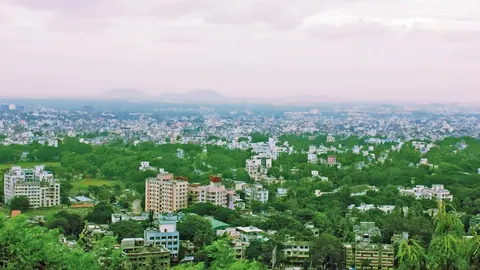
A long-running Pune property dispute spanning more than seven decades has finally reached closure after the Bombay High Court ordered the division of a contested land parcel among the legal heirs of its original owner. The ruling resolves one of the city’s oldest private land conflicts and underscores how unresolved property claims can stall urban land utilisation in rapidly growing metropolitan regions.
The single-judge bench directed that approximately one acre of land located in Yerawada be partitioned among the heirs of the original landholder. The litigation dates back to 1950, when family members approached the court seeking formal division of multiple land holdings left behind after the owner’s death. While portions of the estate were resolved over time, the Yerawada plot remained under prolonged dispute due to competing claims and complex ownership histories. Legal records show that the original estate included two prominent land parcels in Pune. One of these was situated along Deccan College Road and was later acquired by the state government, with compensation distributed among the rightful successors. However, disagreements over a much larger tract in Yerawada once spread across several acres triggered a prolonged chain of legal claims involving family heirs as well as individuals linked to the management of the property.
Over the decades, various stakeholders argued that sections of the land had been transferred or assigned under financial arrangements during the original owner’s lifetime. Although the heirs reached a settlement in the mid-1950s resolving much of the dispute, a smaller portion of land continued to remain contested, leading to prolonged legal proceedings. Urban planners note that cases like this highlight a persistent structural challenge in Indian cities: legacy land disputes that delay the productive use of valuable urban land. Pune’s expansion over the past three decades has dramatically increased the value and development potential of areas such as Yerawada, which now sits within a rapidly urbanising corridor close to educational institutions, business hubs and key transport routes.
Experts say the conclusion of such long-pending litigation is critical for improving land governance and unlocking parcels for responsible urban development. Unclear ownership titles often discourage investment, slow infrastructure expansion and create uncertainty for communities living near disputed properties. A senior real estate analyst said the resolution of the Pune property dispute reflects a broader shift towards clearing historical legal backlogs that continue to shape the urban land market. Courts across India have increasingly prioritised old property cases in recent years as cities face rising pressure to optimise land use while balancing heritage claims and family ownership rights.
Beyond the legal outcome, the case also illustrates the importance of transparent land records and efficient dispute resolution systems in supporting sustainable urban growth. As cities like Pune move toward denser and more climate-resilient planning frameworks, resolving historical ownership conflicts is likely to remain a crucial step in ensuring that land can be used responsibly for housing, infrastructure and public needs.