


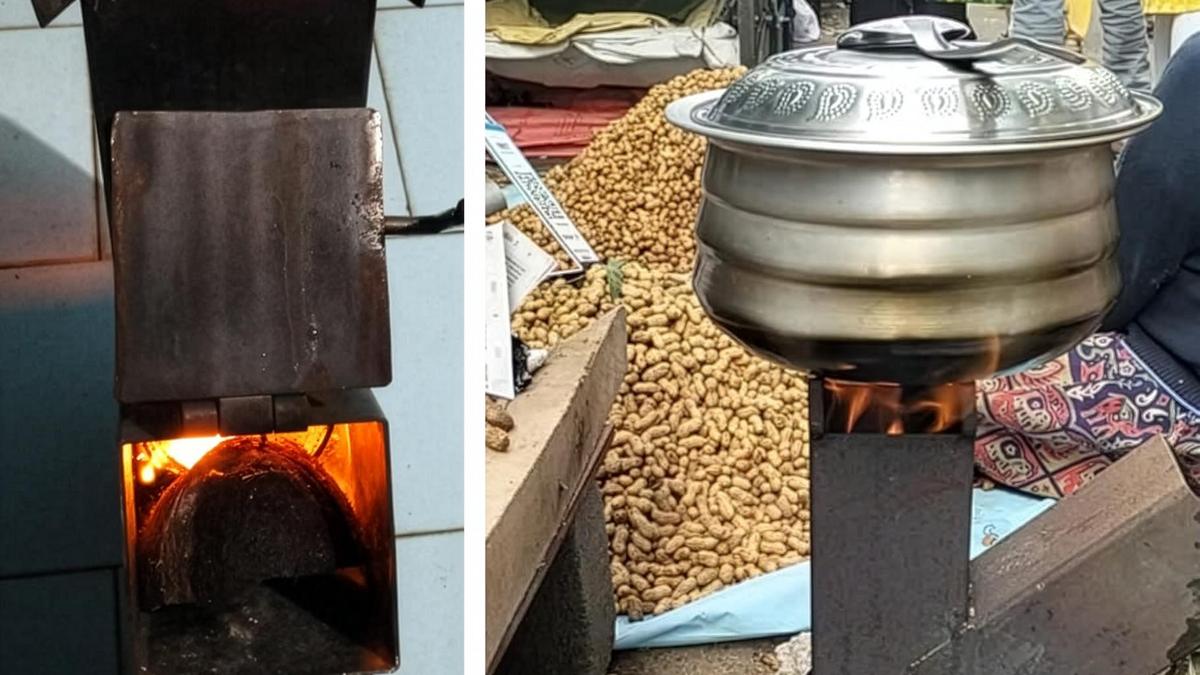
Bengaluru Rocket Stove Highlights Search for Affordable Urban Cooking Alternatives
An energy-efficient cooking device developed by a Bengaluru resident has begun attracting public attention at a time when rising cooking fuel costs and supply concerns are prompting households to explore alternative solutions.
The locally designed Bengaluru rocket stove has emerged as a simple yet practical response to urban energy challenges, highlighting how grassroots innovation can address everyday problems faced by city residents.
The stove, based on a compact combustion design, uses small quantities of biomass such as twigs, dry leaves or wood chips to generate concentrated heat. Unlike conventional open fires, the design channels air through a narrow combustion chamber, enabling higher efficiency and lower smoke output. Advocates say this makes the Bengaluru rocket stove a potential low-cost cooking option for households seeking alternatives to traditional liquefied petroleum gas.Interest in such devices has increased in recent weeks amid concerns over LPG supply disruptions and rising household fuel expenses. Energy analysts note that fluctuations in fuel availability can quickly expose the vulnerability of urban cooking systems that rely heavily on a single energy source.Urban sustainability experts say alternative technologies like rocket stoves are not new but are gaining renewed relevance as cities explore cleaner and more resilient energy solutions. Rocket stoves have long been promoted in rural and semi-urban areas as fuel-efficient cooking devices because they burn biomass more completely than traditional chulhas, reducing both fuel consumption and indoor air pollution.
The Bengaluru rocket stove reflects a broader trend of citizen-driven innovation responding to urban infrastructure pressures. As energy costs increase and environmental concerns grow, communities are experimenting with small-scale technologies that combine affordability with sustainability.However, urban planners caution that while such solutions may provide temporary relief, long-term urban energy resilience requires more comprehensive infrastructure. Expanding piped natural gas networks, promoting electric cooking technologies and improving renewable energy integration are often seen as more scalable solutions for densely populated cities.Environmental specialists also point out that biomass-based cooking must be carefully managed in urban areas to avoid air quality concerns. Efficient combustion technologies can reduce emissions compared with traditional stoves, but widespread adoption in dense neighbourhoods would require clear environmental guidelines.Despite these challenges, innovations like the Bengaluru rocket stove illustrate how individuals and communities are experimenting with practical solutions to everyday urban problems. For many households facing fluctuating fuel costs, such devices represent a reminder that small technological adjustments can sometimes offer immediate relief while larger energy transitions take shape.
As Indian cities continue to expand and energy demand rises, policymakers and urban planners are increasingly recognising the importance of diversified cooking energy systems. Supporting affordable, clean and resilient solutions may prove essential to ensuring that urban households have reliable access to everyday necessities such as cooking fuel.
Also Read:IIT Madras Student Innovations Focus On Future Cities
