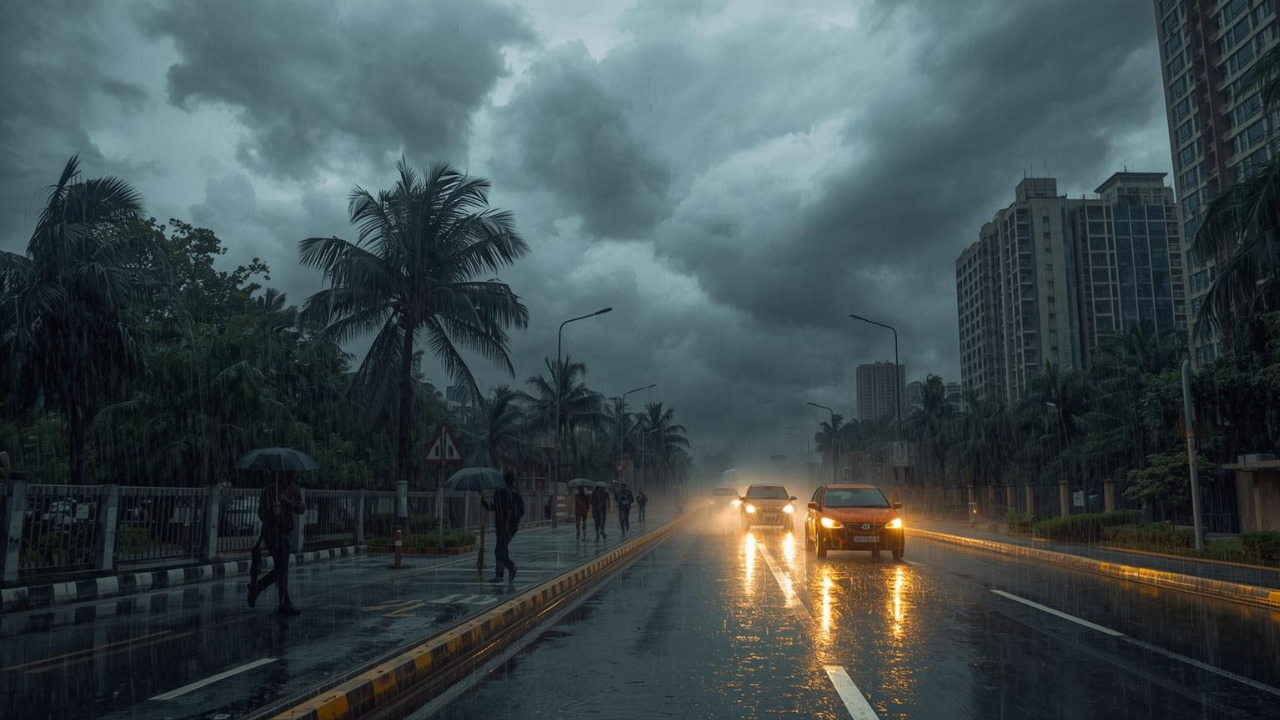
Unseasonal showers accompanied by overcast skies swept across parts of Gurugram over the weekend, prompting meteorologists to issue a Gurugram weather alert warning residents about the possibility of thunderstorms, lightning and gusty winds. While rainfall remained relatively light, the development highlights the increasingly erratic weather patterns affecting rapidly expanding urban regions across northern India. Weather monitoring data indicate that several localities across the district received light precipitation during late-night and early-morning hours, followed by intermittent drizzle through the afternoon. Areas including Sohna, Manesar and Pataudi recorded measurable rainfall, while most other parts of the district experienced scattered showers.
Meteorological authorities have cautioned that isolated thunderstorms could occur across southern districts of the state, with wind speeds potentially reaching 30–40 kilometres per hour in certain locations. The advisory linked to the Gurugram weather alert will remain in effect through the early part of the week as atmospheric instability persists across the region. Although rainfall totals were modest, the showers temporarily eased daytime temperatures in the city. Automatic weather stations reported a noticeable drop in maximum temperatures following the rainfall event, offering brief relief after several days of warmer conditions typical of the pre-summer transition period. Meteorologists suggest that the cooling trend could continue gradually over the coming days. Forecast models indicate relatively stable conditions across southern parts of the state for much of the week, with the possibility of additional light rainfall events later in the month.
For a city like Gurugram, which has experienced rapid urban expansion over the past two decades, such short bursts of rainfall often carry implications beyond weather comfort. Urban planners say changing precipitation patterns can influence stormwater management systems, road infrastructure and air quality dynamics in densely built environments. Despite the rainfall, the city’s air quality deteriorated during the same period. Monitoring stations reported pollution levels moving into the “poor” category in parts of the city, reflecting persistent particulate matter concentrations across the wider National Capital Region. Environmental experts note that light rain is often insufficient to significantly disperse airborne pollutants when atmospheric circulation remains weak. Air quality readings varied widely across monitoring locations, with some areas reporting moderate conditions while others registered significantly higher pollution levels. These fluctuations are common in urban corridors where traffic density, construction activity and industrial emissions interact with local weather conditions. The Gurugram weather alert also serves as a reminder of the vulnerability of rapidly urbanising cities to climate variability. Experts in climate resilience argue that metropolitan regions must integrate weather forecasting, air quality management and infrastructure planning to better manage short-term weather events and long-term environmental stress.
As Gurugram continues to grow as a major economic hub within the National Capital Region, city planners are increasingly emphasising resilient infrastructure and improved environmental monitoring. With forecasts pointing to further seasonal fluctuations ahead, weather alerts such as the current advisory underscore the need for cities to adapt to shifting climate patterns while safeguarding urban systems and public health.