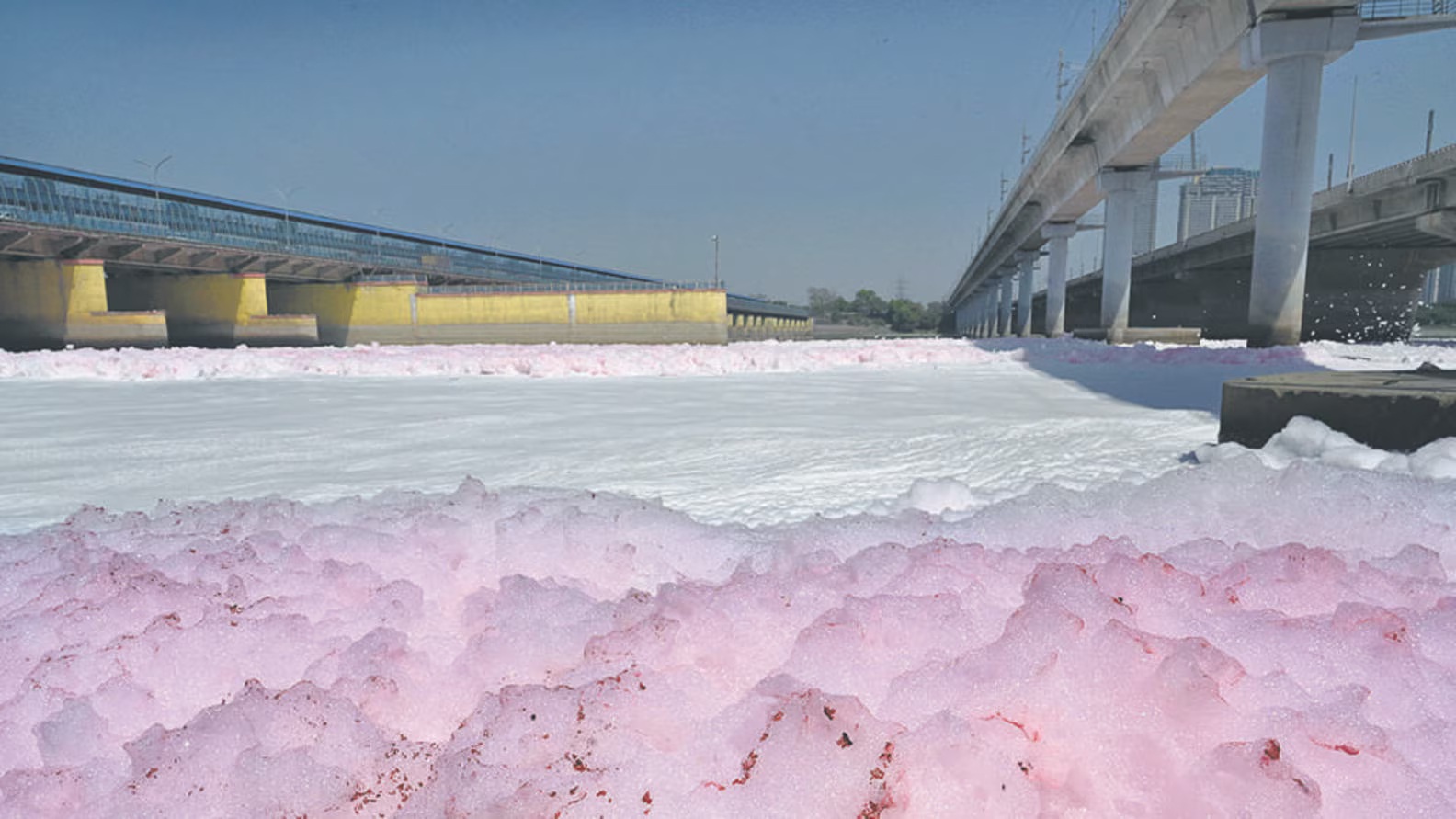
Delhi Yamuna Pollution Raises Alarm Over Pink Foam
Unusual pink-tinted foam floating along a stretch of the Yamuna River in southeast Delhi has triggered fresh concern among environmental observers and urban planners, highlighting the scale of chemical contamination affecting the capital’s primary river system. The incident, visible near the Okhla barrage area, has drawn attention to possible industrial effluents entering the river, intensifying the debate around Delhi Yamuna pollution and the long-standing challenge of safeguarding urban water bodies. Local environmental groups monitoring the river reported the appearance of thick layers of coloured froth drifting across the surface in recent days. While foaming in the Yamuna is not uncommon due to high pollution levels, the distinctive pink hue has raised suspicions that untreated dyes or chemical waste from nearby industrial activities could be entering the river system.
According to environmental researchers studying urban waterways, foam formation in polluted rivers is typically linked to surfactants—chemical compounds commonly found in detergents and industrial cleaners. When contaminated water flows over structures such as barrages or weirs, turbulence causes these compounds to trap air and form persistent foam on the surface. The appearance of coloured foam, however, suggests an additional pollutant source beyond domestic wastewater. Experts familiar with river monitoring in the region say that dyes from textile processing, colouring operations or other small-scale industrial activities can alter the colour of the froth when they mix with surfactants and organic waste already present in the water.\ The stretch of the river where the phenomenon has been observed is part of the heavily urbanised section of the Yamuna that flows through Delhi. Despite accounting for a relatively small portion of the river’s total length, this segment receives a large share of untreated sewage, industrial discharge and drainage from the city’s dense settlements and industrial clusters.
Environmental policy specialists note that Delhi Yamuna pollution remains one of the capital’s most complex ecological challenges. Decades of urban expansion have placed enormous pressure on the river, while infrastructure gaps in sewage treatment and enforcement against illegal industrial discharge continue to hinder restoration efforts. Previous scientific studies examining the sources of foam formation in the Yamuna have also pointed to malfunctioning sewage treatment plants, untreated wastewater released from drains and detergent-rich discharge from community washing areas. These sources collectively introduce phosphates, organic matter and surfactants into the river, creating conditions that promote large-scale foam formation. Officials monitoring water quality say investigations may be required to determine whether the pink colouring is linked to chemical dyes, metal compounds or other industrial pollutants. Environmental regulators typically analyse water samples to identify contaminants and trace them back to potential sources such as unauthorised discharge points or malfunctioning treatment facilities. For urban sustainability experts, the incident underscores the need for stronger monitoring of industrial waste streams and more reliable sewage treatment systems. As Delhi continues to expand, restoring the health of the Yamuna is increasingly seen as central to building a climate-resilient and liveable metropolitan environment.
Ensuring cleaner river systems, planners argue, will depend not only on infrastructure upgrades but also on consistent enforcement against illegal discharge and better coordination between environmental and urban governance agencies responsible for protecting the capital’s waterways.