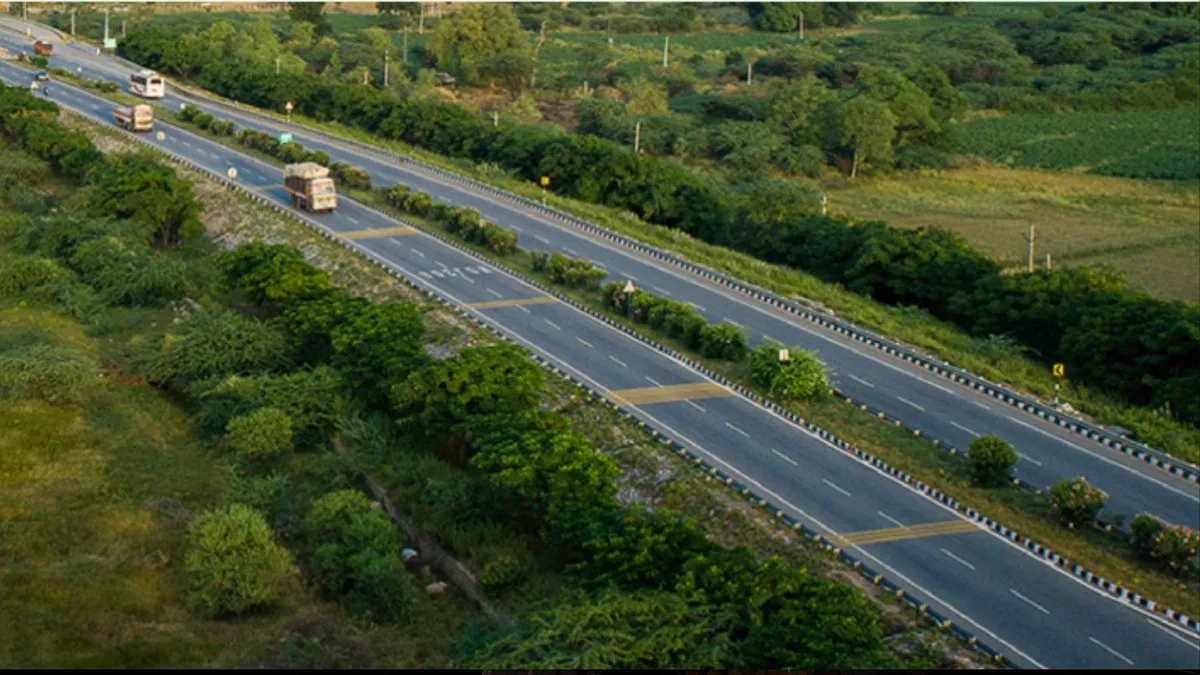
Ahmedabad Greenfield Highway To Boost Regional Connectivity
Transport planners in Noida are evaluating a new elevated road extension aimed at easing congestion along one of the busiest commuter corridors connecting Delhi with the Noida–Greater Noida Expressway. The proposal focuses on expanding the elevated network emerging from the Chilla border area to improve traffic movement near Film City and create a smoother transition for vehicles heading towards Greater Noida. Authorities responsible for urban infrastructure development in Noida have proposed extending the under-construction Chilla elevated corridor beyond its current alignment. The proposed elevated road extension would continue from the descending ramp of the existing structure to a major traffic junction near Sector 94, covering a stretch of roughly two kilometres.
Urban mobility experts say the extension addresses a persistent bottleneck in this part of the National Capital Region. While the main elevated corridor is designed to improve travel between east Delhi and central Noida, commuters travelling further towards the Noida–Greater Noida Expressway still encounter heavy traffic, particularly around Film City and nearby commercial districts. Officials involved in the project indicate that preliminary surveys for the new stretch have already been completed. The findings will inform the final design and alignment of the elevated road extension, which aims to streamline traffic flow between key urban nodes in Noida and the expressway network that links the region to Greater Noida and other expanding economic clusters. The larger Chilla elevated corridor currently under construction spans nearly six kilometres and connects the Mayur Vihar flyover in Delhi with a junction close to the Mahamaya flyover in Noida. Once operational, it is expected to divert a significant portion of daily commuter traffic away from surface roads that frequently experience peak-hour congestion.
Transport planners say the proposed extension could enhance the effectiveness of the broader corridor by providing uninterrupted connectivity for vehicles continuing towards the Noida–Greater Noida Expressway. Without this additional link, a large share of traffic would still converge at ground-level intersections, reducing the overall benefits of the elevated route. For the rapidly urbanising Noida region, improved road infrastructure also carries economic implications. The expressway corridor has emerged as a major growth axis for commercial development, technology parks and residential projects. Efficient road connectivity is considered critical for sustaining the movement of workers, logistics vehicles and daily commuters between Delhi and satellite cities. However, urban planning experts caution that elevated infrastructure alone cannot resolve long-term mobility challenges. They emphasise the need for integrated transport planning that combines road upgrades with stronger public transport networks and pedestrian-friendly urban design. Environmental analysts also highlight the importance of balancing road expansion with sustainable urban practices, including green corridors, improved drainage systems and reduced vehicular emissions.
If approved and implemented, the elevated road extension could become an important addition to Noida’s evolving transport network, improving connectivity between Delhi and Greater Noida while supporting the broader economic integration of the National Capital Region.