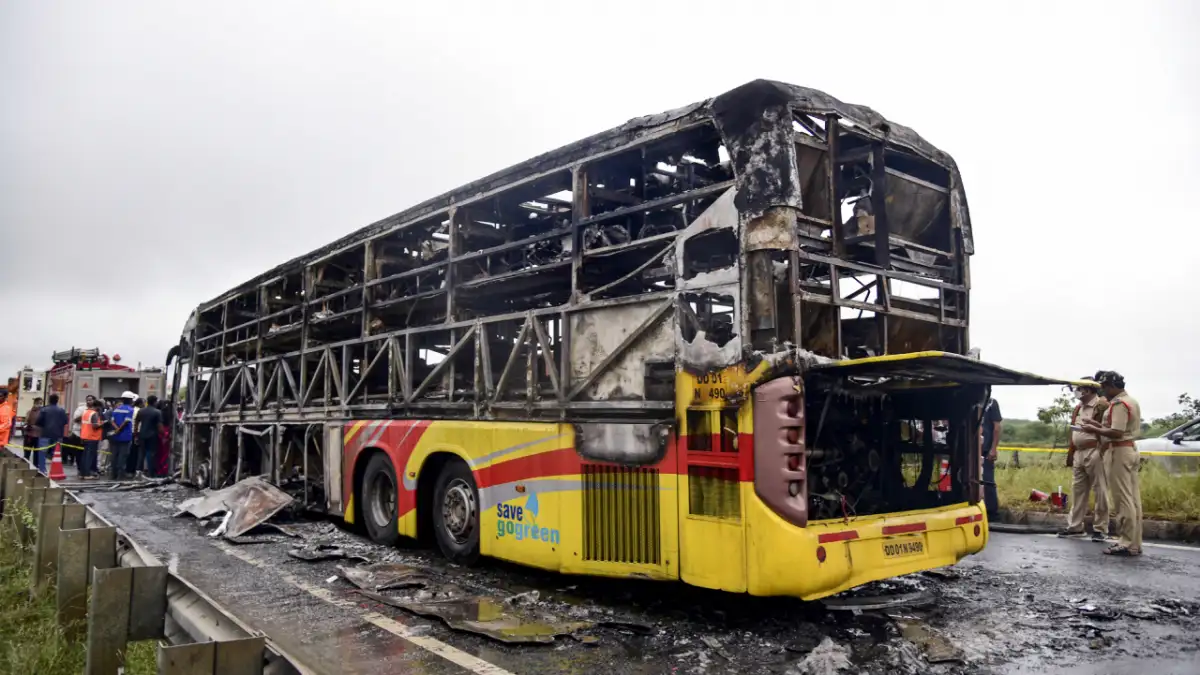
Madhya Pradesh Tightens Fire Safety For Sleeper Buses
Authorities in Madhya Pradesh have introduced stricter safety requirements for long-distance sleeper buses, making advanced fire protection technology mandatory for vehicle registration. The move comes amid growing concern over incidents involving buses catching fire on highways, prompting transport regulators to prioritise passenger safety in a sector that carries thousands of intercity travellers each day.
Under the new directive, sleeper buses seeking registration in the state must be equipped with a Fire Detection and Suppression System (FDSS). The technology is designed to identify early signs of fire such as abnormal heat levels or smoke and automatically activate mechanisms to control flames before they spread through the vehicle. Officials say the FDSS system will now become a central compliance requirement for new sleeper coaches entering the state’s transport network. Transport department officials indicated that long-distance overnight buses present unique safety risks. These vehicles typically operate for extended hours, often through the night, and include enclosed sleeping berths that can complicate evacuation during emergencies. In such situations, early detection and rapid response systems can significantly reduce the risk of major accidents. The FDSS system works through a network of heat and smoke sensors installed around critical areas of the bus, including the engine compartment and electrical systems. When these sensors detect irregular temperature spikes or smoke particles, an alert is triggered for the driver. At the same time, an automated fire suppression mechanism releases specialised chemicals or gases designed to contain the blaze within seconds.
The regulation follows a series of bus fire incidents in the state that raised questions about safety standards and vehicle maintenance practices. In recent cases, moving sleeper coaches reportedly caught fire while travelling on intercity routes, forcing passengers and crew to evacuate quickly. Although fatalities were avoided in some incidents, several buses were completely destroyed, highlighting the need for stronger preventive measures. Transport safety experts note that bus fires often originate from technical faults rather than external factors. Common causes include electrical short circuits, overheating engines, diesel leakage, and unauthorised vehicle modifications. In many cases, inadequate safety equipment or delayed maintenance inspections can worsen the risks. Industry observers say the rule could also push bus operators to modernise fleets and invest in better engineering standards. While the installation of FDSS equipment will increase upfront costs, it may reduce long-term liability risks and improve passenger confidence in intercity road transport. Existing sleeper buses already operating in Madhya Pradesh will not be exempt from scrutiny. Regional transport offices have been instructed to inspect these vehicles to ensure compliance with updated safety norms and retrofit fire detection systems where necessary.
As Indian cities and regions expand their road transport networks, regulators are increasingly focusing on safety infrastructure alongside mobility growth. Experts believe such measures are essential for building resilient and people-centric transport systems that prioritise passenger security while supporting sustainable regional connectivity.