Bhubaneswar Rapid Rail Plan Gains Policy Attention
India’s railway authorities are evaluating a rapid regional rail connection between Bhubaneswar and Cuttack, signalling a possible shift in how the state’s twin urban centres manage growing commuter demand. The proposal to introduce a Namo Bharat rapid rail service could reshape daily travel patterns across the 25-kilometre corridor, offering a faster and more cost-efficient alternative to conventional metro rail infrastructure while strengthening regional mobility in Odisha’s fastest-growing urban cluster.
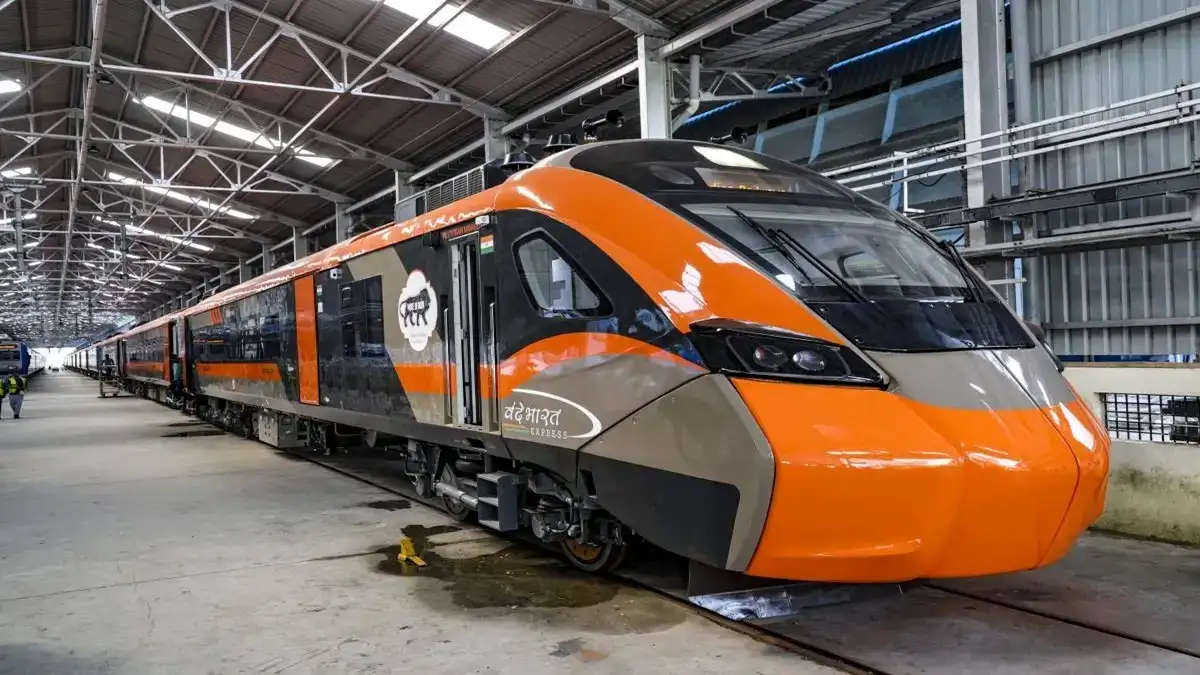
Officials indicated that a dedicated rail alignment is under consideration to support the Namo Bharat rapid rail service, designed for high-frequency operations. The system could allow passengers travelling between the administrative capital and the historic commercial centre to access trains roughly every thirty minutes, significantly reducing dependency on road transport that currently carries the majority of intercity commuters. Urban mobility experts say the corridor linking Bhubaneswar and Cuttack has long been identified as one of eastern India’s most active short-distance commuter routes. Rapid urbanisation, expansion of IT parks, government offices, educational institutions and healthcare hubs in both cities has intensified daily travel demand. The Namo Bharat rapid rail service model, already introduced on a major northern corridor, is designed to serve precisely such high-density regional travel zones.
Transport planners involved in the discussions suggest that the rapid rail format offers a more economical construction model than metro systems. Surface-level rapid transit lines can be built at significantly lower cost compared with elevated or underground metro corridors, which typically require large-scale civil engineering and land acquisition. For state governments balancing infrastructure expansion with fiscal constraints, the difference in capital expenditure can determine whether large urban mobility projects move forward. Beyond cost considerations, the approach aligns with broader national urban policy goals. Regional rapid rail networks are increasingly viewed as a way to integrate neighbouring cities into single economic ecosystems, enabling labour mobility while reducing congestion and emissions. For Bhubaneswar and Cuttack, improved rail connectivity could encourage transit-oriented development around future stations, stimulating housing, retail and commercial activity in planned urban clusters. Urban planners note that better rail connectivity may also help distribute growth more evenly across the metropolitan region. With Bhubaneswar expanding rapidly as an administrative and technology hub, efficient rail-based commuting could enable workers to live in surrounding areas while maintaining access to employment centres. This could reduce pressure on inner-city land markets and support more balanced urban expansion. Parallel discussions are also underway about introducing short-distance regional train services connecting Bhubaneswar and Cuttack with the coastal pilgrimage city of Puri.
Such shuttle-style trains are being designed to cover relatively short intercity distances efficiently, reflecting a broader effort to modernise India’s suburban and regional rail networks. If approved, the Bhubaneswar–Cuttack Namo Bharat rapid rail service would represent one of eastern India’s first experiments with regional rapid transit. The next phase will involve technical feasibility assessments, alignment planning and coordination between national rail authorities and the state government before construction timelines can be finalised.