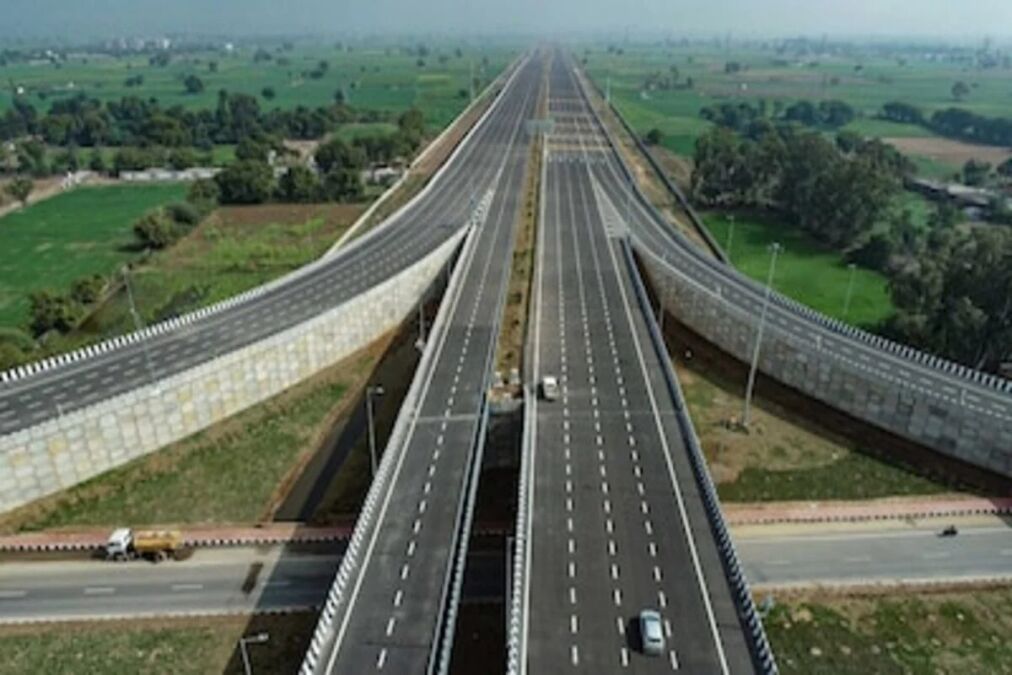
Lucknow Green Corridor Project Accelerates City Transport
Lucknow’s expanding transport network received a major boost this week as new sections of the Lucknow Green Corridor were opened and additional phases were initiated, marking a significant step toward easing congestion across the rapidly growing state capital.
The project, designed as a signal-free mobility corridor, is expected to reshape how commuters move across the city while supporting its broader urban growth strategy. The corridor forms part of a planned 28-kilometre urban route linking IIM Road in north Lucknow to Kisan Path on the city’s outer ring road. Once fully completed, the project will provide a continuous high-speed link between key residential, commercial and institutional areas, reducing travel time along busy stretches that currently experience heavy congestion.
A recently completed stretch of roughly seven kilometres connects Daliganj to Samta Mulak Chowk through the Nishatganj area, creating a new traffic channel along the Gomti river corridor. Officials estimate that this section alone could cut travel time between several central neighbourhoods from around half an hour to approximately 10–15 minutes during peak hours. Urban planners note that the Lucknow Green Corridor reflects a wider shift in infrastructure planning in India’s state capitals. Rather than relying solely on traditional road widening, cities are increasingly building dedicated high-capacity corridors to streamline traffic movement and improve cross-city connectivity.
The project carries an estimated investment of over ₹1,500 crore across multiple phases and is expected to benefit roughly 1.5 million residents once the full network becomes operational. Beyond the immediate traffic benefits, the corridor is designed to integrate with the city’s expanding transport ecosystem. The route connects with major arterial roads including Shaheed Path and Kisan Path, both of which function as key bypasses diverting traffic away from older, densely built areas of the city. By linking these strategic routes, planners aim to create a more coherent mobility grid for Lucknow’s growing metropolitan region.
Construction of the next phases is already underway, with authorities initiating work that will extend the corridor further toward the city’s outer ring road. These phases include additional road upgrades and a railway overbridge intended to ensure uninterrupted vehicle movement across critical junctions. Environmental considerations have also been incorporated into the project’s design. During construction, several mature trees were carefully transplanted rather than removed, reflecting attempts to balance infrastructure expansion with urban ecological protection.
Infrastructure analysts say such projects often trigger broader urban transformation. High-capacity corridors typically attract new housing developments, commercial investments and institutional infrastructure along their alignment, gradually reshaping surrounding neighbourhoods into new urban growth zones. For Lucknow, which has experienced rapid population growth and real estate expansion over the past decade, mobility infrastructure is becoming central to sustaining economic momentum. Efficient transport networks are increasingly viewed as essential for linking emerging residential districts with employment centres and educational institutions.
If the remaining phases progress as planned, the Lucknow Green Corridor could become one of the city’s most significant mobility backbones—reducing congestion in older neighbourhoods while supporting the next stage of Lucknow’s urban development.