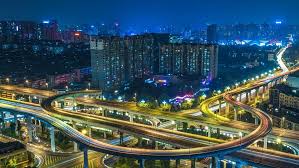
Lucknow Urban Connectivity Push Highlights City Transformation
Lucknow’s urban transformation agenda gained momentum this week with the inauguration of new phases of a major mobility project designed to improve connectivity across the state capital.
The development highlights how strategic transport investments are reshaping the city’s growth trajectory and reinforcing its position as an emerging economic and administrative hub in northern India. The latest phase of the Lucknow Green Corridor was unveiled during a public event that also marked the foundation for additional stretches of the road network. The corridor, planned as a key urban mobility artery, aims to reduce congestion and cut travel time across major city routes while linking expanding residential and institutional areas to established commercial districts. Urban infrastructure planners say projects such as the Lucknow Green Corridor represent a shift in how Indian state capitals are approaching mobility challenges.
As cities expand outward due to population growth and real estate development, integrating peripheral neighbourhoods into a coherent road network becomes essential for maintaining efficient movement of people and goods. The corridor is designed to connect several important traffic nodes across the city, linking established roads such as Shaheed Path and Kisan Path with emerging development zones. Once the full network is completed, officials expect the route to significantly reduce travel time along certain stretches—from roughly half an hour to around ten minutes during peak hours—improving daily commuting for residents. The infrastructure push is also closely tied to Lucknow’s broader urban expansion strategy.
Over the past decade, the city has witnessed rapid growth in residential neighbourhoods, educational institutions, and commercial developments on its outskirts. Improved road connectivity is seen as essential for ensuring that new urban clusters remain integrated with the city’s economic core. Urban economists note that transport corridors often act as catalysts for wider development. Improved mobility tends to stimulate real estate activity, encourage business investment, and create opportunities for new service industries in surrounding areas. In Lucknow’s case, the corridor could also support emerging technology and defence-linked industries that are gradually expanding in the region. The project’s financing approach also reflects evolving urban governance models.
According to officials, part of the funding for the corridor has been generated through revenue recovered from previously encroached public land, demonstrating how cities are increasingly exploring alternative resource mechanisms to finance large infrastructure projects. Beyond transportation efficiency, planners say the initiative fits into a larger effort to shape Lucknow as a more organised and accessible metropolitan centre. Investments in road networks, transit systems, and urban planning frameworks are expected to play a central role in supporting future growth. For residents, however, the immediate benefits are likely to be more tangible—shorter commute times, smoother traffic flow, and improved connectivity between neighbourhoods that have historically remained disconnected.
As construction advances across multiple phases, the Lucknow Green Corridor is emerging as a key component of the city’s evolving urban infrastructure landscape. If integrated effectively with public transport and future development plans, it could help the capital manage rising mobility demand while supporting sustainable metropolitan expansion.