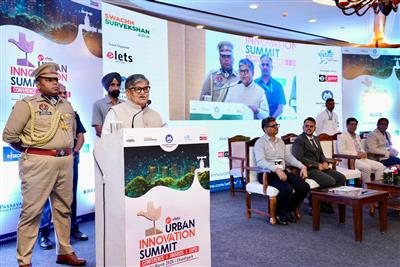
Chandigarh Urban Summit Focuses On Citizen First Cities
Urban governance in India must increasingly prioritise the daily needs of residents if cities are to remain liveable and economically productive, senior policymakers emphasised at a major urban development summit in Chandigarh this week.
The event brought together urban planners, administrators, and technology leaders to discuss how citizen centric urban development can shape future-ready cities across the country. Speaking at the gathering, a senior constitutional authority overseeing the Union Territory administration stressed that the long-term success of urban planning depends on whether residents experience tangible improvements in everyday life. Access to essential services, efficient infrastructure, and inclusive public spaces, officials said, should form the foundation of city planning rather than remain secondary outcomes of infrastructure expansion.
The summit convened policymakers, municipal administrators, and urban technology experts to examine how Indian cities can manage rapid population growth while maintaining environmental balance and service efficiency. More than 150 delegates and several urban policy specialists participated in the discussions, reflecting growing national interest in designing cities that combine economic growth with quality-of-life improvements. Urban planners at the forum highlighted that citizen centric urban development requires coordinated planning across housing, mobility, waste management, and public health infrastructure. While Indian cities have seen rapid expansion in physical infrastructure over the past decade, experts say governance systems must evolve at the same pace to ensure services reach residents effectively.
Officials also pointed to persistent operational inefficiencies that often undermine urban service delivery. Issues such as fragmented coordination between departments, repeated road excavations for infrastructure works, and inefficient use of electricity in public facilities were cited as examples where administrative reforms could improve outcomes for residents. Another area receiving attention was public mobility. Urban transport, experts argued, should be treated as an essential service rather than solely as a revenue-generating system. Expanding accessible, reliable public transport networks is increasingly seen as critical to reducing congestion, lowering emissions, and supporting inclusive access to jobs and services in growing cities.
Participants also discussed behavioural and cultural changes needed within urban administrations. Moving away from hierarchical bureaucratic practices towards collaborative governance—where municipal bodies engage citizens, technology providers, and local communities—was highlighted as an important step in strengthening accountability. The discussions come at a time when Indian cities are under pressure to manage climate risks, rising pollution levels, and increasing migration from rural areas. Urban policy experts believe that people-first planning models can help cities address these challenges while ensuring economic opportunities remain accessible to diverse populations. For Chandigarh, often viewed as one of India’s most carefully planned cities, the summit reinforced the importance of adapting legacy planning models to contemporary challenges.
As Indian cities expand and modernise, the idea of citizen centric urban development is increasingly emerging as a guiding principle—linking infrastructure investment with social inclusion, sustainability, and everyday urban experience. Urban leaders attending the summit concluded that the future of Indian cities will depend not only on large infrastructure projects but on how effectively urban systems respond to the needs of the people who live and work in them.