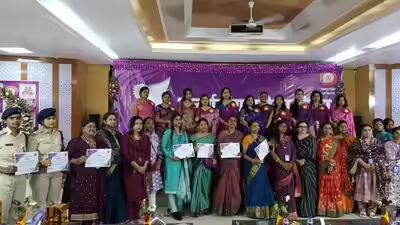
The rail administration in Patna recently honoured 67 women employees in railways for their professional contributions, marking a symbolic step in recognising the growing role of women in India’s public transport sector.
The recognition programme, organised by the East Central Railway’s Danapur division, was held as part of wider celebrations around International Women’s Day and highlighted the expanding participation of women across operational and administrative roles in the rail network. Officials said the event acknowledged women staff working in diverse departments including operations, customer services, maintenance, and administrative units. The initiative reflects the railway system’s broader efforts to encourage gender inclusivity within a workforce historically dominated by men.
Across India’s railway ecosystem, women are increasingly visible in roles that were once considered unconventional, including train operations, technical supervision, signalling systems and safety management. Industry observers note that such recognition programmes not only celebrate individual achievements but also send an institutional signal about workforce diversity within public transport systems. In recent years, railway authorities have expanded recruitment and training opportunities aimed at increasing women’s participation in operational functions. These efforts are aligned with broader government initiatives promoting gender representation in infrastructure sectors such as transport, logistics and engineering. Railway administrators say the achievements of 67 women employees in railways demonstrate how workforce diversity can strengthen service delivery in large public systems.
Women employees today contribute across a wide range of activities — from passenger assistance and ticketing services to train operations and technical maintenance — roles that are critical for maintaining network reliability. Urban mobility experts argue that representation within public transport institutions plays a role in shaping inclusive city infrastructure. When women participate more actively in designing, managing and operating transport networks, systems tend to become more responsive to safety, accessibility and passenger experience. India’s railways remain one of the largest public transport networks in the world and serve as the backbone of regional mobility across both metropolitan and smaller cities. As urban populations expand and mobility demand increases, transport agencies are under growing pressure to modernise services while building a more diverse workforce capable of managing complex operations.
Gender representation within infrastructure sectors is increasingly being seen as an indicator of institutional maturity. Analysts say recognising professional achievements through initiatives like the felicitation of 67 women employees in railways helps create a culture that values merit, leadership and inclusion. While such events are largely symbolic, policymakers note that sustained progress will depend on expanding training programmes, improving workplace facilities and ensuring safe working environments for women across operational roles.
For India’s rail sector — which continues to evolve through station redevelopment, electrification and digital ticketing systems — strengthening workforce diversity may prove as important as technological upgrades in building resilient and people-centred mobility networks.