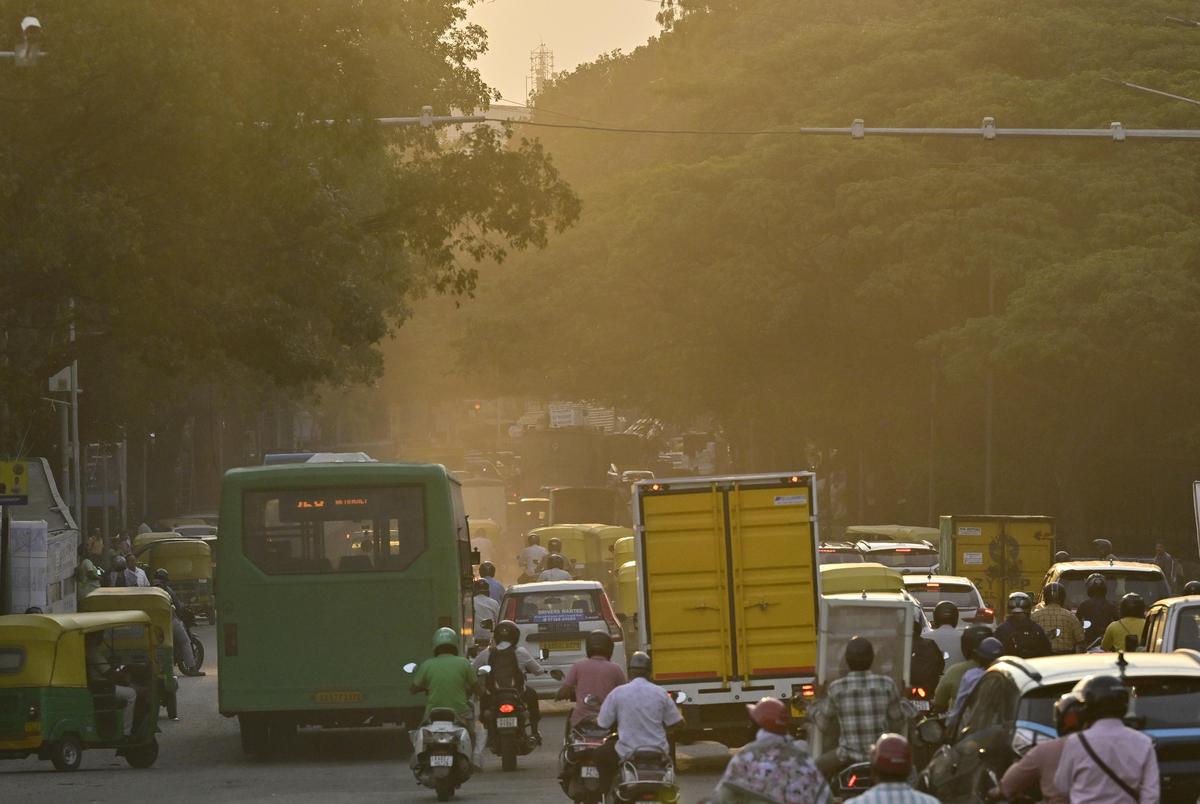
Bengaluru Air Quality Trends Show Lower Pollution Levels
Bengaluru has recorded comparatively lower concentrations of fine particulate pollution than several other major Indian cities, according to recent environmental assessments analysing urban air conditions across the country.
The findings on Bengaluru air quality highlight how geography, urban planning patterns and transport dynamics influence pollution levels in rapidly expanding metropolitan regions.Data compiled from monitoring stations across multiple urban centres suggests that Bengaluru has maintained relatively moderate levels of PM2.5 — microscopic airborne particles small enough to enter the lungs and bloodstream. These pollutants are typically produced by vehicle emissions, construction dust, industrial activity and fossil fuel combustion, making them a major public health concern in dense urban environments.Environmental analysts say Bengaluru’s plateau geography and prevailing wind patterns help disperse pollutants more effectively than in cities located in enclosed plains. The city’s elevation and seasonal air circulation allow particulate matter to move more freely, reducing prolonged pollution build-up that often affects northern urban centres during winter months.However, experts caution that relatively better Bengaluru air quality should not lead to complacency. The metropolitan region has experienced rapid population growth, rising vehicle ownership and expanding construction activity over the past decade. These factors continue to exert pressure on air quality, especially in congested traffic corridors and rapidly developing neighbourhoods.Urban mobility specialists point out that the city’s dependence on private vehicles remains a significant challenge.
Bengaluru’s technology-driven economy has attracted a large workforce, leading to longer commuting distances and higher daily traffic volumes. Transport emissions therefore remain a critical contributor to urban air pollution, even if overall levels appear lower than in many other metropolitan areas.Municipal authorities and environmental regulators have begun expanding air monitoring infrastructure to track pollution patterns more accurately. Additional monitoring stations are being deployed across residential, commercial and industrial zones to provide real-time data that can guide policy decisions and urban planning strategies.Urban planners say maintaining cleaner air in growing cities requires long-term investments in sustainable mobility systems. Expanding metro rail networks, improving public bus connectivity and promoting non-motorised transport are widely seen as key steps to preserving Bengaluru air quality as the metropolitan region continues to expand.Green infrastructure also plays an important role in shaping urban environmental outcomes. Parks, urban forests and tree-lined corridors help moderate heat and absorb certain pollutants, while improving overall liveability. Experts argue that protecting such ecological assets is critical for maintaining environmental balance in fast-growing cities.Public health researchers emphasise that even moderate pollution levels can affect vulnerable populations, including children, the elderly and people with respiratory conditions. Continuous monitoring and proactive policy responses are therefore essential to prevent pollution from rising alongside economic growth.
As Bengaluru positions itself as a global technology hub, city officials face the challenge of aligning economic expansion with environmental sustainability. Preserving air quality, urban planners say, will depend on integrating climate-sensitive infrastructure, cleaner transport systems and responsible real estate development into the city’s long-term growth strategy.
Bengaluru air quality report highlights cleaner urban air