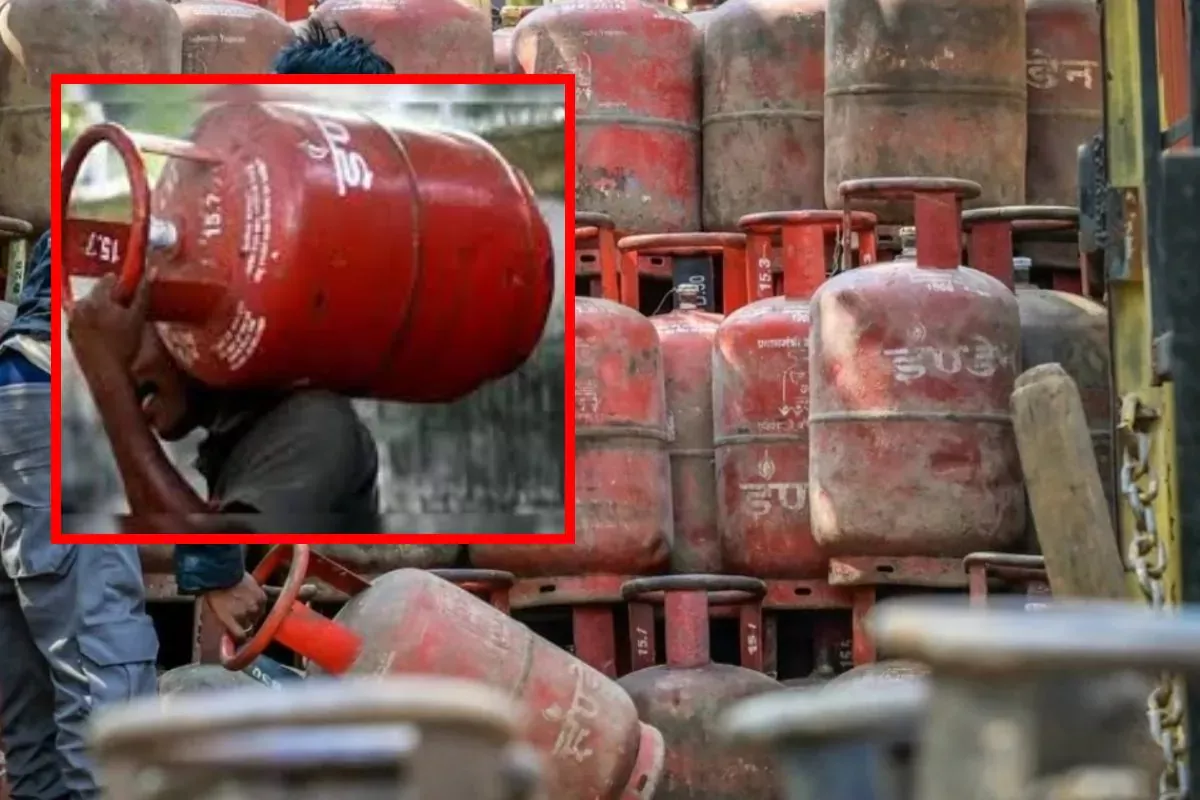
Cooking fuel distribution in Bhopal is under growing scrutiny as the emergence of an LPG black market across several neighbourhoods signals widening gaps between official supply systems and household demand. Long queues outside authorised distributors have become common across the city, while informal networks are reportedly supplying cylinders at significantly higher prices through unregulated channels.
Local enforcement officials confirm that investigations into the LPG black market have intensified following multiple raids in residential and commercial areas. Authorities from the state’s food and civil supplies department recently uncovered illegal refilling operations where domestic cylinders were being stored and redistributed without regulatory approval. Seizures included dozens of cylinders in several locations, highlighting the scale of unauthorised trade emerging alongside supply disruptions. The illegal operations pose both safety and governance concerns. Unlicensed refilling of cylinders within densely populated neighbourhoods raises risks of fire or explosion, particularly in areas where housing density and narrow access lanes complicate emergency response. Urban safety experts warn that such activities could have severe consequences in cities already struggling with ageing infrastructure and limited disaster preparedness. Investigations indicate that informal distribution networks have been operating through small repair shops and storage spaces where domestic cylinders are being resold at prices several hundred rupees above regulated rates. These networks have expanded as consumers face delays in receiving cylinders booked through official distributors.
Across many parts of Madhya Pradesh, enforcement agencies have carried out coordinated raids in cities including Indore and Jabalpur, where large quantities of domestic and commercial cylinders were confiscated from warehouses and residential properties. Officials say these actions followed intelligence inputs suggesting organised stockpiling and resale. Despite these developments, state authorities maintain that overall supply levels remain stable. According to government data, millions of households depend on LPG distribution networks managed by public-sector companies such as Indian Oil Corporation, Bharat Petroleum, and Hindustan Petroleum. Daily dispatch figures across the state are broadly aligned with standard consumption levels, officials say. However, urban planners note that even short-term logistical disruptions can create severe consequences in fast-growing cities. A temporary supply gap in cooking fuel quickly translates into long queues, price spikes, and the rise of informal markets. The impact is particularly visible among lower and middle-income households that rely almost entirely on LPG for daily cooking. In several neighbourhoods, families are reportedly returning to traditional fuels such as wood or coal after their cylinders ran empty, reversing years of progress toward cleaner household energy.
Urban policy specialists argue that the situation underscores the need for more resilient last-mile fuel distribution in expanding cities. As urban populations grow and housing densities rise, essential services from water and electricity to cooking fuel—require stronger monitoring systems and digital tracking to prevent supply bottlenecks and illicit trade. For city administrators, the current LPG black market challenge offers a reminder that urban service delivery must evolve alongside population growth. Ensuring reliable access to safe cooking energy remains central to building healthier, more sustainable urban living environments.