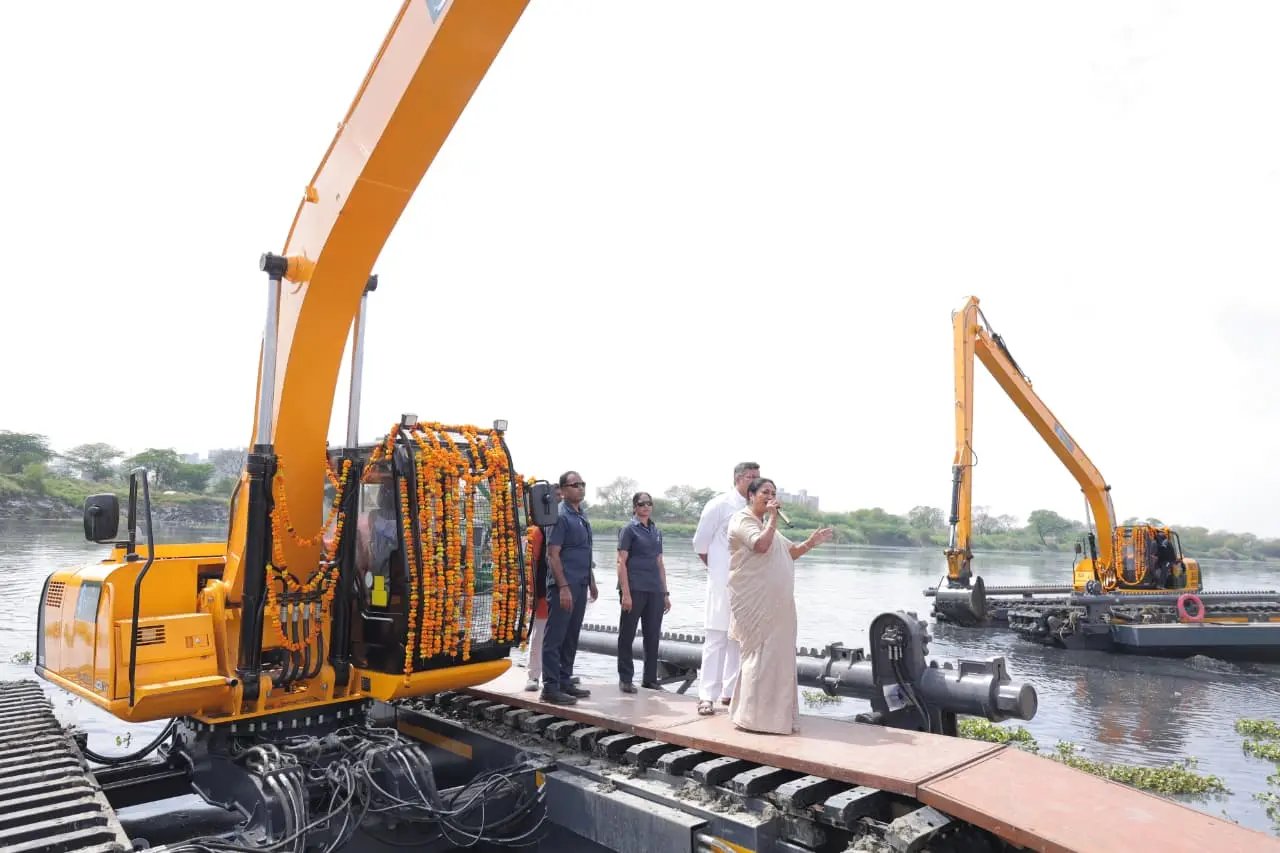
Delhi Steps Up Najafgarh Drain Cleaning With New Machines
Authorities in Delhi have initiated a large-scale Najafgarh drain cleaning operation using specialised amphibious excavator machines, aiming to remove massive deposits of silt and waste that have accumulated over years. The intervention targets one of the capital’s most significant stormwater channels, widely recognised as a major source of pollution entering the Yamuna River and a contributor to urban flooding risks during the monsoon. Officials associated with the city’s irrigation and flood management department confirmed that multiple amphibious excavators have been deployed along critical stretches of the drain. Unlike conventional dredging equipment, these machines are designed to operate directly in waterlogged or marshy terrain, allowing engineers to remove sediment, debris and organic waste from areas that are otherwise difficult to access.
The Najafgarh drain cleaning effort is expected to address a substantial quantity of accumulated material within the channel. Engineers estimate that millions of tonnes of silt and waste have built up over time, reducing the drain’s carrying capacity and slowing water flow. Such blockages can worsen pollution levels and increase the likelihood of waterlogging during intense rainfall events. Urban drainage experts note that the Najafgarh drain functions as a key drainage corridor for a large portion of western Delhi as well as adjoining urban settlements. Over time, untreated wastewater, industrial discharge, and solid waste dumping have degraded water quality within the channel. Because the drain eventually feeds into the Yamuna River, its condition has a direct influence on river health downstream. The new mechanical deployment reflects a broader shift in how cities are approaching urban water infrastructure. Instead of seasonal desilting conducted shortly before monsoon months, authorities are increasingly emphasising year-round maintenance supported by specialised equipment and monitoring systems. According to infrastructure planners, modern dredging technology can significantly shorten project timelines while improving safety for workers involved in cleaning operations.
Improving the performance of stormwater drains has become particularly important for climate-resilient urban planning. Cities such as Delhi are experiencing more intense rainfall episodes linked to changing climate patterns. When drainage systems are clogged or undersized, even moderate rainfall can trigger severe localised flooding, affecting housing clusters, road networks and public transport systems. Environmental planners also highlight the potential ecological benefits of sustained Najafgarh drain cleaning. Reducing the volume of waste entering the Yamuna could support long-term river restoration efforts while improving conditions for biodiversity and urban ecosystems. Cleaner waterways can also enhance the quality of surrounding neighbourhood environments, particularly in densely populated districts located near drainage corridors. Officials overseeing the project indicated that the machines will be used not only for immediate desilting but also for ongoing maintenance along vulnerable stretches of the drain. Experts believe that integrating mechanical cleaning with stricter waste management and wastewater treatment policies will be necessary to ensure that improvements remain durable.
As Indian cities expand and urban populations continue to grow, maintaining functional drainage networks is increasingly seen as essential infrastructure. Projects such as the current Najafgarh drain cleaning initiative underline the growing recognition that water management, pollution control and climate resilience are closely linked within modern urban planning.