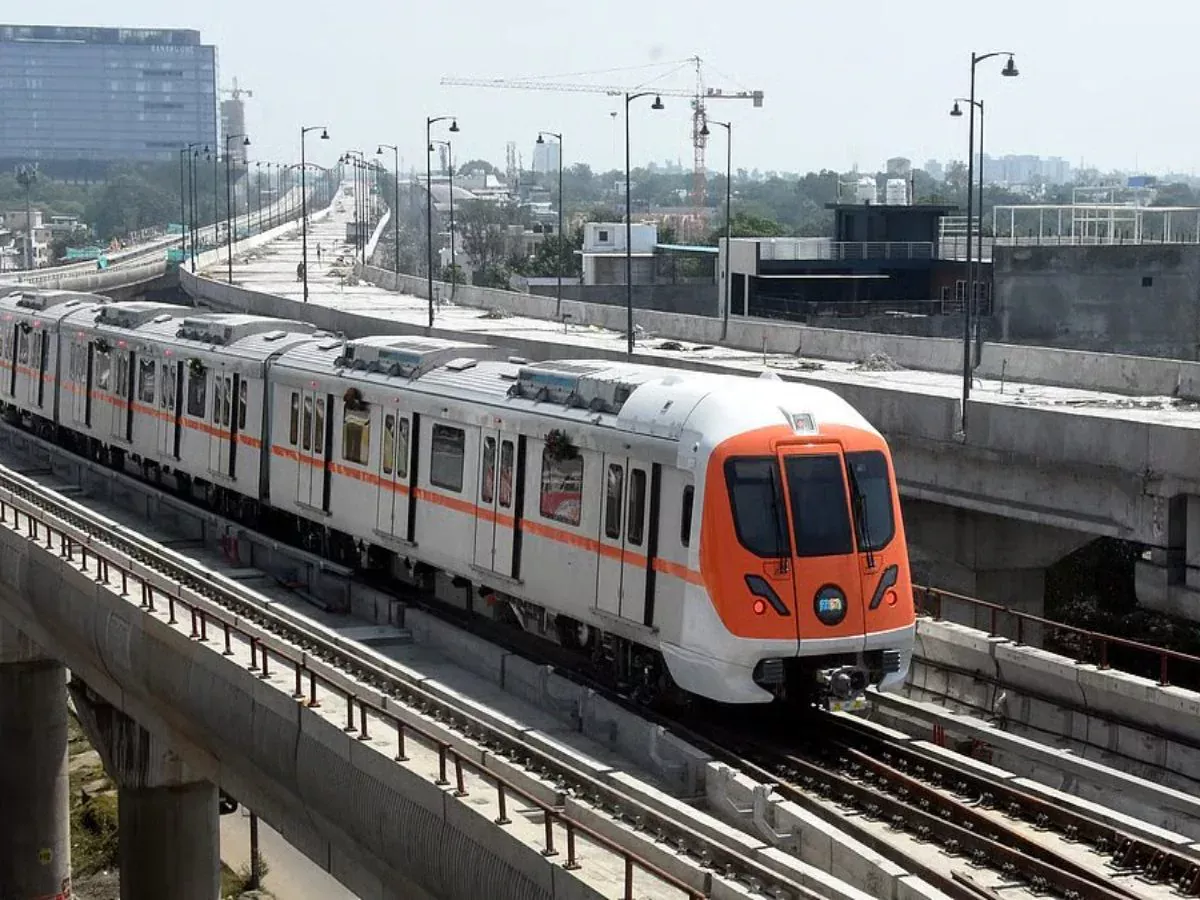
Indore Metro Safety Testing Advances Before Operations
Bhopal’s urban transit network is set to expand further as authorities advance construction of the city’s second metro corridor, with 13 elevated stations planned along the upcoming Bhopal Metro Blue Line. The new stretch, linking key residential and administrative zones, is expected to strengthen public transport access while supporting the city’s long-term shift toward cleaner, transit-oriented urban growth.
The corridor will connect the Bhadbhada area with Ratnagiri, passing through several prominent neighbourhoods and civic districts that currently depend heavily on road-based mobility. Officials overseeing the project indicate that civil work, including pillar construction and structural groundwork, has already begun along sections of the route. Construction of one station has also commenced, signalling the project’s move from planning to on-ground execution. Urban planners say the Bhopal Metro Blue Line could play a crucial role in redistributing mobility demand across the city. Bhopal’s rapid spatial expansion over the past decade has increased commuting distances and traffic pressure on arterial roads. By linking residential clusters, institutional zones and commercial areas through mass transit, the new corridor could help reduce reliance on private vehicles and ease congestion. The alignment is expected to include elevated stations at several important junctions and neighbourhood hubs such as Bhadbhada Chauraha, Jawahar Chowk, Roshanpura Square, Parade Ground, Prabhat Square, Govindpura, Indrapuri, Piplani and Ratnagiri Square. These locations form a key urban spine connecting administrative districts, industrial areas and expanding housing zones.
Transport experts note that metro investments increasingly influence real estate patterns in Indian cities. Areas located near stations often see renewed residential and commercial activity, driven by improved accessibility. In Bhopal, planners anticipate that neighbourhoods along the Bhopal Metro Blue Line may gradually evolve into mixed-use transit corridors, encouraging compact development and reducing travel distances. The Blue Line is part of a larger two-corridor metro project designed to modernise public transport in the state capital. Alongside the new corridor, work continues on the system’s first operational segment along the Orange Line. That section has already seen the construction of several stations under a priority corridor designed to introduce metro services to commuters in phases. Project authorities are also preparing to initiate tunnelling work for underground stations on the first corridor using a Tunnel Boring Machine. Technical preparations for these subterranean sections are nearing completion, according to officials involved in the infrastructure rollout.
Altogether, the city’s metro blueprint envisions 28 stations across the two corridors. With eight stations already developed along the initial stretch, the remaining network will be delivered in stages over the coming years. Urban mobility analysts say the expansion comes at a critical moment for mid-sized Indian cities like Bhopal. As populations grow and vehicle ownership rises, integrated public transport systems are increasingly seen as essential to building climate-resilient, inclusive urban economies. If implemented efficiently, the Bhopal Metro Blue Line could become a cornerstone of the city’s effort to balance growth with sustainable mobility.