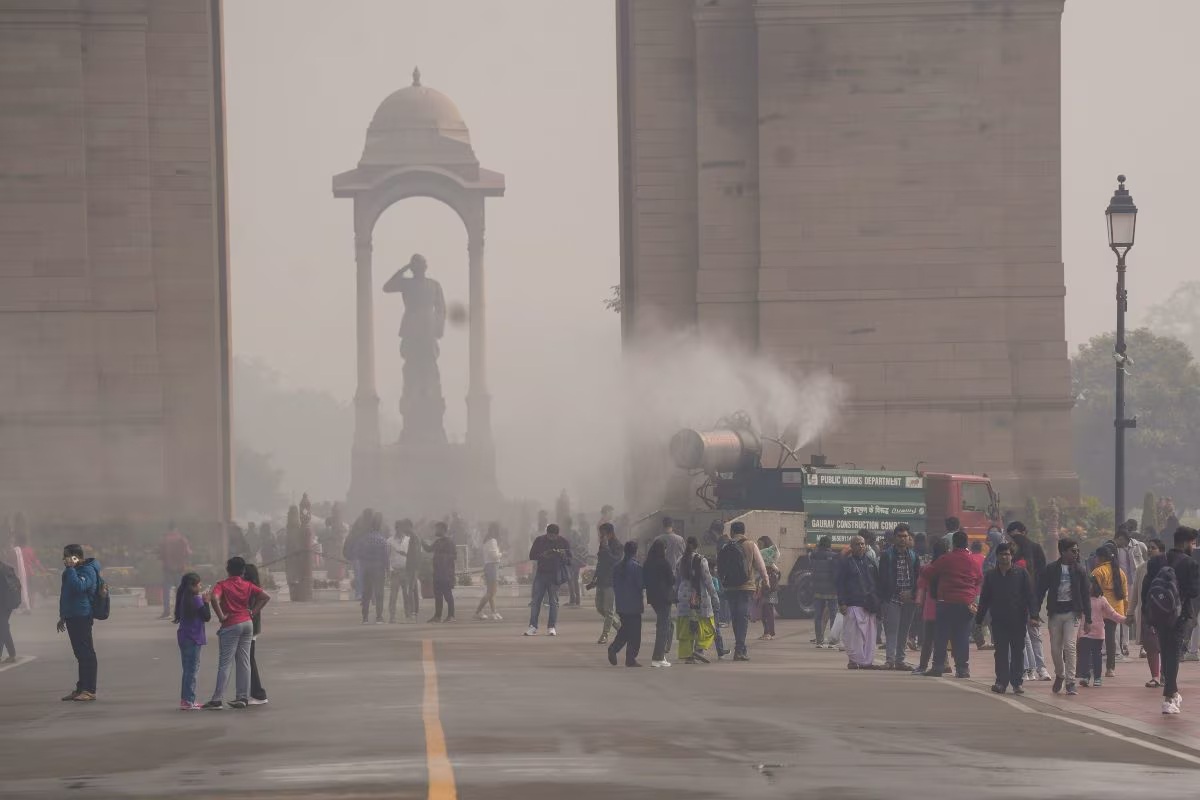
Delhi NCR Air Quality Falls Into Very Poor Category
Dense fog combined with high pollution levels pushed the Delhi NCR air quality into the ‘very poor’ category on a winter morning, raising fresh concerns about urban air safety across the region. Monitoring data indicated that the capital’s overall Air Quality Index crossed the 300 mark, a threshold associated with significant health risks, particularly for vulnerable groups such as children, elderly residents and individuals with respiratory conditions. According to data from national pollution monitoring authorities, the overall AQI in the capital hovered above 300 during the early morning hours. Several monitoring stations across the city recorded readings well within the ‘very poor’ bracket, indicating elevated concentrations of particulate matter and gaseous pollutants.
Urban environmental analysts say the combination of dense fog and weak atmospheric circulation can trap pollutants close to the ground, worsening air conditions in large metropolitan areas. Such weather patterns are common during winter months in northern India, when lower temperatures reduce vertical air movement and prevent pollutants from dispersing. The Delhi NCR air quality situation varied across neighbourhoods but remained concerning across most monitoring stations. High pollution levels were reported in several residential and commercial districts, where AQI readings ranged between the upper ‘poor’ and ‘very poor’ categories. In some industrial and traffic-heavy zones, readings approached the higher end of the pollution scale. However, a few areas recorded relatively lower pollution levels, though still above recommended safety limits. Environmental experts note that local factors such as green cover, traffic density and urban layout can influence pollution concentrations within different parts of the city. Poor visibility caused by fog also affected road conditions in several parts of the capital. Transport officials often caution that reduced visibility during such episodes can increase the risk of traffic congestion and accidents, particularly during early morning commuting hours.
Weather authorities had earlier issued an advisory warning of changing atmospheric conditions across the region, including thunderstorms, gusty winds and possible rainfall in parts of northern India. Such weather systems can temporarily improve air quality by dispersing pollutants or washing particulate matter out of the atmosphere. Air pollution remains one of the most persistent environmental challenges facing the National Capital Region. Rapid urbanisation, vehicle emissions, construction dust and seasonal agricultural burning across neighbouring states are often cited as major contributors to the region’s deteriorating air quality. Urban planners and climate researchers say addressing the Delhi NCR air quality crisis requires coordinated action across multiple sectors including transport, energy, waste management and urban planning. Expanding electric mobility, improving public transport and controlling construction emissions are among the measures frequently recommended by environmental experts. For residents, the immediate impact of high pollution episodes often includes respiratory discomfort, reduced outdoor activity and increased reliance on protective measures such as masks and air purifiers.
As the region enters another phase of fluctuating winter weather, environmental agencies continue to monitor the Delhi NCR air quality levels closely. Sustained improvements, however, are likely to depend on long-term policy interventions aimed at reducing emissions while strengthening climate-resilient urban infrastructure.