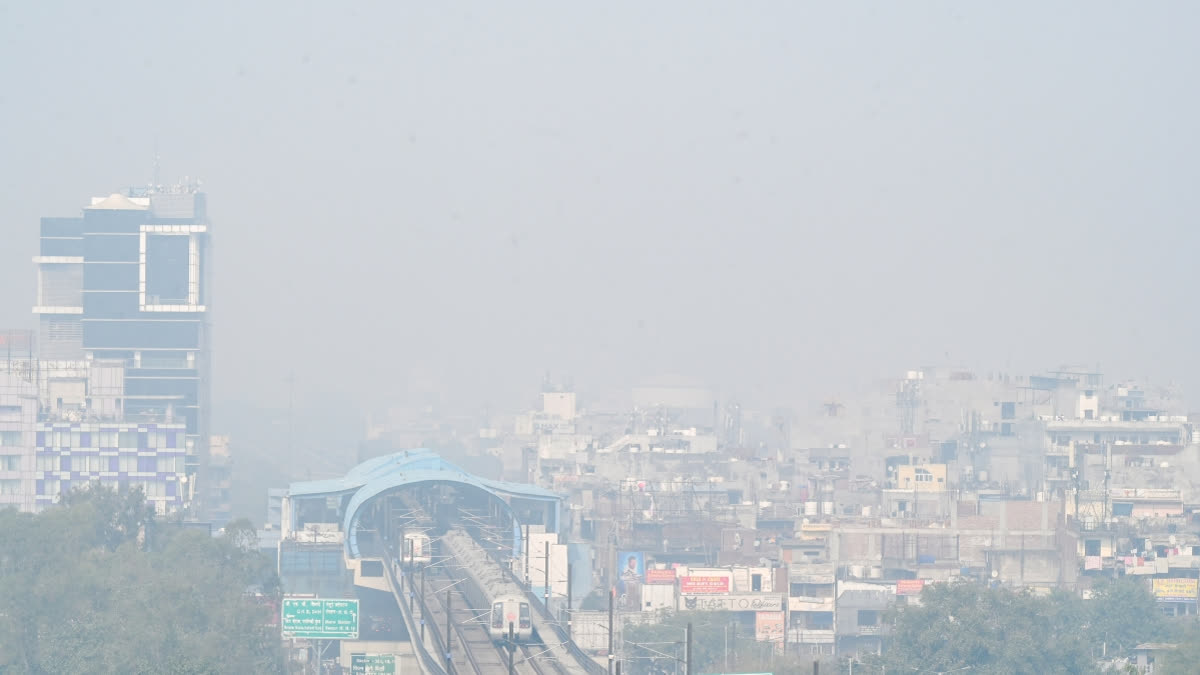
Delhi Launches Research Pilot On Smog Reducing Urban Surfaces
Delhi authorities have partnered with a leading research institution to examine whether specialised surface coatings can help reduce air pollution in dense urban environments. The collaboration will test the effectiveness of photocatalytic materials capable of breaking down harmful pollutants, marking a science-driven approach to tackling persistent smog challenges in the national capital. The initiative forms part of a new Delhi air pollution study being undertaken in collaboration with researchers from a prominent technology institute. The pilot will examine the potential of Titanium Dioxide–based materials that trigger chemical reactions under sunlight, allowing surfaces to neutralise certain pollutants present in the air.
Urban environmental experts say the concept of “smog-eating” materials has been explored in several global cities, where specially treated surfaces are used on buildings, roads and pavements to reduce concentrations of nitrogen oxides and volatile organic compounds. These pollutants are among the major contributors to urban smog formation. Officials involved in the project say the Delhi air pollution study will begin with controlled laboratory experiments designed to measure how effectively the photocatalytic materials can break down airborne contaminants. Researchers will use a specialised smog chamber to simulate polluted atmospheric conditions and evaluate the chemical reactions triggered by the coatings. Following laboratory testing, the research team plans to conduct field trials within Delhi’s built environment. The materials may be applied to various urban surfaces including concrete pavements, asphalt roads, building facades and other structures to determine how they perform under real-world conditions such as sunlight exposure, dust accumulation and weather fluctuations.Urban planners say such field experiments are crucial before cities consider adopting emerging environmental technologies on a large scale. While laboratory research has shown promising results globally, real-world effectiveness often depends on factors such as climate, maintenance and the extent of urban pollution.
The Delhi air pollution study will also explore the possibility of installing dedicated photocatalytic panels across urban infrastructure. These panels, which can be mounted on rooftops or streetlight poles, would function similarly to solar panels but focus on removing pollutants from the surrounding air rather than generating electricity. Air quality researchers note that technological solutions alone cannot resolve urban pollution challenges. However, supplementary tools such as photocatalytic surfaces could support broader strategies that include transport reforms, emission controls and improvements in energy systems. Delhi continues to face severe seasonal air pollution, particularly during winter months when weather conditions trap pollutants close to the ground. Rapid urbanisation and growing mobility demand across the National Capital Region have further intensified concerns about air quality. Environmental policy specialists say partnerships between government agencies and scientific institutions are increasingly important for developing evidence-based urban solutions. Testing new technologies through structured pilot programmes allows cities to evaluate both environmental impact and economic feasibility before large-scale deployment. The research collaboration is expected to run for several months, after which experts will analyse the results to determine whether smog-reducing materials could play a meaningful role in improving urban air quality.
If the findings prove promising, the Delhi air pollution study could offer insights into how built environments might contribute to cleaner air through innovative surface technologies integrated into city infrastructure.