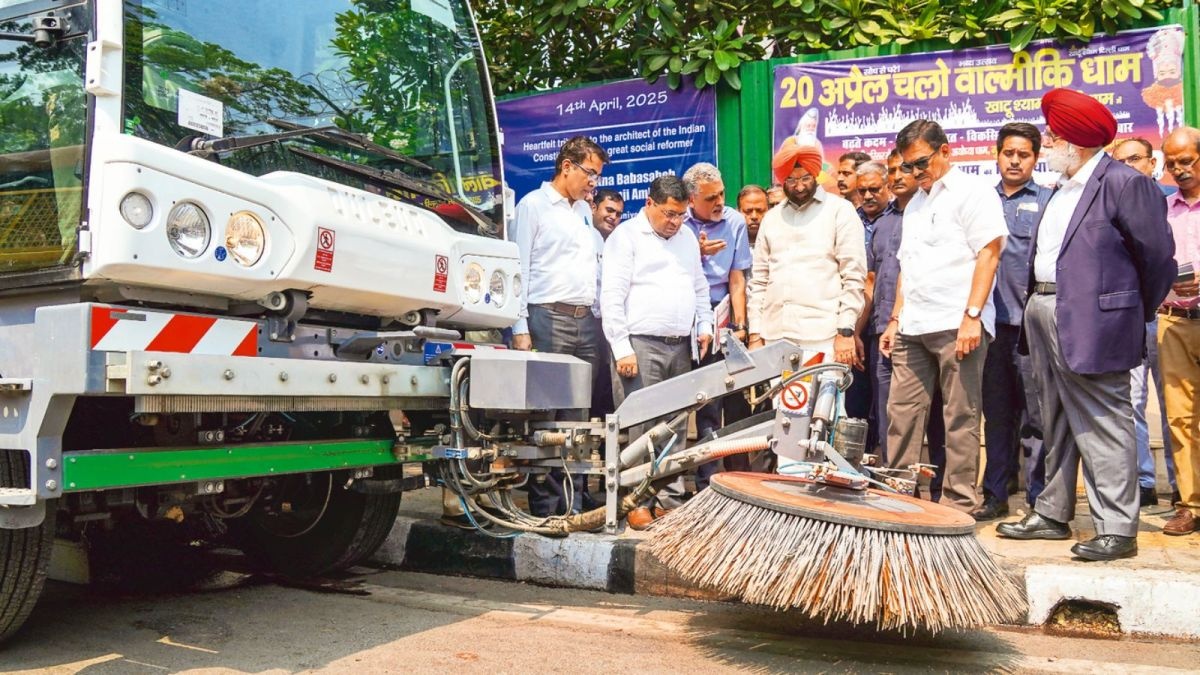
Delhi’s municipal authorities are exploring new ways to modernise sanitation services in densely populated neighbourhoods where conventional cleaning machines cannot operate. The city administration has initiated a study to examine whether compact mechanised systems could improve Delhi street cleaning in narrow lanes that currently depend largely on manual labour. Officials in the civic administration say a large share of Delhi’s internal road network consists of streets less than 10 metres wide. These lanes are common in older residential colonies, unauthorised settlements and mixed-use neighbourhoods where tight layouts limit access for full-sized mechanical sweepers typically used on wider arterial roads.
Through the proposed study, the civic body aims to evaluate technologies capable of operating in confined urban spaces. Experts will assess the feasibility of deploying smaller road-sweeping vehicles, adaptable cleaning equipment and specialised designs that can navigate narrow corridors without disrupting local mobility. Urban sanitation specialists note that improving Delhi street cleaning in such areas has become increasingly important as the capital’s population density continues to rise. Narrow streets often experience high pedestrian movement, informal commerce and frequent waste accumulation, making regular cleaning both challenging and essential for public health. Municipal officials have invited specialised agencies and research organisations to propose solutions that could extend mechanised sanitation services to these underserved parts of the city. The feasibility assessment will examine operational requirements, equipment design, cost efficiency and potential environmental benefits. Experts in urban infrastructure say mechanisation can significantly improve the efficiency and consistency of sanitation systems when applied effectively. Mechanical sweepers are capable of collecting fine dust particles and debris more quickly than manual cleaning methods, helping cities manage both hygiene and air quality concerns.
However, the challenge in Delhi lies in adapting technology to suit the city’s complex street patterns. Urban planners point out that many residential pockets in the capital developed decades ago without accommodating modern service vehicles, creating logistical obstacles for municipal operations ranging from waste collection to road maintenance. A successful pilot for Delhi street cleaning in narrow lanes could therefore have broader implications for other Indian cities with similar urban layouts. Several historic city centres and informal settlements across the country face comparable challenges where mechanised sanitation has struggled to reach. Environmental experts also highlight the potential benefits for worker safety. Manual street sweeping and waste handling can expose sanitation workers to dust, pollutants and physical strain. Expanding mechanised systems could reduce these risks while improving overall efficiency in municipal services. Officials say the upcoming feasibility study will also consider how compact cleaning technologies could be integrated into existing sanitation workflows, including waste collection and dust control measures. Agencies interested in conducting the study have been asked to submit proposals later this month, with consultations scheduled before the evaluation process begins.
Urban policy analysts believe that improving Delhi street cleaning through adaptable technologies will be essential for maintaining hygiene standards in high-density neighbourhoods. As cities grow and public spaces become more crowded, modern sanitation infrastructure will remain a key pillar of sustainable and people-focused urban development.