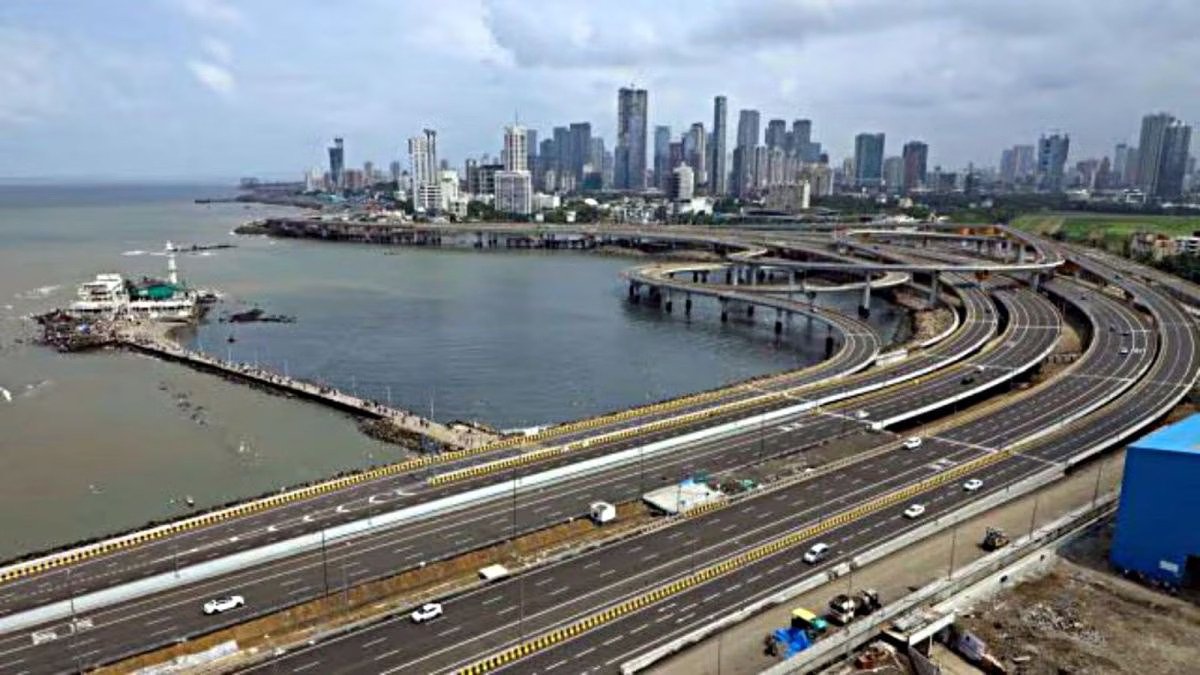
Mumbai’s newest waterfront public space may soon see an additional layer of pedestrian comfort as the civic administration moves to install protective roofing structures over access underpasses along the city’s coastal promenade. The proposal, estimated at roughly ₹19 crore, is intended to improve the usability of the entry points linking the urban shoreline walkway with surrounding neighbourhood roads.
Urban infrastructure officials say the intervention targets the pedestrian underpasses that connect inland roads to the seafront corridor of the Mumbai Coastal Promenade. These access tunnels were designed to allow visitors to safely reach the waterfront without crossing the high-speed coastal road corridor running above. The new plan proposes lightweight roof structures above the entry and exit zones of these underpasses. The additions would provide shelter from intense sun, monsoon rain and coastal winds while also improving the visual quality of the access points. Urban planners involved in waterfront design say such elements often determine how comfortable and safe public spaces feel, particularly for families, senior citizens and daily walkers.
The Mumbai Coastal Promenade forms part of the larger Mumbai Coastal Road (South) Project — a major transport and urban redevelopment initiative linking the city’s southern districts to the Worli area through an eight-lane corridor built along reclaimed coastline. While the expressway component addresses traffic congestion, the promenade has emerged as one of the project’s most visible public benefits. Stretching roughly 7.47 kilometres between the Malabar Hill area and Worli, the waterfront walkway is significantly longer than the historic Marine Drive promenade. Designed with walking tracks, seating zones and open sea views, it is intended to function as a major recreational corridor within one of the world’s most densely populated coastal cities.
To ensure safe pedestrian connectivity, planners integrated multiple underpasses at different locations along the corridor. These links connect residential neighbourhoods and arterial roads to the seafront without interrupting traffic on the coastal road above. In total, close to twenty access points have been built or planned across the stretch. Several sections of the Mumbai Coastal Promenade have already opened to the public in phases. The early operational segments — including stretches in south Mumbai and Worli — have quickly become popular destinations for morning walkers, cyclists and evening visitors seeking open space near the sea.
Urban development specialists say the popularity of these spaces reflects a broader shift in Indian city planning, where large infrastructure projects are increasingly expected to deliver both mobility improvements and public realm benefits. The roofing proposal is currently awaiting administrative clearance before tendering can begin. If approved, the structures would be installed at the promenade’s access nodes alongside other improvements such as landscaping, pedestrian pathways and cycle-friendly design elements.
City planners note that relatively small interventions — such as shaded access points and well-designed entrances — can significantly shape how people experience large public infrastructure. As more sections of the coastal promenade become operational, the project is expected to play a growing role in expanding accessible waterfront space in Mumbai’s dense urban environment.
Mumbai Plans Covered Access for Coastal Promenade