Delhi Microalgae Air Tower Targets Highway Pollution
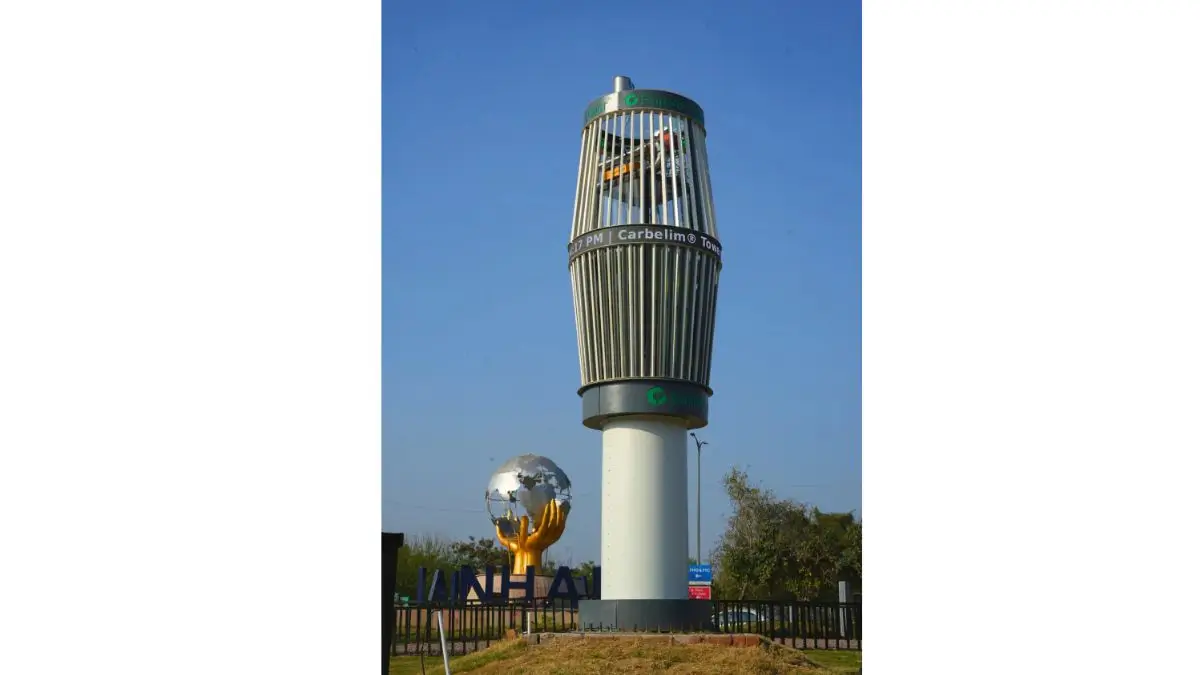
Delhi has begun testing a biotechnology-driven air purification system along one of its busiest airport corridors, installing a Delhi microalgae air tower designed to capture pollutants generated by heavy traffic. Positioned on a road divider along the Aerocity highway stretch, the pilot installation aims to explore whether bio-based systems can help reduce roadside emissions in dense urban environments. Urban environmental planners say the Delhi microalgae air tower represents an experimental shift away from conventional mechanical smog control systems. Instead of using industrial filtration units, the technology relies on living microalgae that absorb airborne pollutants through natural photosynthesis.
The biological process allows the system to capture carbon dioxide, particulate pollutants and nitrogen oxides directly from the surrounding air at street level. As the microalgae grow, these pollutants are metabolised and converted into oxygen and organic biomass. Engineers involved in the pilot say this approach could offer a lower-energy alternative to traditional air cleaning technologies used in cities facing severe air quality challenges. The tower has been installed on a road median where traffic density remains high for much of the day. Officials monitoring the project say the location was chosen deliberately to test the system’s ability to treat emissions from passing vehicles in real-world conditions. Air quality researchers note that urban highways are among the most concentrated sources of transport pollution. Vehicles emit nitrogen oxides, fine particulate matter and carbon dioxide that accumulate near road surfaces, particularly in densely built corridors with limited ventilation. Deploying decentralised purification systems such as the Delhi microalgae air tower could help reduce pollution levels in micro-environments where exposure risks are highest. The technology has been developed through collaboration between infrastructure contractors and climate technology start-ups supported by academic incubation programmes. Such partnerships reflect a growing trend in India’s urban innovation ecosystem, where research institutions are working with municipal authorities to pilot environmental technologies at city scale.
Another element of the initiative involves integrating biological purification systems into existing road infrastructure. Urban designers involved in the project say roadside barriers and dividers could potentially be retrofitted with microalgae-based panels, creating continuous “green corridors” that absorb pollutants along high-traffic routes. Preliminary design estimates suggest each unit can deliver an air-cleaning effect comparable to several mature trees, although experts emphasise that the technology should complement rather than replace urban tree cover. Biological systems embedded within infrastructure may help address pollution in locations where large-scale planting is difficult due to space constraints. Environmental analysts caution that long-term effectiveness will depend on careful monitoring of maintenance requirements, biomass management and climatic conditions affecting algae growth. The Delhi microalgae air tower pilot is therefore expected to generate performance data that could inform future deployments across urban transport corridors.
As cities across India continue to explore innovative responses to worsening air quality, the experiment highlights a broader shift towards integrating climate technology into everyday infrastructure. Whether the Delhi microalgae air tower becomes a scalable solution will depend on the results of ongoing testing, operational costs and its measurable impact on roadside pollution levels.
Delhi Microalgae Air Tower Targets Highway Pollution