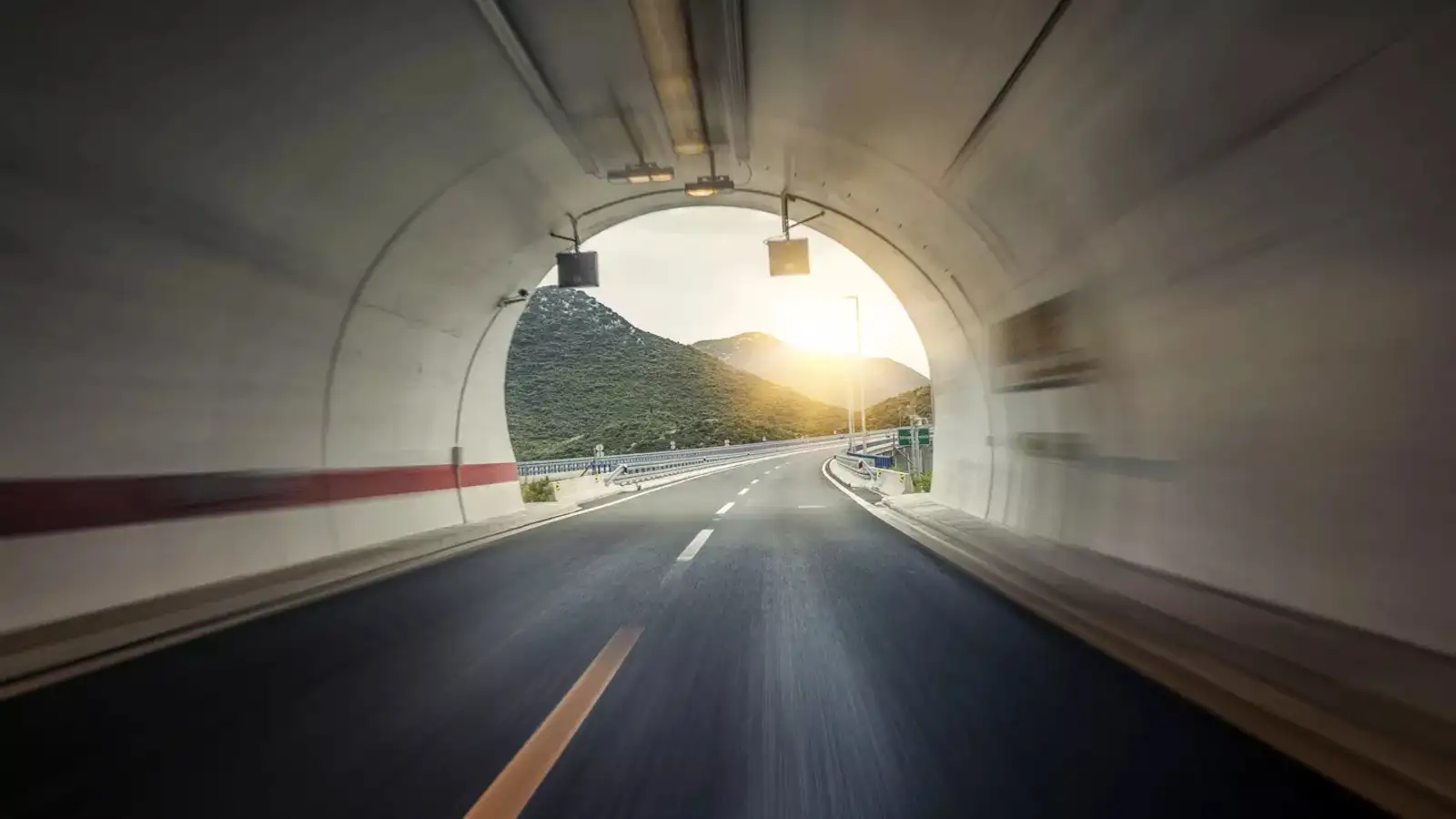
A new four-lane highway section cutting through the rugged hills between Indore and Khandwa is nearing completion, marking a significant infrastructure upgrade for one of Madhya Pradesh’s busiest regional corridors. The 33-kilometre stretch forms part of the Indore Ichhapur corridor project, which aims to modernise road connectivity between central India and major southern trade routes. Developed on National Highway-347BG, the new section runs between Tejaji Nagar in Indore and Balwada in the Khandwa region. The route replaces a narrow and accident-prone two-lane ghat road that for decades slowed traffic and created safety concerns for both passenger vehicles and freight transport. Engineers working on the project say one of its defining features is the construction of three tunnels through the mountainous terrain. The tunnels—built at Bherughat, Choral Ghat and Baigram—range from roughly 480 metres to over 570 metres in length and are designed to bypass steep slopes and winding hill sections that historically caused congestion and accidents.
Advanced excavation techniques, including electronic blasting and modern tunnelling methods, are being used to carve through the rocky landscape while maintaining structural stability. Once operational, the new alignment will allow vehicles to maintain steady speeds and reduce travel time along the stretch to about 30–35 minutes, compared with significantly longer journeys on the existing road.Transport planners say the Indore Ichhapur corridor project plays a strategic role in strengthening links between Madhya Pradesh’s commercial capital and southern logistics gateways. Indore functions as a major industrial and commercial hub, while Khandwa acts as a key railway and road junction connecting routes toward Maharashtra and the Deccan region. Improved connectivity between the two cities is expected to streamline the movement of agricultural produce, industrial goods and daily commuter traffic. The highway is also part of a broader effort to strengthen long-distance road corridors connecting Indore with cities such as Jalgaon and eventually Hyderabad. Infrastructure analysts say such routes can significantly reshape regional trade flows by reducing logistics costs and improving travel reliability across state boundaries.
Beyond economic considerations, the new design addresses long-standing safety concerns along the ghat sections. Narrow bends and steep gradients previously made the stretch vulnerable to accidents, especially during monsoon months or in low-visibility conditions. By rerouting vehicles through tunnels and wider lanes, the project aims to minimise such risks and provide a safer passage for heavy vehicles and passenger traffic alike. Officials overseeing the construction say the highway segment is expected to open later in 2026 once final structural work and safety inspections are completed. For the broader region, the Indore Ichhapur corridor project represents more than a road upgrade—it reflects the growing push to build resilient transport infrastructure that can support industrial growth, tourism and safer mobility across central India’s rapidly evolving urban-regional network.