


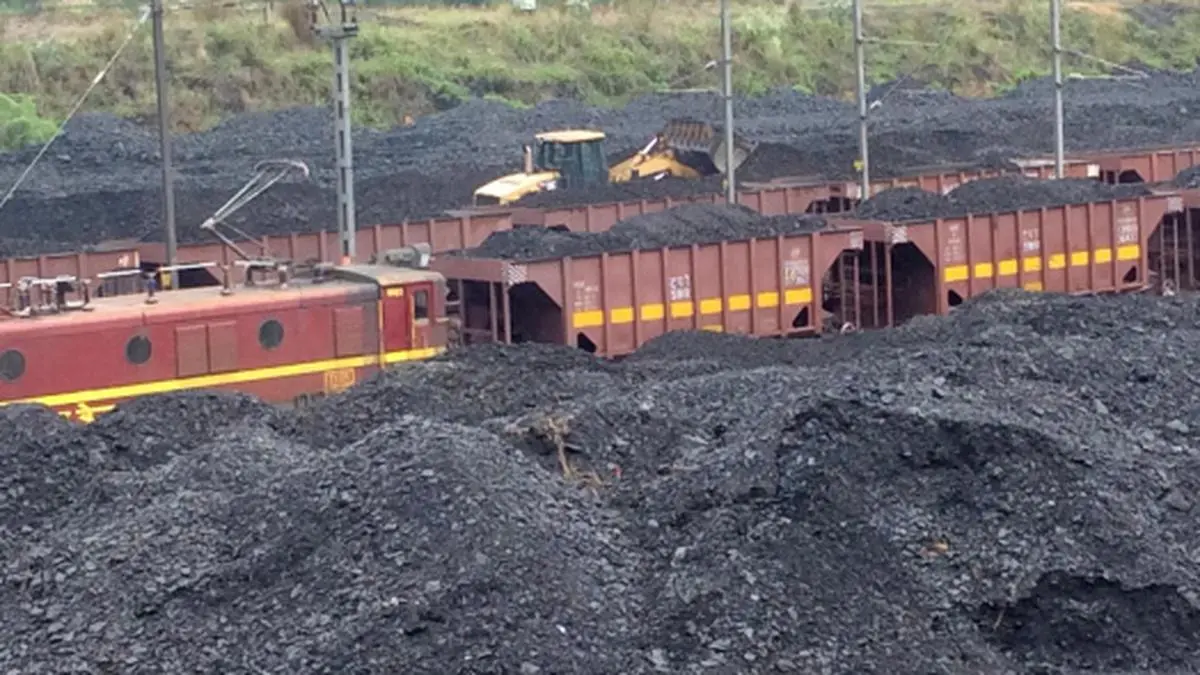
India’s energy system has entered the summer demand season with one of its strongest coal buffers in recent years, as national stockpiles climbed to roughly 210 million tonnes, providing a substantial reserve for electricity generation and industrial use. The rise in India coal availability comes as the country prepares for a seasonal surge in power consumption driven by rising temperatures and economic activity.
Officials overseeing the power sector say the current reserves are sufficient to support approximately 88 days of consumption, offering a significant cushion for electricity producers during peak demand months. Coal remains the backbone of India’s power system, accounting for nearly three-quarters of electricity generation, making reliable supply critical for grid stability. A major portion of these reserves is held at mining sites and power plants across the country. Coal stockpiles at mines operated by state-run producers alone exceed 120 million tonnes, while thermal power stations collectively hold more than 50 million tonnes, providing operational flexibility for utilities. Energy planners say the improvement in India coal availability reflects a deliberate strategy to avoid the supply disruptions that affected the power sector during earlier demand spikes. Increased domestic production and better logistics coordination between mining companies, railways and power generators have helped build higher inventory levels ahead of the summer season.
Coal output from commercial and captive mines has also expanded significantly. Production during the current financial year has grown by more than 11 percent year-on-year, indicating the government’s emphasis on strengthening domestic energy resources while reducing reliance on imports. Despite India’s rapid expansion of renewable energy capacity, coal continues to play a stabilising role in the electricity system. Solar and wind power are increasingly important components of the national grid, but their intermittent nature means thermal generation remains essential for maintaining baseload supply and meeting sudden surges in demand.Energy economists note that the improved supply situation could also reduce pressure on coal imports, which have already declined in recent years as domestic output rises. Greater self-sufficiency in coal production is seen as a strategic advantage for a country with one of the world’s fastest-growing electricity markets.
At the same time, long-term planning continues to focus on balancing energy security with climate commitments. India has pledged to expand non-fossil power capacity dramatically over the next decade while still relying on coal to support economic growth and infrastructure development.For now, however, the immediate priority remains ensuring uninterrupted electricity supply during the summer months, when demand for cooling and industrial activity tends to peak. The surge in India coal availability offers policymakers and power producers a larger operational buffer as they manage the seasonal pressure on the grid.
As India’s urban population grows and electricity consumption rises alongside industrialisation, maintaining adequate fuel reserves will remain central to the country’s energy planning. The current stockpile levels highlight how domestic coal production continues to underpin the reliability of India’s power system even as the broader energy transition gathers pace.
Also Read: Dalmia Cement Receives Tribunal Relief In PMLA Case
India Coal Supply Strengthens Power Security
