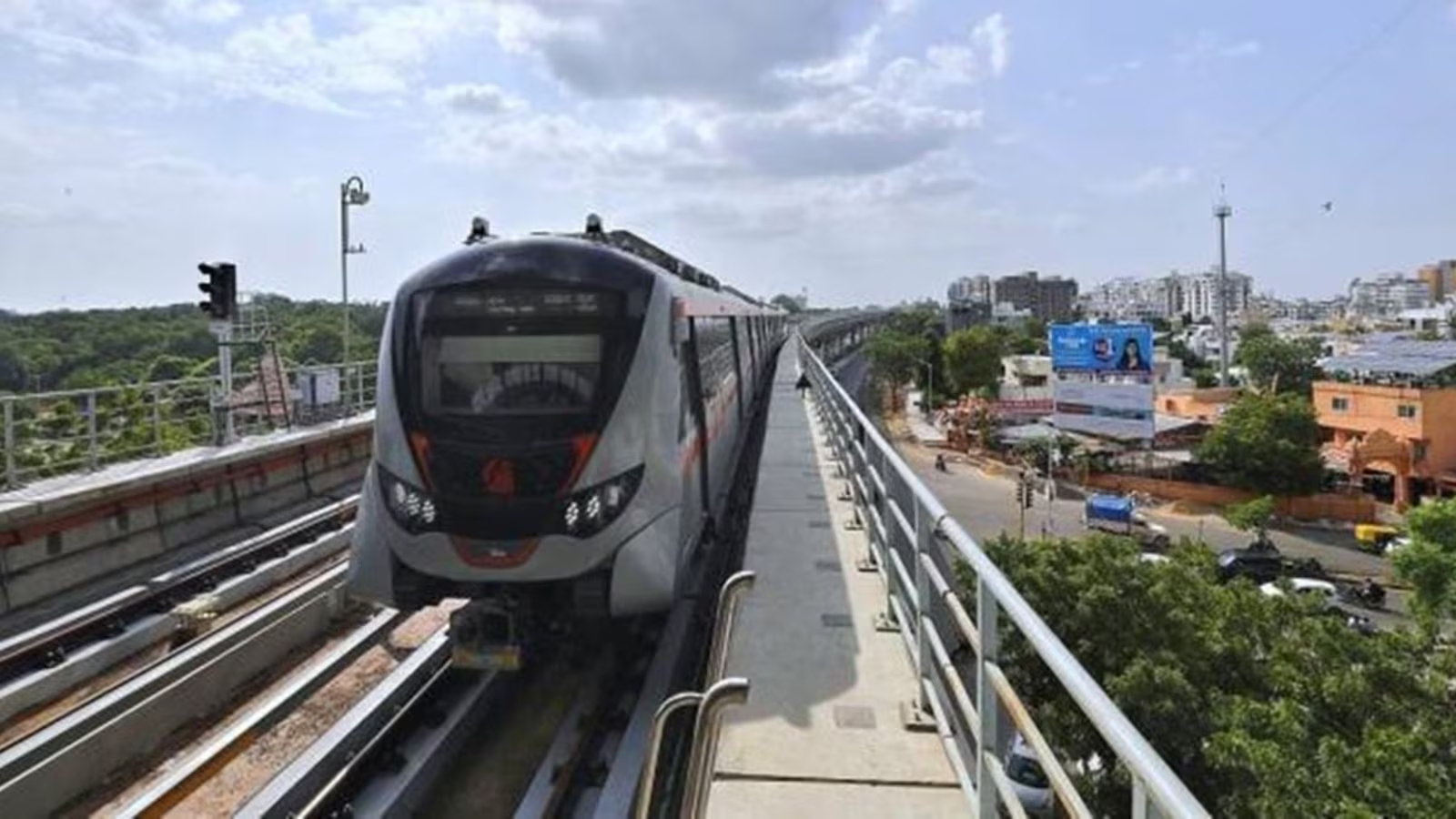
Gujarat has moved to expand its urban rail capacity with t zhe procurement of Gujarat metro train sets for the Ahmedabad and Surat metro networks, a step expected to improve service frequency and prepare the state’s transit systems for future passenger demand. Authorities have placed an order for 34 new train sets, with a portion designated for the Ahmedabad–Gandhinagar corridor and the remainder planned for the upcoming Surat Metro project.
Transport officials say the acquisition of additional Gujarat metro train sets will strengthen operational capacity on existing corridors while supporting metro expansion in cities where population growth and rising commuter traffic are increasing pressure on road networks. According to infrastructure planners involved in the project, ten train sets will be integrated into the Ahmedabad Metro’s second phase, particularly on the Ahmedabad–Gandhinagar route where metro services already operate across a substantial portion of the urban region. The additional rolling stock is expected to allow more frequent services, helping reduce waiting times for commuters travelling between the two rapidly expanding cities.
Ahmedabad’s metro system has evolved into a key mobility backbone linking residential neighbourhoods, institutional districts and commercial areas across the metropolitan region. Urban mobility specialists say that increasing train frequency is often one of the most effective ways to encourage greater public transport adoption, particularly in cities where private vehicle use remains high. The remaining Gujarat metro train sets have been allocated for the Surat Metro project, currently under construction across a network extending more than forty kilometres. Surat, one of India’s fastest-growing urban economies, has experienced rising traffic congestion as its population and industrial activity expand. Metro rail is expected to provide a mass transit alternative capable of moving large numbers of commuters efficiently across the city.
Manufacturing of the train sets is being undertaken at a rail production facility in eastern India operated by a domestic rolling stock company. Industry analysts say such procurement programmes can have wider economic implications by supporting local manufacturing ecosystems, generating skilled employment and strengthening supply chains linked to rail infrastructure. Officials associated with the project indicate that the new trains will incorporate advanced automation and monitoring systems designed to improve operational reliability and passenger safety. These systems typically include automated braking controls, digital diagnostics, obstacle detection technologies and surveillance systems to monitor operations in real time.
The expansion of metro rolling stock forms part of a broader mobility strategy being pursued across Gujarat’s urban centres. The state already operates a metro rail network connecting Ahmedabad and Gandhinagar, while future projects and extensions are under consideration in other cities as well.
Urban planning experts say metro investments play an increasingly important role in shaping sustainable city growth. Rail-based transit systems can help reduce reliance on private vehicles, lower urban emissions and support compact development patterns around transit corridors. As additional Gujarat metro train sets enter service over the coming years, transport planners will be watching how effectively expanded metro capacity shifts travel patterns. For cities such as Ahmedabad and Surat, the long-term success of these investments will depend on integrating metro systems with bus networks, pedestrian infrastructure and land-use planning to create more accessible and climate-resilient urban environments.
Gujarat Metro Train Sets Ordered For Expansion