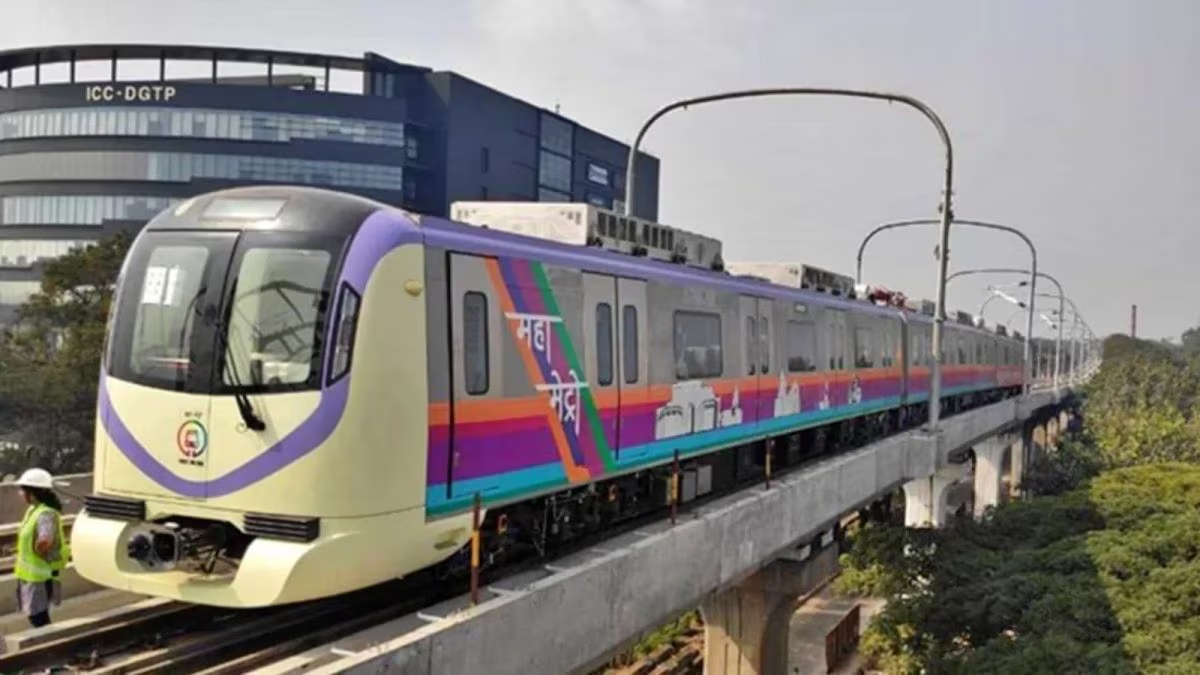
Pune’s effort to strengthen public transport connectivity has taken a step ahead with authorities advancing plans for the Khadakwasla Hinjewadi Metro Corridor, a proposed rail link expected to connect western Pune with the city’s technology hub while also providing a direct metro connection to the airport. Officials have begun preparing the groundwork for a detailed project report after reviewing multiple route alignments for the corridor. The proposed Khadakwasla Hinjewadi Metro Corridor is designed to bridge several fast-growing residential and employment districts across Pune. By linking the Khadakwasla region in the city’s southwest with Hinjewadi’s IT and business district, the line could create an important east–west transit spine while strengthening connections to the existing metro network.
Urban mobility experts say the project could address a long-standing gap in Pune’s transport system: reliable rail access to Pune International Airport. Currently, travellers rely almost entirely on road transport to reach the airport at Lohegaon. Even with the metro network expanding along Nagar Road, the nearest operational metro station is located at Ramwadi, leaving passengers to complete the final stretch through road-based travel. A direct airport link through the Khadakwasla Hinjewadi Metro Corridor could significantly reduce travel uncertainty during peak traffic hours. Nagar Road and surrounding corridors often experience congestion due to a mix of commuter traffic, airport trips and commercial vehicle movement.
seamless rail connection would offer passengers, airport workers and airline staff a more predictable travel option. The new corridor also reflects shifting mobility priorities in Pune, where population growth and employment clusters are increasingly spread across multiple zones. Hinjewadi alone hosts thousands of technology professionals commuting daily from residential neighbourhoods located across the metropolitan region. Improved metro connectivity could help shift a portion of this travel demand away from private vehicles.
Transport planners say the corridor alignment was selected after evaluating several possible routes to balance engineering feasibility, passenger demand and urban integration. The revised proposal replaces an earlier idea of a Chandani Chowk–Hinjewadi metro line and instead creates a longer corridor linking additional residential areas. However, public transport advocates have also suggested alternative metro routes to address other congested corridors in the city. Some commuter groups have recommended examining a potential Katraj–Hinjewadi alignment to reduce traffic pressure along the Mumbai–Bengaluru National Highway corridor, where heavy IT commuter traffic frequently leads to bottlenecks.
Infrastructure specialists say such debates are common as rapidly expanding cities attempt to prioritise limited metro investments. Each corridor must balance financial feasibility, passenger demand and long-term urban development patterns. For Pune, the Khadakwasla Hinjewadi Metro Corridor could play a critical role in shaping a more integrated mobility network. If the project progresses through design and approval stages, it would strengthen connections between residential neighbourhoods, employment hubs and the airport while supporting the broader shift toward low-emission public transport in one of India’s fastest-growing metropolitan regions.
Pune Khadakwasla Hinjewadi Metro Corridor Moves Forward