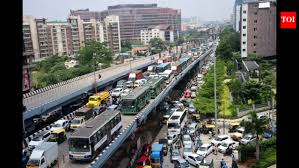
Urban finance experts advising Karnataka’s metropolitan governance framework have proposed introducing a Bengaluru congestion tax on some of the city’s most heavily used road corridors, arguing that pricing road access during peak periods could both reduce traffic pressure and strengthen municipal finances.
The proposal, outlined in a recent fiscal review examining the financial capacity of local civic bodies across the Greater Bengaluru region, suggests that targeted congestion pricing could help manage vehicle density on major arterial roads such as the Outer Ring Road and other high-traffic stretches.Urban policy specialists involved in the review say the recommendation is part of a broader effort to identify new revenue streams for rapidly expanding metropolitan administrations. Bengaluru’s population growth, rising vehicle ownership and increasing infrastructure demand have placed significant pressure on municipal budgets, prompting policymakers to explore alternative funding tools.Under the suggested model, select vehicle categories that contribute most significantly to road congestion could be subject to an electronic fee when entering designated high-traffic zones. Transport planners say digital tolling systems similar to India’s FASTag platform could enable automatic fee collection without requiring additional physical checkpoints.Supporters of the Bengaluru congestion tax proposal argue that road pricing has been used in several global cities to influence travel behaviour and improve urban mobility. By assigning a cost to peak-hour road usage, policymakers aim to encourage shifts towards public transport, carpooling and non-motorised travel.
Urban mobility researchers note that traffic congestion in Bengaluru has become one of the city’s most pressing urban challenges. Long commute times affect worker productivity, increase fuel consumption and worsen urban air pollution. Pricing strategies, they argue, can complement investments in metro expansion, bus systems and pedestrian infrastructure.The fiscal review also highlighted other innovative financing mechanisms that could support long-term urban development across the Greater Bengaluru Area. Among them is the possibility of generating revenue through carbon credit markets linked to environmental initiatives such as urban forestry programmes and waste management projects.City administrators have been encouraged to evaluate whether existing sustainability initiatives — including waste recovery infrastructure and dense micro-forest plantations — could be registered within carbon trading frameworks. Revenues from such credits could potentially fund climate-focused infrastructure including electric vehicle charging networks, water resilience programmes and green mobility systems.Another recommendation focuses on expanding municipal bond financing. Bengaluru has historical experience in this area, having raised capital through a municipal bond issuance in the late 1990s to fund infrastructure improvements. Financial analysts suggest that reviving bond-based financing could help diversify funding sources for urban infrastructure expansion.
Taken together, the policy proposals reflect a growing recognition that rapidly urbanising cities require new financial tools to sustain infrastructure development while addressing environmental pressures.
If implemented carefully, policymakers say, the Bengaluru congestion tax could become part of a broader strategy linking transport reform, climate resilience and long-term urban investment. However, transport experts emphasise that any pricing mechanism must be paired with reliable public transport options to ensure equitable mobility access for residents.
Bengaluru Road Pricing Plan Aims To Ease Traffic